India’s soaring concrete skyline is a carbon emissions blindspot
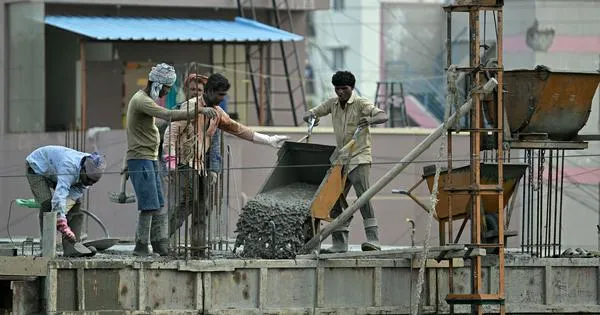
urban development India’s soaring concrete skyline is a carbon emissions blindspot The construction sector is determined by the market and not environmental or urban planning norms. However, many of the embedded sources of environmental harm remain unacknowledged. As a rapidly urbanising country, one such source that India can no longer ignore is carbon emissions emerging from its growing built environment.Every building carries a carbon cost that far outlasts those who built it.
- ▪urban development India’s soaring concrete skyline is a carbon emissions blindspot The construction sector is determined by the market and not environmental or urban planning norms.
- ▪However, many of the embedded sources of environmental harm remain unacknowledged.
- ▪As a rapidly urbanising country, one such source that India can no longer ignore is carbon emissions emerging from its growing built environment.Every building carries a carbon cost that far outlasts those who built it.
Scroll.in files mainly under design. We currently carry 3 of its stories.
Story provenance
Source · retrieval · rights · ranking — open for full record
inspect →
Story provenance
Attribution is not the same as permission. This drawer separates discovery metadata, excerpts, WeSearch-generated summaries, reuse status, and whether the publisher receives the visit. Nothing here claims a legal grant the publisher has not made.
Record
| Original publisher | Scroll.in |
| Canonical URL | https://scroll.in/article/1094062/indias-soaring-concrete-skyline-is-a-carbon-emissions-blindspot?utm_source=rss&utm_medium=public |
| Publication time | Fri, 24 Jul 2026 03:30:00 +0000 |
| Retrieval time | 2026-07-24T06:27:06.790Z |
| Last seen | 2026-07-24T06:27:06.790Z |
| Headline source | Publisher (no WeSearch rewrite) |
| Excerpt source | publisher body |
| Excerpt method | First ~120 words (~800 chars) of extracted publisher body, fair-use limited. |
| Summary | WeSearch · cerebras-chat (WeSearch summarizer) |
| Summary source text | contentText |
| Citation coverage | Summary is a WeSearch-generated derivative; primary citation is the original publisher URL. |
| Cluster | G8Fpo07VpdAL |
| Cluster logic | Grouped by semantic title/content similarity across sources within a rolling window. Same-publisher template collisions are excluded from coverage comparison. |
| Ranking reason | Story pages are not engagement-ranked. Hub feeds use recency, with optional source-diversified chronological ordering (cap consecutive stories per source). No personalized ranking. |
| Publisher visit | Yes — open original |
| Substitutes article? | No — link-out required for full text |
Rights status (four layers)
WeSearch handling by dimension
| Indexing | May the item be indexed (stored, ranked, made findable)? | Allowed |
| Snippet | May a short excerpt of the publisher's text be shown? | Allowed |
| AI summary | May WeSearch generate its own short summary of the article? | Limited |
| Retrieval / RAG | May the content be exposed for third-party retrieval-augmented generation? | Not asserted |
| Model training | May the content be used to train AI models? | Not asserted |
| Commercial reuse | May the content be reused commercially? | Not permitted |
Basis: Derived from the published RSS/Atom feed. Contact: [email protected]. Reviewed: 2026-07-24.
Opening excerpt (first ~120 words) tap to expand
urban development India’s soaring concrete skyline is a carbon emissions blindspot The construction sector is determined by the market and not environmental or urban planning norms. Mathew Idiculla, Ashok Lall & Girisha Sethi 3 hours ago Share Share on Facebook Share on X Share on LinkedIn Share on BlueSky Share on Threads Share on Reddit Copy Link Email Print Add Scroll on Google iOS App Android App AFP The spectre of climate change is upon us and its manifestations are there for all to see.The public debate about climate change tends to focus on its more visible effects for adaptive (and not preventive) measures: increased frequency and intensity of heat waves, urban flooding and air pollution. However, many of the embedded sources of environmental harm remain unacknowledged.
…
Excerpt limited to ~120 words for fair-use compliance. The full article is at Scroll.in.
Discussion
0 commentsMore from Scroll.in