Indonesia blindly drifting into a US vs China storm
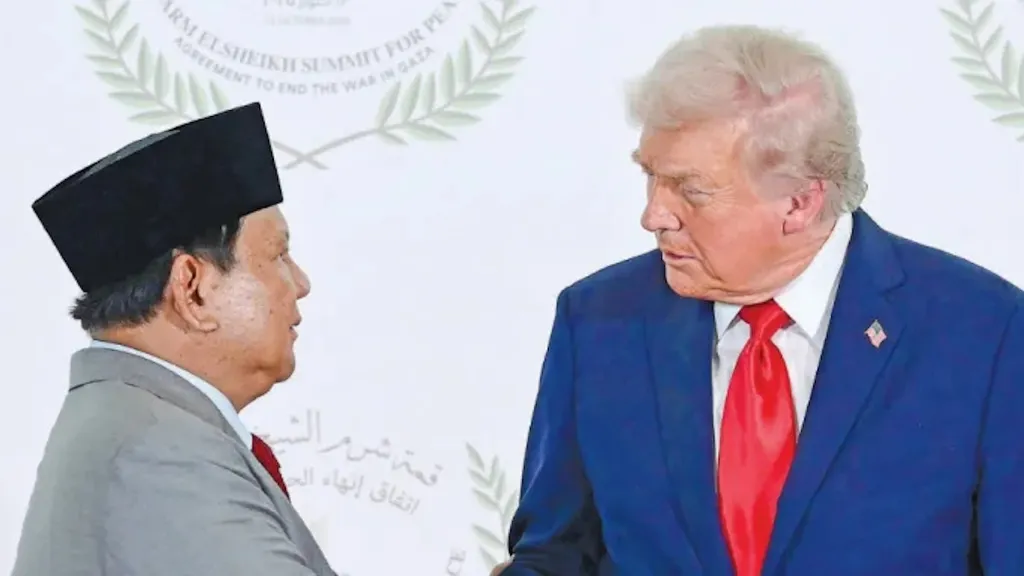
Indonesia is navigating a delicate geopolitical position amid rising US-China tensions, recently signing a defense agreement with Japan and engaging in strategic discussions with the US and its allies. While maintaining strong economic ties with China and participating in China-backed initiatives like BRICS+, Indonesia's moves are raising concerns in Beijing about potential military cooperation with the US. The country's strategic location near critical maritime chokepoints amplifies the stakes, as its airspace and sea lanes could play a pivotal role in any future Indo-Pacific conflict.
- ▪Indonesia signed a defense cooperation agreement with Japan that could enable the transfer of lethal weaponry.
- ▪The US has requested expanded military overflight access in Indonesia, raising concerns in China about regional alignment.
- ▪China views Indonesia's defense engagements with the US and Japan as potentially undermining regional stability, despite Indonesia's official non-alignment policy.
- ▪Indonesia is China's largest trading partner and joined BRICS+ in 2025, deepening economic and institutional ties outside US-led frameworks.
- ▪Indonesia's geographic position near the Strait of Malacca makes its airspace and maritime routes strategically significant in US-China strategic competition.
Asia Times files mainly under world. We currently carry 156 of its stories.
Story provenance
Source · retrieval · rights · ranking — open for full record
inspect →
Story provenance
Attribution is not the same as permission. This drawer separates discovery metadata, excerpts, WeSearch-generated summaries, reuse status, and whether the publisher receives the visit. Nothing here claims a legal grant the publisher has not made.
Record
| Original publisher | Asia Times |
| Canonical URL | https://asiatimes.com/2026/05/indonesia-blindly-drifting-into-a-us-vs-china-storm/ |
| Publication time | Sat, 16 May 2026 07:09:54 +0000 |
| Retrieval time | 2026-05-16T07:15:17.627Z |
| Last seen | 2026-05-16T07:15:17.627Z |
| Headline source | Publisher (no WeSearch rewrite) |
| Excerpt source | publisher body |
| Excerpt method | First ~120 words (~800 chars) of extracted publisher body, fair-use limited. |
| Summary | WeSearch · cerebras-chat (WeSearch summarizer) |
| Summary source text | contentText |
| Citation coverage | Summary is a WeSearch-generated derivative; primary citation is the original publisher URL. |
| Cluster | tGMgAlP44Omn |
| Cluster logic | Grouped by semantic title/content similarity across sources within a rolling window. Same-publisher template collisions are excluded from coverage comparison. |
| Ranking reason | Story pages are not engagement-ranked. Hub feeds use recency, with optional source-diversified chronological ordering (cap consecutive stories per source). No personalized ranking. |
| Publisher visit | Yes — open original |
| Substitutes article? | No — link-out required for full text |
Rights status (four layers)
WeSearch handling by dimension
| Indexing | May the item be indexed (stored, ranked, made findable)? | Allowed |
| Snippet | May a short excerpt of the publisher's text be shown? | Allowed |
| AI summary | May WeSearch generate its own short summary of the article? | Limited |
| Retrieval / RAG | May the content be exposed for third-party retrieval-augmented generation? | Not asserted |
| Model training | May the content be used to train AI models? | Not asserted |
| Commercial reuse | May the content be reused commercially? | Not permitted |
Basis: Derived from the published RSS/Atom feed. Contact: [email protected]. Reviewed: 2026-07-24.
Opening excerpt (first ~120 words) tap to expand
Earlier this month, Indonesia and Japan signed a defense cooperation agreement that could eventually allow Jakarta to acquire lethal weaponry from Tokyo. The move was the latest in a series of strategic engagements signaling that Indonesia is beginning to lean toward one side amid intensifying geopolitical rivalry in Indo-Pacific. When I argued last July that the US–Indonesia trade compromise would test President Prabowo Subianto’s non-aligned strategic discipline, the assumption was that Jakarta would have time to calibrate. It has not, and does not.
…
Excerpt limited to ~120 words for fair-use compliance. The full article is at Asia Times.
Discussion
0 commentsMore from Asia Times