Japan hits 6G key milestone with high-frequency speeds topping 100 Gbps
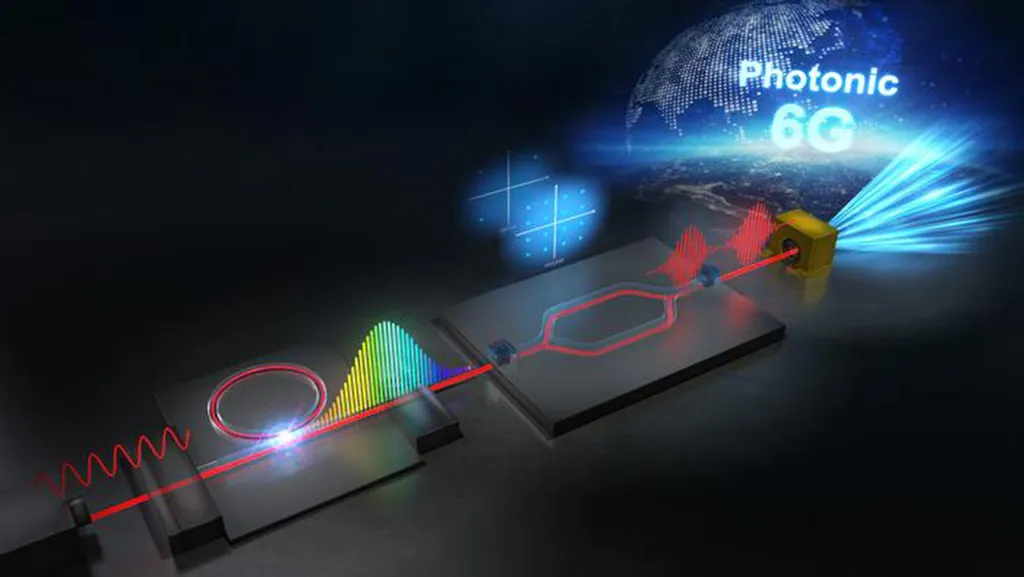
Researchers in Japan have achieved a significant milestone in 6G technology by developing a terahertz wireless communication system that can transmit data at speeds of 112 Gbps. This system utilizes miniaturized microcombs to overcome the limitations of conventional electronics at ultrahigh frequencies. The findings indicate a promising future for the rollout of 6G networks, with potential speeds reaching up to 1 terabit per second.
- ▪The new terahertz wireless communication system is 90 times smaller than conventional chips.
- ▪Researchers achieved data transfer speeds of 112 Gbps in the 560 GHz spectrum band.
- ▪This breakthrough could lead to practical 6G wireless systems and ultra-high-speed mobile backhaul.
Live Science files mainly under science. We currently carry 137 of its stories.
Story provenance
Source · retrieval · rights · ranking — open for full record
inspect →
Story provenance
Attribution is not the same as permission. This drawer separates discovery metadata, excerpts, WeSearch-generated summaries, reuse status, and whether the publisher receives the visit. Nothing here claims a legal grant the publisher has not made.
Record
| Original publisher | Live Science |
| Canonical URL | https://www.livescience.com/technology/communications/japan-hits-6g-key-milestone-with-high-frequency-speeds-topping-100-gbps |
| Publication time | Fri, 29 May 2026 16:00:00 +0000 |
| Retrieval time | 2026-05-29T16:05:02.257Z |
| Last seen | 2026-05-29T16:05:02.257Z |
| Headline source | Publisher (no WeSearch rewrite) |
| Excerpt source | publisher body |
| Excerpt method | First ~120 words (~800 chars) of extracted publisher body, fair-use limited. |
| Summary | WeSearch · cerebras-chat (WeSearch summarizer) |
| Summary source text | contentText |
| Citation coverage | Summary is a WeSearch-generated derivative; primary citation is the original publisher URL. |
| Cluster | 0_BvLrAYVrFG |
| Cluster logic | Grouped by semantic title/content similarity across sources within a rolling window. Same-publisher template collisions are excluded from coverage comparison. |
| Ranking reason | Story pages are not engagement-ranked. Hub feeds use recency, with optional source-diversified chronological ordering (cap consecutive stories per source). No personalized ranking. |
| Publisher visit | Yes — open original |
| Substitutes article? | No — link-out required for full text |
Rights status (four layers)
WeSearch handling by dimension
| Indexing | May the item be indexed (stored, ranked, made findable)? | Allowed |
| Snippet | May a short excerpt of the publisher's text be shown? | Allowed |
| AI summary | May WeSearch generate its own short summary of the article? | Limited |
| Retrieval / RAG | May the content be exposed for third-party retrieval-augmented generation? | Not asserted |
| Model training | May the content be used to train AI models? | Not asserted |
| Commercial reuse | May the content be reused commercially? | Not permitted |
Basis: Derived from the published RSS/Atom feed. Contact: [email protected]. Reviewed: 2026-07-24.
Opening excerpt (first ~120 words) tap to expand
Technology Communications Japan hits 6G key milestone with high-frequency speeds topping 100 Gbps Researchers have built a miniaturized microcomb-driven terahertz wireless communication system that's 90 times smaller than conventional chips to deliver record-breaking data-transfer speeds at ultrahigh frequencies. By Roland Moore-Colyer published 29 May 2026 in News When you purchase through links on our site, we may earn an affiliate commission. Here’s how it works. Tiny microcombs with optical fibers could hold the solution to fast and stable wireless 6G networks.
…
Excerpt limited to ~120 words for fair-use compliance. The full article is at Live Science.
Discussion
0 commentsMore from Live Science