Japan is gripped by mass allergies. A 1950s project is to blame
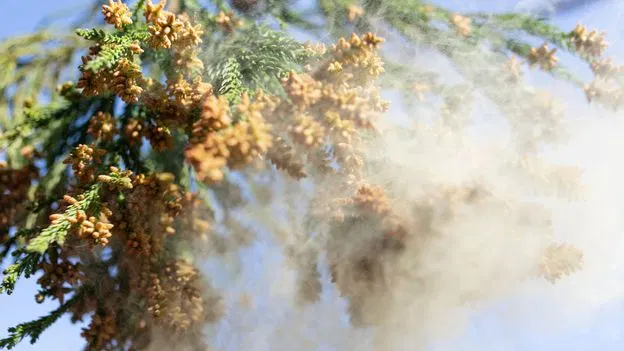
Japan is facing a significant allergy crisis, primarily due to a reforestation project from the 1950s that favored two tree species. This has resulted in a high prevalence of pollen allergies, affecting around 43% of the population and leading to substantial economic impacts. The government has recognized this issue and aims to reduce pollen production by 50% over the next 30 years.
- ▪A reforestation project in the 1950s led to the planting of only Japanese cedar and cypress trees, resulting in excessive pollen production.
- ▪Currently, 43% of Japan's population suffers from medium to severe hay fever symptoms, significantly higher than in other countries.
- ▪The economic impact of pollen allergies in Japan is estimated at $1.6 billion per day during peak allergy season.
Hacker News (Newest) files mainly under programming. We currently carry 5,306 of its stories.
Story provenance
Source · retrieval · rights · ranking — open for full record
inspect →
Story provenance
Attribution is not the same as permission. This drawer separates discovery metadata, excerpts, WeSearch-generated summaries, reuse status, and whether the publisher receives the visit. Nothing here claims a legal grant the publisher has not made.
Record
| Original publisher | Bbc |
| Canonical URL | https://www.bbc.com/future/article/20260515-the-1950s-blunder-which-causes-mass-hay-fever-in-japan |
| Publication time | Wed, 20 May 2026 01:43:06 +0000 |
| Retrieval time | 2026-05-20T02:04:58.856Z |
| Last seen | 2026-05-20T02:04:58.856Z |
| Headline source | Publisher (no WeSearch rewrite) |
| Excerpt source | publisher body |
| Excerpt method | First ~120 words (~800 chars) of extracted publisher body, fair-use limited. |
| Summary | WeSearch · cerebras-chat (WeSearch summarizer) |
| Summary source text | contentText |
| Citation coverage | Summary is a WeSearch-generated derivative; primary citation is the original publisher URL. |
| Cluster | Ekx0kxSO1Y9W |
| Cluster logic | Grouped by semantic title/content similarity across sources within a rolling window. Same-publisher template collisions are excluded from coverage comparison. |
| Ranking reason | Story pages are not engagement-ranked. Hub feeds use recency, with optional source-diversified chronological ordering (cap consecutive stories per source). No personalized ranking. |
| Publisher visit | Yes — open original |
| Substitutes article? | No — link-out required for full text |
Rights status (four layers)
WeSearch handling by dimension
| Indexing | May the item be indexed (stored, ranked, made findable)? | Allowed |
| Snippet | May a short excerpt of the publisher's text be shown? | Allowed |
| AI summary | May WeSearch generate its own short summary of the article? | Limited |
| Retrieval / RAG | May the content be exposed for third-party retrieval-augmented generation? | Not asserted |
| Model training | May the content be used to train AI models? | Not asserted |
| Commercial reuse | May the content be reused commercially? | Not permitted |
Basis: Derived from the published RSS/Atom feed. Contact: [email protected]. Reviewed: 2026-07-24.
Opening excerpt (first ~120 words) tap to expand
Japan is gripped by mass allergies. A 1950s project is to blame16 hours agoShareSaveAdd as preferred on GoogleNithin CocaGetty Images(Credit: Getty Images)A decision made 70 years ago to reforest vast swathes of Japan with just two kinds of tree has come back to haunt the country.In February, videos showing what looked like waves of smoke blowing off an evergreen forest went viral in Japan. It wasn't smoke – it was pollen, and the videos were a warning to tens of millions of residents of the archipelago nation: prepare your masks and allergy medicine.Every spring (which is already arriving earlier in Japan due to climate change) you'll see people of all ages wearing masks on the streets of cities across the country. The reason: hay fever, driven by all the pollen.
…
Excerpt limited to ~120 words for fair-use compliance. The full article is at Bbc.
Discussion
0 commentsMore from Bbc