Make Way for Beavers
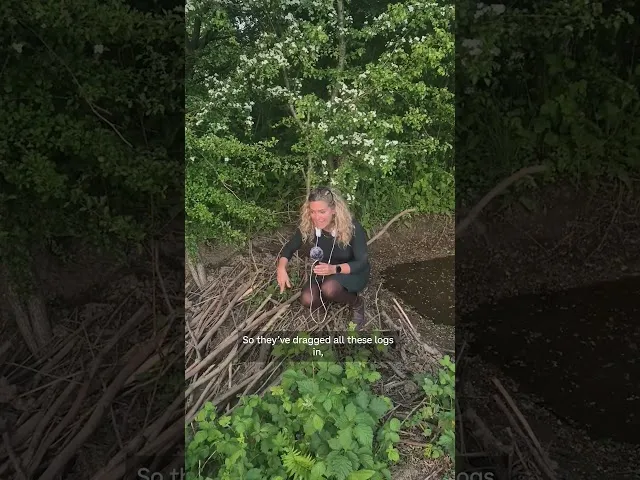
Beavers are being reintroduced in Britain as part of an initiative to combat climate change and flooding. In West London, a family of beavers has been relocated to an urban park where they have created a pond and wetland to absorb heavy rainfall. This project aims to enhance the area's resilience to flooding by utilizing the natural engineering skills of beavers.
- ▪Beavers are being used to help mitigate flooding caused by climate change in Britain.
- ▪A family of five beavers was relocated to a 20-acre urban park in West London.
- ▪The beavers have created a pond and wetland that absorbs heavy rainfall, reducing flood risk downstream.
kottke.org files mainly under culture. We currently carry 82 of its stories.
Story provenance
Source · retrieval · rights · ranking — open for full record
inspect →
Story provenance
Attribution is not the same as permission. This drawer separates discovery metadata, excerpts, WeSearch-generated summaries, reuse status, and whether the publisher receives the visit. Nothing here claims a legal grant the publisher has not made.
Record
| Original publisher | kottke.org |
| Canonical URL | https://kottke.org/26/05/make-way-for-beavers |
| Publication time | 2026-05-27T21:30:00Z |
| Retrieval time | 2026-05-27T21:38:05.389Z |
| Last seen | 2026-05-27T21:48:53.673Z |
| Headline source | Publisher (no WeSearch rewrite) |
| Excerpt source | publisher body |
| Excerpt method | First ~120 words (~800 chars) of extracted publisher body, fair-use limited. |
| Summary | WeSearch · cerebras-chat (WeSearch summarizer) |
| Summary source text | contentText |
| Citation coverage | Summary is a WeSearch-generated derivative; primary citation is the original publisher URL. |
| Cluster | None |
| Cluster logic | Not yet clustered, or no peer story found in the clustering window. |
| Ranking reason | Story pages are not engagement-ranked. Hub feeds use recency, with optional source-diversified chronological ordering (cap consecutive stories per source). No personalized ranking. |
| Publisher visit | Yes — open original |
| Substitutes article? | No — link-out required for full text |
Rights status (four layers)
WeSearch handling by dimension
| Indexing | May the item be indexed (stored, ranked, made findable)? | Allowed |
| Snippet | May a short excerpt of the publisher's text be shown? | Allowed |
| AI summary | May WeSearch generate its own short summary of the article? | Limited |
| Retrieval / RAG | May the content be exposed for third-party retrieval-augmented generation? | Not asserted |
| Model training | May the content be used to train AI models? | Not asserted |
| Commercial reuse | May the content be reused commercially? | Not permitted |
Basis: Derived from the published RSS/Atom feed. Contact: [email protected]. Reviewed: 2026-07-24.
Opening excerpt (first ~120 words) tap to expand
The beavers are part of an unlikely effort to bring back a vanished species and help Britain adapt to a very modern problem: climate change.Britain is famous for drizzle, but climate change is making rainfall heavier and more erratic. Places that didn’t used to flood are now waterlogged. So scientists have enlisted some of the animal kingdom’s best flood engineers — beavers — to help.In West London, conservationists got a government license to resettle a family of five beavers in a 20-acre urban park near the Greenford Tube station. It used to be a golf course, with a creek running through it. Within weeks, the beavers dammed up the creek, creating a pond that holds water and stops it from spilling into the city.
…
Excerpt limited to ~120 words for fair-use compliance. The full article is at kottke.org.
Discussion
0 commentsMore from kottke.org