
Medieval teeth open a new perspective on leprosy care and toxic medicine
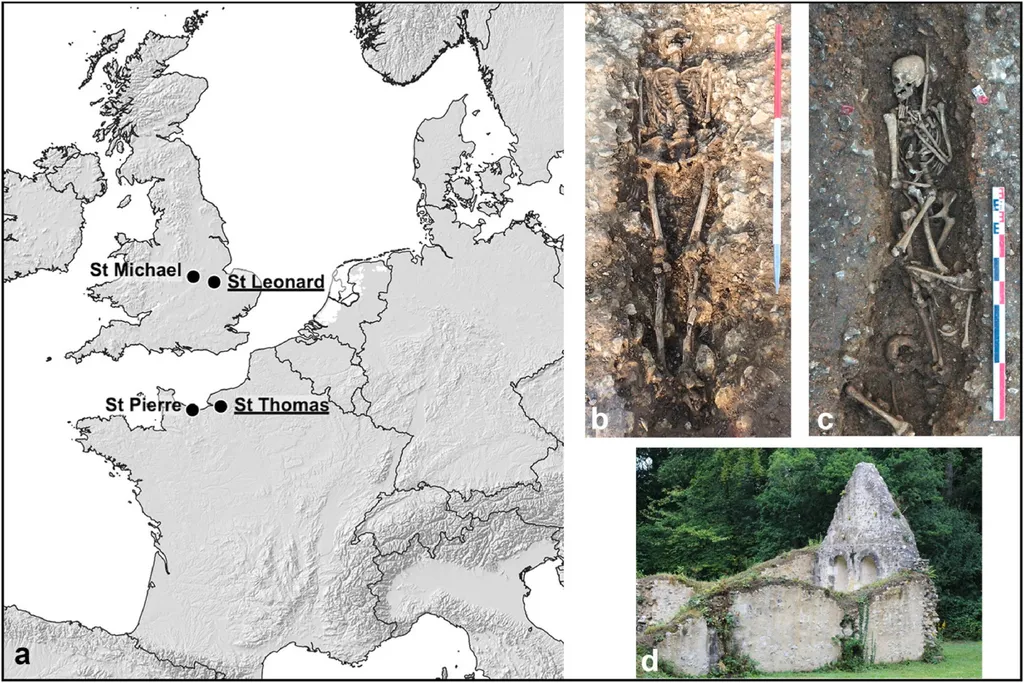
A new study analyzed dental calculus from medieval skeletons to investigate the use of mercury-based treatments for leprosy, finding higher mercury levels in individuals buried in leprosaria. This marks the first large-scale analysis of mercury in dental calculus compared with soil samples from the same graves. The findings suggest that mercury was likely used as a medical treatment for leprosy despite its toxicity.
- ▪The study examined 76 individuals and 45 soil samples from leprosaria in England and France to assess mercury exposure.
- ▪Individuals buried in leprosaria had significantly higher mercury levels in their dental calculus than those from non-leprosaria sites.
- ▪Dental calculus can trap particles from food, drink, and medical treatments, offering direct evidence of exposure during life.
- ▪Mercury was historically used to treat skin conditions like leprosy and syphilis, often in ointments applied to the skin.
- ▪This is the first study to use dental calculus on such a scale to identify mercury-based medical treatments in medieval populations.
Phys.org files mainly under science. We currently carry 1,272 of its stories.
Story provenance
Source · retrieval · rights · ranking — open for full record
inspect →
Story provenance
Attribution is not the same as permission. This drawer separates discovery metadata, excerpts, WeSearch-generated summaries, reuse status, and whether the publisher receives the visit. Nothing here claims a legal grant the publisher has not made.
Record
| Original publisher | Phys.org |
| Canonical URL | https://phys.org/news/2026-05-medieval-teeth-perspective-leprosy-toxic.html |
| Publication time | Sat, 16 May 2026 08:10:01 EDT |
| Retrieval time | 2026-05-16T12:15:18.422Z |
| Last seen | 2026-05-16T12:15:18.422Z |
| Headline source | Publisher (no WeSearch rewrite) |
| Excerpt source | publisher body |
| Excerpt method | First ~120 words (~800 chars) of extracted publisher body, fair-use limited. |
| Summary | WeSearch · cerebras-chat (WeSearch summarizer) |
| Summary source text | contentText |
| Citation coverage | Summary is a WeSearch-generated derivative; primary citation is the original publisher URL. |
| Cluster | wRyBq9P92agB |
| Cluster logic | Grouped by semantic title/content similarity across sources within a rolling window. Same-publisher template collisions are excluded from coverage comparison. |
| Ranking reason | Story pages are not engagement-ranked. Hub feeds use recency, with optional source-diversified chronological ordering (cap consecutive stories per source). No personalized ranking. |
| Publisher visit | Yes — open original |
| Substitutes article? | No — link-out required for full text |
Rights status (four layers)
WeSearch handling by dimension
| Indexing | May the item be indexed (stored, ranked, made findable)? | Allowed |
| Snippet | May a short excerpt of the publisher's text be shown? | Allowed |
| AI summary | May WeSearch generate its own short summary of the article? | Limited |
| Retrieval / RAG | May the content be exposed for third-party retrieval-augmented generation? | Not asserted |
| Model training | May the content be used to train AI models? | Not asserted |
| Commercial reuse | May the content be reused commercially? | Not permitted |
Basis: Derived from the published RSS/Atom feed. Contact: [email protected]. Reviewed: 2026-07-24.
Opening excerpt (first ~120 words) tap to expand
May 16, 2026 feature Medieval teeth open a new perspective on leprosy care and toxic medicine by Sandee Oster, Phys.org Sandee Oster Author Meet our staff & contributors Learn about our editorial standards edited by Sadie Harley, reviewed by Robert Egan Sadie Harley Scientific Editor Meet our editorial team Behind our editorial process Robert Egan Associate Editor Meet our editorial team Behind our editorial process Editors' notes This article has been reviewed according to Science X's editorial process and policies.
…
Excerpt limited to ~120 words for fair-use compliance. The full article is at Phys.org.