NASA’s Psyche spacecraft uses Mars as a giant slingshot toward a mysterious metal world
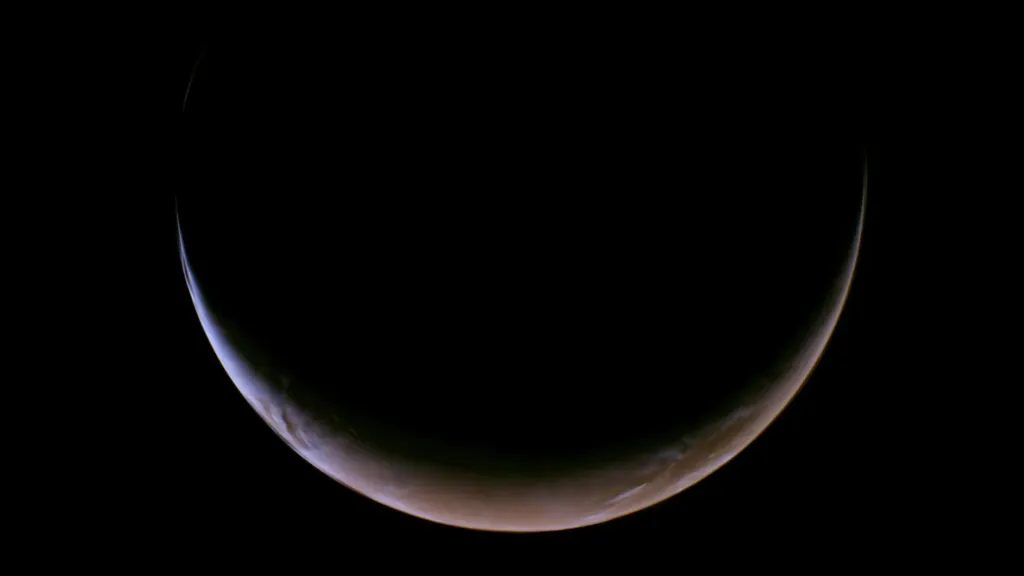
NASA's Psyche spacecraft successfully completed a close flyby of Mars, using the planet's gravity to gain speed for its journey to the asteroid Psyche. The maneuver provided a boost of approximately 1,000 mph and allowed for the capture of unique images of Mars. Following the flyby, the spacecraft is on track to reach its target in the asteroid belt by summer 2029.
- ▪The Psyche spacecraft passed within 2,864 miles of Mars during its flyby.
- ▪The spacecraft gained a speed boost of about 1,000 mph without using additional fuel.
- ▪Psyche's instruments were tested during the flyby, capturing thousands of images of Mars.
ScienceDaily files mainly under science. We currently carry 84 of its stories.
Story provenance
Source · retrieval · rights · ranking — open for full record
inspect →
Story provenance
Attribution is not the same as permission. This drawer separates discovery metadata, excerpts, WeSearch-generated summaries, reuse status, and whether the publisher receives the visit. Nothing here claims a legal grant the publisher has not made.
Record
| Original publisher | ScienceDaily |
| Canonical URL | https://www.sciencedaily.com/releases/2026/05/260525040421.htm |
| Publication time | Tue, 26 May 2026 02:11:55 EDT |
| Retrieval time | 2026-05-26T06:27:44.833Z |
| Last seen | 2026-05-26T06:27:44.833Z |
| Headline source | Publisher (no WeSearch rewrite) |
| Excerpt source | publisher body |
| Excerpt method | First ~120 words (~800 chars) of extracted publisher body, fair-use limited. |
| Summary | WeSearch · cerebras-chat (WeSearch summarizer) |
| Summary source text | contentText |
| Citation coverage | Summary is a WeSearch-generated derivative; primary citation is the original publisher URL. |
| Cluster | UVHTesYZ7yr5 |
| Cluster logic | Grouped by semantic title/content similarity across sources within a rolling window. Same-publisher template collisions are excluded from coverage comparison. |
| Ranking reason | Story pages are not engagement-ranked. Hub feeds use recency, with optional source-diversified chronological ordering (cap consecutive stories per source). No personalized ranking. |
| Publisher visit | Yes — open original |
| Substitutes article? | No — link-out required for full text |
Rights status (four layers)
WeSearch handling by dimension
| Indexing | May the item be indexed (stored, ranked, made findable)? | Allowed |
| Snippet | May a short excerpt of the publisher's text be shown? | Allowed |
| AI summary | May WeSearch generate its own short summary of the article? | Limited |
| Retrieval / RAG | May the content be exposed for third-party retrieval-augmented generation? | Not asserted |
| Model training | May the content be used to train AI models? | Not asserted |
| Commercial reuse | May the content be reused commercially? | Not permitted |
Basis: Derived from the published RSS/Atom feed. Contact: [email protected]. Reviewed: 2026-07-24.
Opening excerpt (first ~120 words) tap to expand
Science News from research organizations NASA’s Psyche spacecraft uses Mars as a giant slingshot toward a mysterious metal world Date: May 26, 2026 Source: NASA's Jet Propulsion Laboratory Summary: NASA’s Psyche spacecraft just used Mars as a giant gravitational slingshot to continue its journey toward a strange metal rich asteroid. The close flyby boosted the spacecraft’s speed by about 1,000 mph while also producing rare crescent images of Mars glowing through its dusty atmosphere. Share: Facebook Twitter Pinterest LinkedIN Email FULL STORY This view of a crescent Mars was captured on May 15, 2026, at about 5:03 a.m. PDT by NASA’s Psyche mission as it approached the planet for a gravity assist.
…
Excerpt limited to ~120 words for fair-use compliance. The full article is at ScienceDaily.
Discussion
0 commentsMore from ScienceDaily