Nearly half (44%) of every T-shirt goes to waste before you even buy it
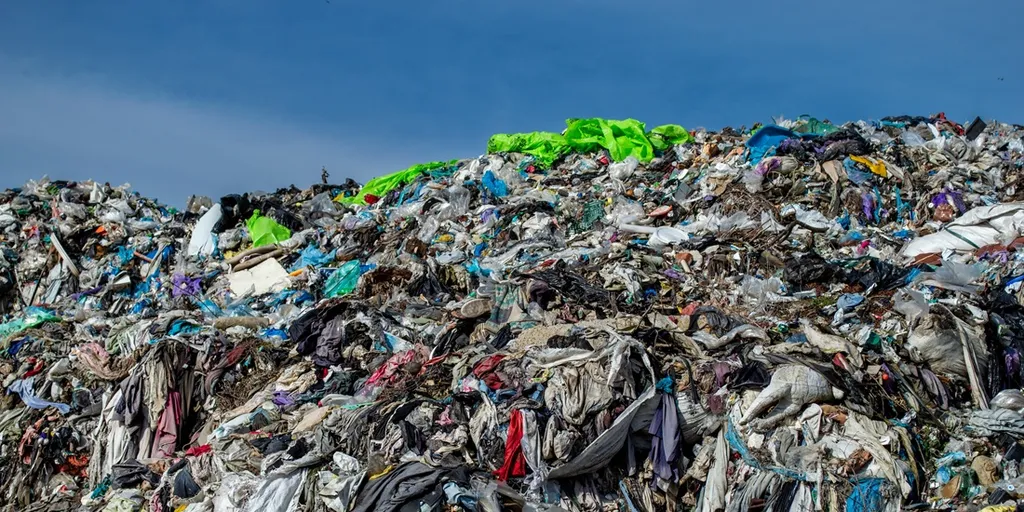
A significant amount of textile waste occurs before clothing reaches consumers, with nearly half of every T-shirt's material wasted in the production process. Research indicates that only a small percentage of used clothing is recycled, contributing to environmental issues. The fashion industry is responsible for a considerable portion of global greenhouse gas emissions, highlighting the need for better management of textile waste.
- ▪Nearly 44% of the material used to make T-shirts is wasted before they reach consumers.
- ▪Less than 1% of used clothing is recycled into new textiles globally.
- ▪The fashion industry accounts for approximately 10% of global greenhouse gas emissions.
3 outlets in our directory ran this story, first to last over 7 hours. All of the coverage we found sits in one bucket: centre. That one-sidedness is itself worth noticing.
Hacker News (Newest) files mainly under programming. We currently carry 5,306 of its stories.
Story provenance
Source · retrieval · rights · ranking — open for full record
inspect →
Story provenance
Attribution is not the same as permission. This drawer separates discovery metadata, excerpts, WeSearch-generated summaries, reuse status, and whether the publisher receives the visit. Nothing here claims a legal grant the publisher has not made.
Record
| Original publisher | Norwegian SciTech News |
| Canonical URL | https://norwegianscitechnews.com/2026/05/nearly-half-of-every-t-shirt-goes-to-waste-before-you-even-buy-it/ |
| Publication time | Tue, 26 May 2026 12:27:03 +0000 |
| Retrieval time | 2026-05-26T12:37:49.103Z |
| Last seen | 2026-05-26T12:37:49.103Z |
| Headline source | Publisher (no WeSearch rewrite) |
| Excerpt source | publisher body |
| Excerpt method | First ~120 words (~800 chars) of extracted publisher body, fair-use limited. |
| Summary | WeSearch · cerebras-chat (WeSearch summarizer) |
| Summary source text | contentText |
| Citation coverage | Summary is a WeSearch-generated derivative; primary citation is the original publisher URL. |
| Cluster | NCBsMvqOk4_d · 3 stories |
| Cluster logic | Grouped by semantic title/content similarity across sources within a rolling window. Same-publisher template collisions are excluded from coverage comparison. |
| Ranking reason | Story pages are not engagement-ranked. Hub feeds use recency, with optional source-diversified chronological ordering (cap consecutive stories per source). No personalized ranking. |
| Publisher visit | Yes — open original |
| Substitutes article? | No — link-out required for full text |
Rights status (four layers)
WeSearch handling by dimension
| Indexing | May the item be indexed (stored, ranked, made findable)? | Allowed |
| Snippet | May a short excerpt of the publisher's text be shown? | Allowed |
| AI summary | May WeSearch generate its own short summary of the article? | Limited |
| Retrieval / RAG | May the content be exposed for third-party retrieval-augmented generation? | Not asserted |
| Model training | May the content be used to train AI models? | Not asserted |
| Commercial reuse | May the content be reused commercially? | Not permitted |
Basis: Derived from the published RSS/Atom feed. Contact: [email protected]. Reviewed: 2026-07-24.
Opening excerpt (first ~120 words) tap to expand
Billions of clothes end up in landfills every year. Many are completely unused. Photo: Shutterstock, NTB Toggle image description Nearly half of every T-shirt goes to waste before you even buy it The global consumption of clothing is enormous. However, a significant portion of the textile fibres is lost before the garments even reach the market. By Steinar Brandslet - Published 26.05.2026 Denne saken er også tilgjengelig på norsk “When we talk about textile waste, the debate often focuses on the clothes we throw away. But the problem starts much earlier,” explained former NTNU master’s student Rakib Ahmed, currently a researcher at SINTEF Industry. The EU has introduced several initiatives aimed at collecting used clothing and managing the waste, once the garments are no longer in use.
…
Excerpt limited to ~120 words for fair-use compliance. The full article is at Norwegian SciTech News.
Discussion
0 commentsMore from Norwegian SciTech News