New Scans Reveal Ancient Med Kit Belonging to Possible Pompeii Doctor
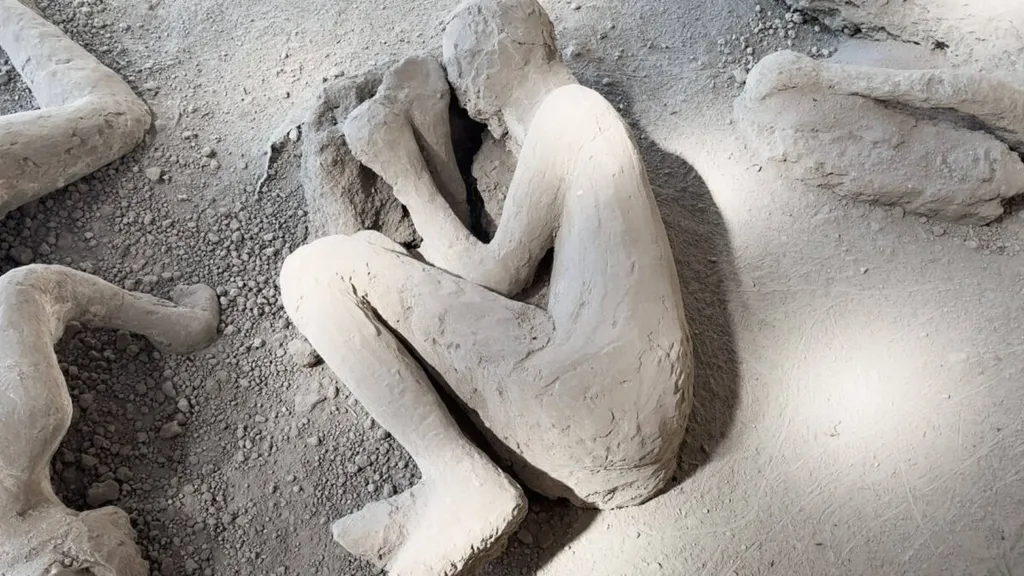
Recent scans have revealed the existence of a medical kit belonging to a possible doctor from Pompeii. This discovery was made in the Garden of the Fugitives, where many victims of the Mount Vesuvius eruption were found. Advanced imaging techniques have provided new insights into the lives of those who perished in the disaster.
- ▪The discovery was reported by Italy's Pompeii Archaeological Park.
- ▪A small slab containing surgical tools was found among the archaeological deposits.
- ▪The Garden of the Fugitives was initially excavated in 1961 and is known for preserving casts of victims caught in the eruption.
Gizmodo files mainly under tech. We currently carry 698 of its stories.
Story provenance
Source · retrieval · rights · ranking — open for full record
inspect →
Story provenance
Attribution is not the same as permission. This drawer separates discovery metadata, excerpts, WeSearch-generated summaries, reuse status, and whether the publisher receives the visit. Nothing here claims a legal grant the publisher has not made.
Record
| Original publisher | Gizmodo |
| Canonical URL | https://gizmodo.com/new-scans-reveal-ancient-med-kit-belonging-to-possible-pompeii-doctor1148-am-2000761340 |
| Publication time | Wed, 20 May 2026 15:55:38 +0000 |
| Retrieval time | 2026-05-20T16:00:03.049Z |
| Last seen | 2026-05-20T16:00:03.049Z |
| Headline source | Publisher (no WeSearch rewrite) |
| Excerpt source | publisher body |
| Excerpt method | First ~120 words (~800 chars) of extracted publisher body, fair-use limited. |
| Summary | WeSearch · cerebras-chat (WeSearch summarizer) |
| Summary source text | contentText |
| Citation coverage | Summary is a WeSearch-generated derivative; primary citation is the original publisher URL. |
| Cluster | uWAEQqbGcg9l |
| Cluster logic | Grouped by semantic title/content similarity across sources within a rolling window. Same-publisher template collisions are excluded from coverage comparison. |
| Ranking reason | Story pages are not engagement-ranked. Hub feeds use recency, with optional source-diversified chronological ordering (cap consecutive stories per source). No personalized ranking. |
| Publisher visit | Yes — open original |
| Substitutes article? | No — link-out required for full text |
Rights status (four layers)
WeSearch handling by dimension
| Indexing | May the item be indexed (stored, ranked, made findable)? | Allowed |
| Snippet | May a short excerpt of the publisher's text be shown? | Allowed |
| AI summary | May WeSearch generate its own short summary of the article? | Limited |
| Retrieval / RAG | May the content be exposed for third-party retrieval-augmented generation? | Not asserted |
| Model training | May the content be used to train AI models? | Not asserted |
| Commercial reuse | May the content be reused commercially? | Not permitted |
Basis: Derived from the published RSS/Atom feed. Contact: [email protected]. Reviewed: 2026-07-24.
Opening excerpt (first ~120 words) tap to expand
In 79 CE, Mount Vesuvius unleashed a destructive mix of fast-moving pumice, ash, and volcanic gas upon the Roman city of Pompeii. Many people in the path of these pyroclastic flows likely died of thermal shock, eventually leaving behind hollow forms buried inside volcanic ash as their bodies decomposed. With technological advances, scientists are now getting a much more detailed view of these long-decomposed bodies, including snapshots of their lives before the…
Excerpt limited to ~120 words for fair-use compliance. The full article is at Gizmodo.
Discussion
0 commentsMore from Gizmodo