New York Times Challenges Pentagon’s Requirement for Journalist Escorts in 2nd Lawsuit
The New York Times has filed a second lawsuit against the Pentagon, challenging its requirement for journalists to be escorted by government personnel. The lawsuit claims this policy violates the First Amendment by hindering reporters' ability to gather news independently. The Pentagon defends the policy as lawful and necessary for national security, while the legal dispute continues over media access regulations.
- ▪The New York Times accuses the Pentagon of unlawfully restricting press access with its escort requirement.
- ▪The lawsuit argues that the policy creates excessive barriers to newsgathering and limits reporters' independence.
- ▪The Pentagon's spokesman claims the rules are lawful and designed to protect national security.
3 outlets in our directory ran this story, first to last over 3 hours. Coverage spans 2 points on the political spectrum — 1 lean left, 1 centre.
TheWrap files mainly under film tv. We currently carry 272 of its stories.
Story provenance
Source · retrieval · rights · ranking — open for full record
inspect →
Story provenance
Attribution is not the same as permission. This drawer separates discovery metadata, excerpts, WeSearch-generated summaries, reuse status, and whether the publisher receives the visit. Nothing here claims a legal grant the publisher has not made.
Record
| Original publisher | TheWrap |
| Canonical URL | https://www.thewrap.com/industry-news/public-policy-legal/new-york-times-challenges-pentagon-requirement-journalist-escorts/ |
| Publication time | Mon, 18 May 2026 22:46:56 +0000 |
| Retrieval time | 2026-05-18T23:04:56.983Z |
| Last seen | 2026-05-18T23:04:56.983Z |
| Headline source | Publisher (no WeSearch rewrite) |
| Excerpt source | publisher body |
| Excerpt method | First ~120 words (~800 chars) of extracted publisher body, fair-use limited. |
| Summary | WeSearch · cerebras-chat (WeSearch summarizer) |
| Summary source text | contentText |
| Citation coverage | Summary is a WeSearch-generated derivative; primary citation is the original publisher URL. |
| Cluster | d9btAmVydsOk · 3 stories |
| Cluster logic | Grouped by semantic title/content similarity across sources within a rolling window. Same-publisher template collisions are excluded from coverage comparison. |
| Ranking reason | Story pages are not engagement-ranked. Hub feeds use recency, with optional source-diversified chronological ordering (cap consecutive stories per source). No personalized ranking. |
| Publisher visit | Yes — open original |
| Substitutes article? | No — link-out required for full text |
Rights status (four layers)
WeSearch handling by dimension
| Indexing | May the item be indexed (stored, ranked, made findable)? | Allowed |
| Snippet | May a short excerpt of the publisher's text be shown? | Allowed |
| AI summary | May WeSearch generate its own short summary of the article? | Limited |
| Retrieval / RAG | May the content be exposed for third-party retrieval-augmented generation? | Not asserted |
| Model training | May the content be used to train AI models? | Not asserted |
| Commercial reuse | May the content be reused commercially? | Not permitted |
Basis: Derived from the published RSS/Atom feed. Contact: [email protected]. Reviewed: 2026-07-24.
Opening excerpt (first ~120 words) tap to expand
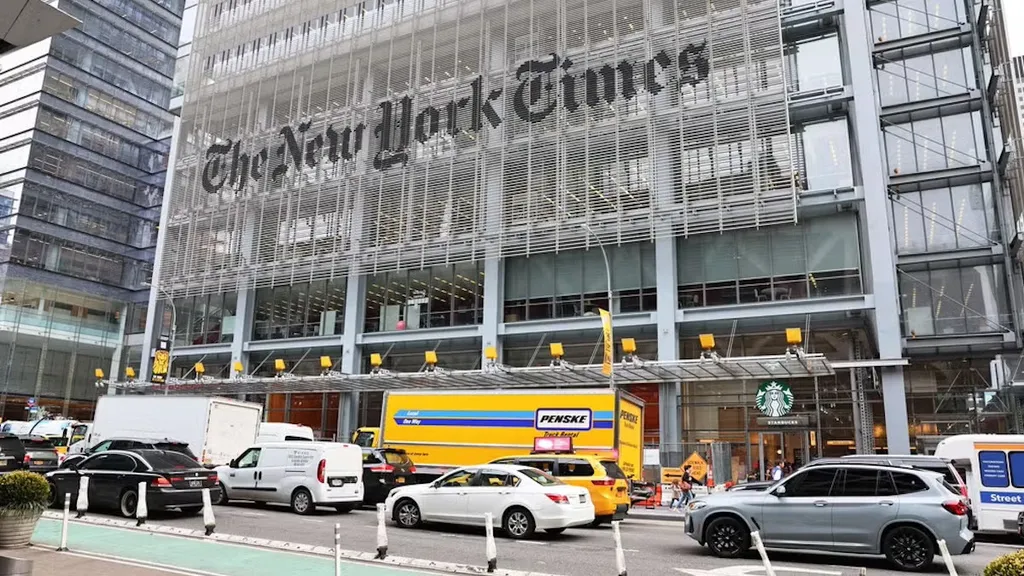
Home > Industry News > Public Policy & Legal New York Times Challenges Pentagon’s Requirement for Journalist Escorts in 2nd Lawsuit The paper describes the revised policy as “patently retaliatory” and says the mandate interferes with reporters’ ability to cultivate sources Josh Dickey May 18, 2026 @ 3:46 PM Share on Social Media Share on Facebook Share on X (formerly Twitter) Share on LinkedIn Share on Email The New York Times (Getty Images) The New York Times has filed a second federal lawsuit against the Defense Department, this time accusing it of unlawfully restricting press access inside the Pentagon by forcing reporters to be accompanied by government escorts. Filed Monday in U.S.
…
Excerpt limited to ~120 words for fair-use compliance. The full article is at TheWrap.
Discussion
0 commentsMore from TheWrap