NVIDIA Research Unlocks Advanced Grasping, Smarter Autonomous Driving and Agent Training at Scale
NVIDIA Research has introduced significant advancements in AI for robotics and autonomous vehicles. Their new models, including GraspGen-X and LCDrive, focus on enhancing the generalization capabilities of AI systems across various applications. These breakthroughs were presented at the CVPR conference, showcasing the potential for improved performance in real-world scenarios.
- ▪GraspGen-X is the first foundation model for zero-shot grasping, trained on billions of simulated grasps.
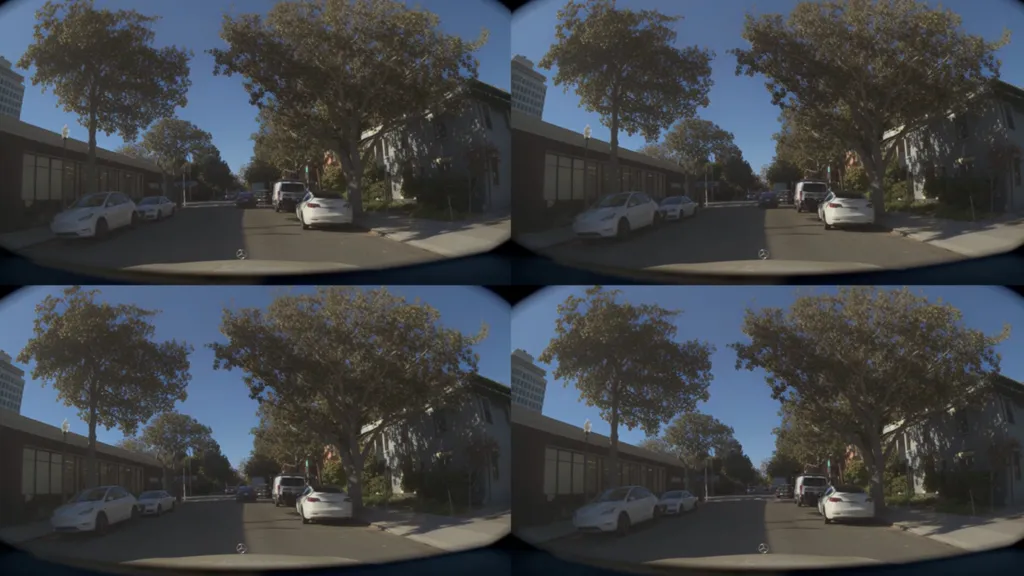
- ▪LCDrive introduces a model that allows autonomous vehicles to reason faster on embedded hardware by using compact latent representations.
- ▪NitroGen is a gameplay AI foundation model designed to train embodied agents in virtual environments through extensive interaction.
NVIDIA Blog files mainly under ai. We currently carry 19 of its stories.
Story provenance
Source · retrieval · rights · ranking — open for full record
inspect →
Story provenance
Attribution is not the same as permission. This drawer separates discovery metadata, excerpts, WeSearch-generated summaries, reuse status, and whether the publisher receives the visit. Nothing here claims a legal grant the publisher has not made.
Record
| Original publisher | NVIDIA Blog |
| Canonical URL | https://blogs.nvidia.com/blog/cvpr-research-grasping-driving-agent-training/ |
| Publication time | Wed, 03 Jun 2026 15:00:57 +0000 |
| Retrieval time | 2026-06-03T15:07:10.413Z |
| Last seen | 2026-06-03T15:07:10.413Z |
| Headline source | Publisher (no WeSearch rewrite) |
| Excerpt source | publisher body |
| Excerpt method | First ~120 words (~800 chars) of extracted publisher body, fair-use limited. |
| Summary | WeSearch · cerebras-chat (WeSearch summarizer) |
| Summary source text | contentText |
| Citation coverage | Summary is a WeSearch-generated derivative; primary citation is the original publisher URL. |
| Cluster | UHw32Miv-yeW |
| Cluster logic | Grouped by semantic title/content similarity across sources within a rolling window. Same-publisher template collisions are excluded from coverage comparison. |
| Ranking reason | Story pages are not engagement-ranked. Hub feeds use recency, with optional source-diversified chronological ordering (cap consecutive stories per source). No personalized ranking. |
| Publisher visit | Yes — open original |
| Substitutes article? | No — link-out required for full text |
Rights status (four layers)
WeSearch handling by dimension
| Indexing | May the item be indexed (stored, ranked, made findable)? | Allowed |
| Snippet | May a short excerpt of the publisher's text be shown? | Allowed |
| AI summary | May WeSearch generate its own short summary of the article? | Limited |
| Retrieval / RAG | May the content be exposed for third-party retrieval-augmented generation? | Not asserted |
| Model training | May the content be used to train AI models? | Not asserted |
| Commercial reuse | May the content be reused commercially? | Not permitted |
Basis: Derived from the published RSS/Atom feed. Contact: [email protected]. Reviewed: 2026-07-24.
Opening excerpt (first ~120 words) tap to expand
NVIDIA Research Unlocks Advanced Grasping, Smarter Autonomous Driving and Agent Training at Scale New NVIDIA Research breakthroughs show how training at scale — across gripper types, driving scenarios and virtual worlds — creates AI that generalizes to diverse applications. June 3, 2026 by Isha Salian 0 Comments Share Share This Article X Facebook LinkedIn Copy link Link copied! Your browser doesn't support HTML5 video. Here is a link to the video instead. What makes a robot gripper useful isn’t that it can pick up one object — it’s that it can pick up the next one, and the one after that, with a tool it’s never held before.
…
Excerpt limited to ~120 words for fair-use compliance. The full article is at NVIDIA Blog.
Discussion
0 commentsMore from NVIDIA Blog