Opinion: Living with bullet fragments in the body can have long-term medical consequences
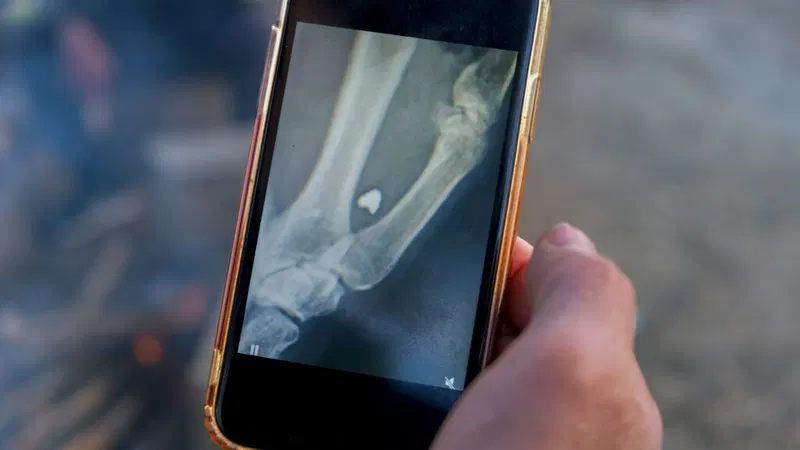
Living with retained bullet fragments can lead to significant long-term health issues for survivors of gun violence. These fragments may cause chronic pain, mobility issues, and even lead poisoning. Awareness of the potential medical and psychological consequences is crucial for both patients and healthcare providers.
- ▪Approximately 115,000 firearm injuries occur annually in the United States.
- ▪About 75% of survivors of firearm injuries live with retained bullet fragments.
- ▪Retained bullet fragments can lead to chronic pain, mobility issues, and organ damage.
STAT News files mainly under health. We currently carry 238 of its stories.
Story provenance
Source · retrieval · rights · ranking — open for full record
inspect →
Story provenance
Attribution is not the same as permission. This drawer separates discovery metadata, excerpts, WeSearch-generated summaries, reuse status, and whether the publisher receives the visit. Nothing here claims a legal grant the publisher has not made.
Record
| Original publisher | STAT |
| Canonical URL | https://www.statnews.com/2026/05/21/retained-bullet-fragments-depression-lead-poisoning-trauma/?utm_campaign=rss |
| Publication time | Thu, 21 May 2026 08:30:00 +0000 |
| Retrieval time | 2026-05-21T08:38:15.079Z |
| Last seen | 2026-05-21T09:03:51.205Z |
| Headline source | Publisher (no WeSearch rewrite) |
| Excerpt source | publisher body |
| Excerpt method | First ~120 words (~800 chars) of extracted publisher body, fair-use limited. |
| Summary | WeSearch · cerebras-chat (WeSearch summarizer) |
| Summary source text | contentText |
| Citation coverage | Summary is a WeSearch-generated derivative; primary citation is the original publisher URL. |
| Cluster | G6kZzCx4Hohd |
| Cluster logic | Grouped by semantic title/content similarity across sources within a rolling window. Same-publisher template collisions are excluded from coverage comparison. |
| Ranking reason | Story pages are not engagement-ranked. Hub feeds use recency, with optional source-diversified chronological ordering (cap consecutive stories per source). No personalized ranking. |
| Publisher visit | Yes — open original |
| Substitutes article? | No — link-out required for full text |
Rights status (four layers)
WeSearch handling by dimension
| Indexing | May the item be indexed (stored, ranked, made findable)? | Allowed |
| Snippet | May a short excerpt of the publisher's text be shown? | Allowed |
| AI summary | May WeSearch generate its own short summary of the article? | Limited |
| Retrieval / RAG | May the content be exposed for third-party retrieval-augmented generation? | Not asserted |
| Model training | May the content be used to train AI models? | Not asserted |
| Commercial reuse | May the content be reused commercially? | Not permitted |
Basis: Derived from the published RSS/Atom feed. Contact: [email protected]. Reviewed: 2026-07-24.
Opening excerpt (first ~120 words) tap to expand
OpinionFirst Opinion Living with bullet fragments in the body can have long-term medical consequences Physicians and patients need to be aware of the potential for medical and psychological problems Manage alerts for this article Email this article Share this article An X-ray image shows a bullet fragment lodged in the hand of a gunshot victim.COURTNEY BONNEAU/Middle East Images/AFP via Getty Images By Adeiyewunmi (Ade) OsinubiMay 21, 2026 Osinubi, M.D., is an emergency medicine resident physician. Oronde McClain was only 10 when he was shot in the head while caught in the gunfire of a drive-by shooting. He had to learn how to walk and talk again after an eight-week coma and the removal of one-third of his brain.
…
Excerpt limited to ~120 words for fair-use compliance. The full article is at STAT.
Discussion
0 commentsMore from STAT