Pete Hegseth’s desperate crusade for masculine validation
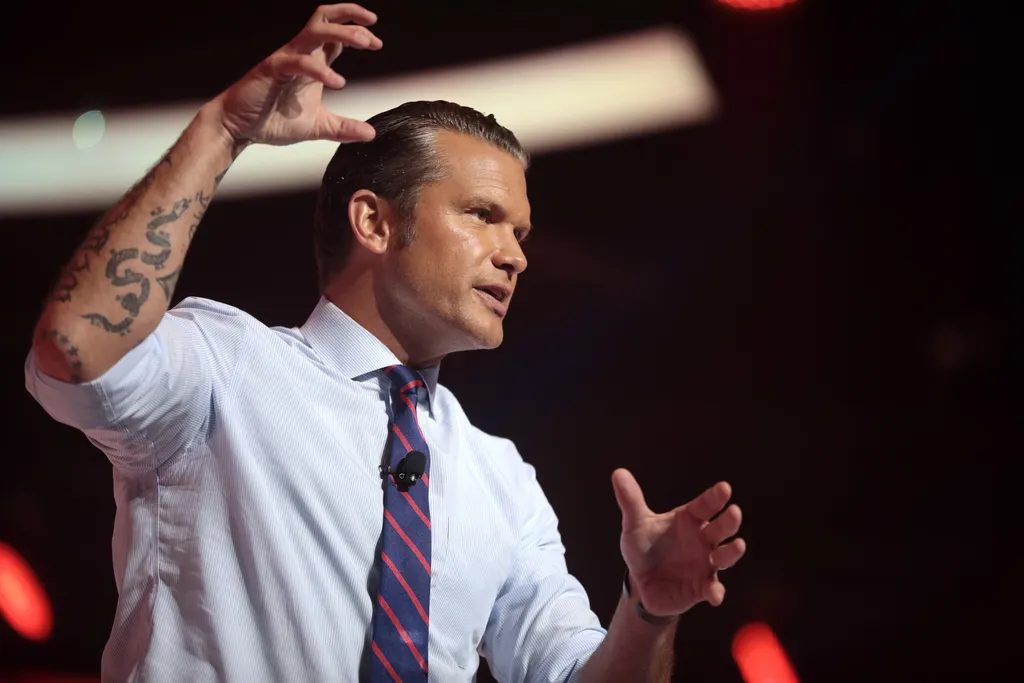
Pete Hegseth, a prominent figure in military discussions, has shown a strong desire for validation through martial success. His military career, marked by deployments in Afghanistan and Iraq, has been characterized by a defense of controversial military strategies. Hegseth's rhetoric has increasingly reflected a toxic masculinity and Islamophobia, as he seeks to assert a more aggressive U.S. military stance in the Middle East.
- ▪Pete Hegseth has been described as Trump's self-styled 'Secretary of War' and has advocated for military action against Iran.
- ▪His military career included deployments to Afghanistan and Iraq, which he defended despite their failures.
- ▪Hegseth's rhetoric has shifted towards Islamophobia and a critique of military leadership, particularly targeting women and minorities.
Asia Times files mainly under world. We currently carry 156 of its stories.
Story provenance
Source · retrieval · rights · ranking — open for full record
inspect →
Story provenance
Attribution is not the same as permission. This drawer separates discovery metadata, excerpts, WeSearch-generated summaries, reuse status, and whether the publisher receives the visit. Nothing here claims a legal grant the publisher has not made.
Record
| Original publisher | Asia Times |
| Canonical URL | https://asiatimes.com/2026/05/pete-hegseths-desperate-crusade-for-masculine-validation/ |
| Publication time | Tue, 26 May 2026 19:06:58 +0000 |
| Retrieval time | 2026-05-26T19:12:54.451Z |
| Last seen | 2026-05-26T19:12:54.451Z |
| Headline source | Publisher (no WeSearch rewrite) |
| Excerpt source | publisher body |
| Excerpt method | First ~120 words (~800 chars) of extracted publisher body, fair-use limited. |
| Summary | WeSearch · cerebras-chat (WeSearch summarizer) |
| Summary source text | contentText |
| Citation coverage | Summary is a WeSearch-generated derivative; primary citation is the original publisher URL. |
| Cluster | ILNd42fsyYnJ |
| Cluster logic | Grouped by semantic title/content similarity across sources within a rolling window. Same-publisher template collisions are excluded from coverage comparison. |
| Ranking reason | Story pages are not engagement-ranked. Hub feeds use recency, with optional source-diversified chronological ordering (cap consecutive stories per source). No personalized ranking. |
| Publisher visit | Yes — open original |
| Substitutes article? | No — link-out required for full text |
Rights status (four layers)
WeSearch handling by dimension
| Indexing | May the item be indexed (stored, ranked, made findable)? | Allowed |
| Snippet | May a short excerpt of the publisher's text be shown? | Allowed |
| AI summary | May WeSearch generate its own short summary of the article? | Limited |
| Retrieval / RAG | May the content be exposed for third-party retrieval-augmented generation? | Not asserted |
| Model training | May the content be used to train AI models? | Not asserted |
| Commercial reuse | May the content be reused commercially? | Not permitted |
Basis: Derived from the published RSS/Atom feed. Contact: [email protected]. Reviewed: 2026-07-24.
Opening excerpt (first ~120 words) tap to expand
Earlier this year, President Donald Trump surveyed his top military brass on the prospect of making war in Iran. Chairman of the Joint Chiefs of Staff General Dan Caine urged caution, presciently predicting that a ramped-up campaign against Iran could lead its leaders to close the Strait of Hormuz. However, Pete Hegseth, Trump’s self-styled “Secretary of War,” jumped at the prospect of such a conflict. “Pete, I think you were the first one to speak up,” Trump recently recalled at a press event. “And you said, ‘Let’s do it, because you can’t let them have a nuclear weapon.’” Americans join the military for any number of reasons: to serve their country, gain economic stability or simply join a community.
…
Excerpt limited to ~120 words for fair-use compliance. The full article is at Asia Times.
Discussion
0 commentsMore from Asia Times