Police boast of hacking VPN where criminals "believed themselves to be safe"
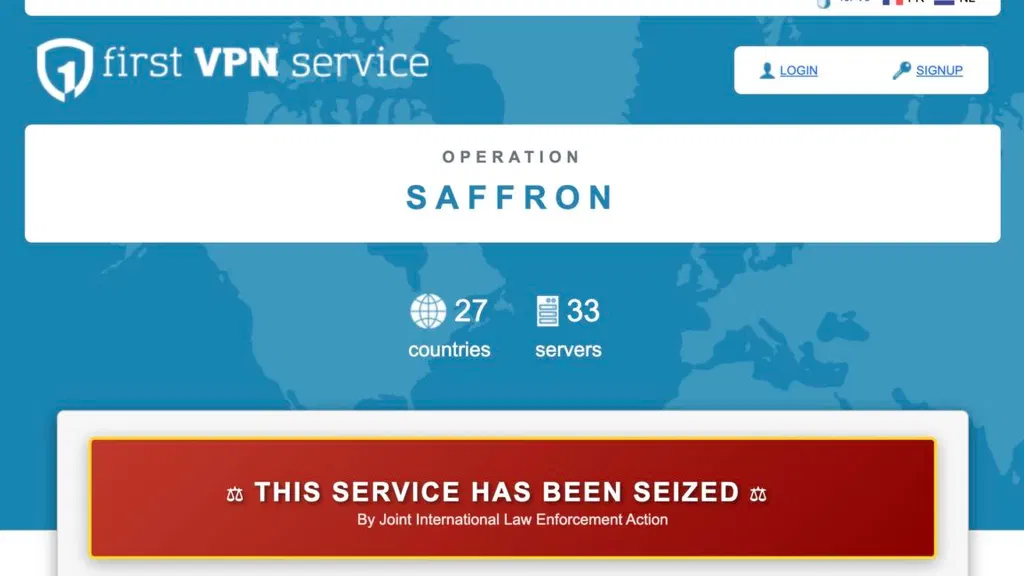
European law enforcement has successfully dismantled a VPN service known as First VPN, which was used by cybercriminals for various illegal activities. The operation, led by France and the Netherlands with support from Europol, resulted in the seizure of the VPN's domain and the arrest of its operator. Thousands of users who believed they were safe while using the service have been identified as part of the investigation.
- ▪Europol announced the dismantling of First VPN, a service used for ransomware attacks and other crimes.
- ▪The operation revealed thousands of users linked to cybercrime activities worldwide.
- ▪First VPN was promoted on Russian-speaking forums as a trusted tool for evading law enforcement.
Ars Technica files mainly under tech. We currently carry 191 of its stories.
Story provenance
Source · retrieval · rights · ranking — open for full record
inspect →
Story provenance
Attribution is not the same as permission. This drawer separates discovery metadata, excerpts, WeSearch-generated summaries, reuse status, and whether the publisher receives the visit. Nothing here claims a legal grant the publisher has not made.
Record
| Original publisher | Ars Technica |
| Canonical URL | https://arstechnica.com/tech-policy/2026/05/police-boast-of-hacking-vpn-where-criminals-believed-themselves-to-be-safe/ |
| Publication time | Fri, 22 May 2026 18:43:54 +0000 |
| Retrieval time | 2026-05-22T18:57:02.755Z |
| Last seen | 2026-05-22T18:57:02.755Z |
| Headline source | Publisher (no WeSearch rewrite) |
| Excerpt source | publisher body |
| Excerpt method | First ~120 words (~800 chars) of extracted publisher body, fair-use limited. |
| Summary | WeSearch · cerebras-chat (WeSearch summarizer) |
| Summary source text | contentText |
| Citation coverage | Summary is a WeSearch-generated derivative; primary citation is the original publisher URL. |
| Cluster | tuAjD70XzQVv |
| Cluster logic | Grouped by semantic title/content similarity across sources within a rolling window. Same-publisher template collisions are excluded from coverage comparison. |
| Ranking reason | Story pages are not engagement-ranked. Hub feeds use recency, with optional source-diversified chronological ordering (cap consecutive stories per source). No personalized ranking. |
| Publisher visit | Yes — open original |
| Substitutes article? | No — link-out required for full text |
Rights status (four layers)
WeSearch handling by dimension
| Indexing | May the item be indexed (stored, ranked, made findable)? | Allowed |
| Snippet | May a short excerpt of the publisher's text be shown? | Allowed |
| AI summary | May WeSearch generate its own short summary of the article? | Limited |
| Retrieval / RAG | May the content be exposed for third-party retrieval-augmented generation? | Not asserted |
| Model training | May the content be used to train AI models? | Not asserted |
| Commercial reuse | May the content be reused commercially? | Not permitted |
Basis: Derived from the published RSS/Atom feed. Contact: [email protected]. Reviewed: 2026-07-24.
Opening excerpt (first ~120 words) tap to expand
Plenty of logs Police boast of hacking VPN where criminals “believed themselves to be safe” Law enforcement intercepted VPN traffic, seized domains, and arrested its operator. Jon Brodkin – May 22, 2026 2:43 pm | 2 Screenshot of the First VPN website after its domain was seized. Screenshot of the First VPN website after its domain was seized. Text settings Story text Size Small Standard Large Width * Standard Wide Links Standard Orange * Subscribers only Learn more Minimize to nav European law enforcement say they hacked into a VPN (virtual private network) service used for ransomware attacks and other crimes, and identified thousands of users before shutting the VPN down and arresting its administrator.
…
Excerpt limited to ~120 words for fair-use compliance. The full article is at Ars Technica.
Discussion
0 commentsMore from Ars Technica