Rare 1,700-year-old relic accidentally uncovered during child’s hunt stuns archaeologists
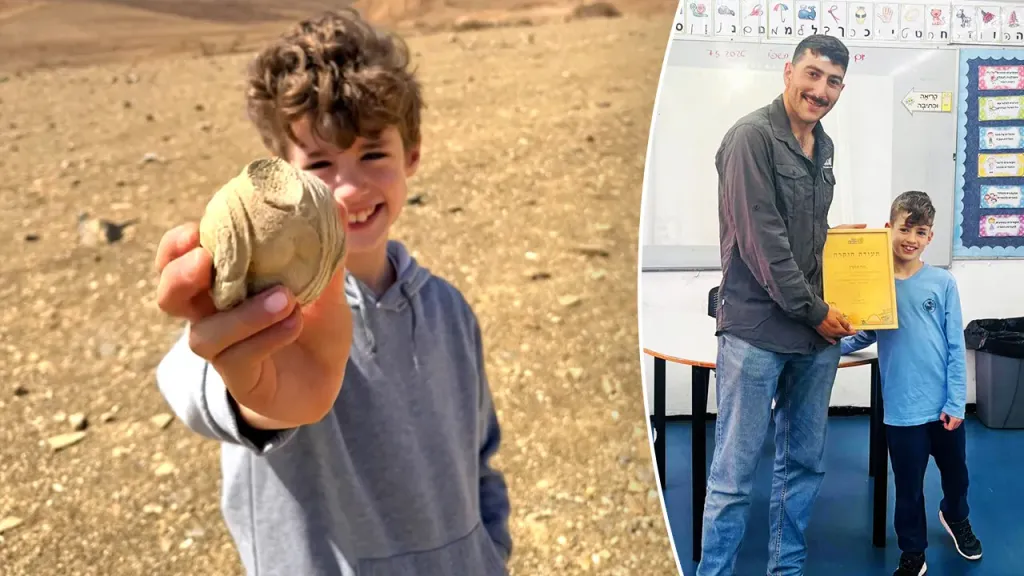
An 8-year-old boy in Israel discovered a 1,700-year-old Roman statuette fragment while on a family trip to the Negev Desert. The artifact, measuring six by six centimeters, depicts part of a human figure with intricately sculpted fabric. Archaeologists were surprised by the find, which adds to the historical significance of the region.
- ▪The statuette fragment dates back to the fourth century A.D.
- ▪The boy found the artifact while searching for interesting items during a family retreat.
- ▪The fragment was shown to an archaeologist who recognized its historical value.
2 outlets in our directory ran this story, first to last over 4 hours. All of the coverage we found sits in one bucket: right. That one-sidedness is itself worth noticing.
Fox News — Latest files mainly under news. We currently carry 3,522 of its stories.
Story provenance
Source · retrieval · rights · ranking — open for full record
inspect →
Story provenance
Attribution is not the same as permission. This drawer separates discovery metadata, excerpts, WeSearch-generated summaries, reuse status, and whether the publisher receives the visit. Nothing here claims a legal grant the publisher has not made.
Record
| Original publisher | Fox News — Latest |
| Canonical URL | https://www.foxnews.com/travel/rare-1700-year-old-relic-accidentally-uncovered-childs-hunt-stuns-archaeologists |
| Publication time | Mon, 25 May 2026 08:00:36 -0400 |
| Retrieval time | 2026-05-25T12:07:36.708Z |
| Last seen | 2026-05-25T12:07:36.708Z |
| Headline source | Publisher (no WeSearch rewrite) |
| Excerpt source | publisher body |
| Excerpt method | First ~120 words (~800 chars) of extracted publisher body, fair-use limited. |
| Summary | WeSearch · cerebras-chat (WeSearch summarizer) |
| Summary source text | contentText |
| Citation coverage | Summary is a WeSearch-generated derivative; primary citation is the original publisher URL. |
| Cluster | tTAtRo1X5Hyn · 2 stories |
| Cluster logic | Grouped by semantic title/content similarity across sources within a rolling window. Same-publisher template collisions are excluded from coverage comparison. |
| Ranking reason | Story pages are not engagement-ranked. Hub feeds use recency, with optional source-diversified chronological ordering (cap consecutive stories per source). No personalized ranking. |
| Publisher visit | Yes — open original |
| Substitutes article? | No — link-out required for full text |
Rights status (four layers)
WeSearch handling by dimension
| Indexing | May the item be indexed (stored, ranked, made findable)? | Allowed |
| Snippet | May a short excerpt of the publisher's text be shown? | Allowed |
| AI summary | May WeSearch generate its own short summary of the article? | Limited |
| Retrieval / RAG | May the content be exposed for third-party retrieval-augmented generation? | Not asserted |
| Model training | May the content be used to train AI models? | Not asserted |
| Commercial reuse | May the content be reused commercially? | Not permitted |
Basis: Derived from the published RSS/Atom feed. Contact: [email protected]. Reviewed: 2026-07-24.
Opening excerpt (first ~120 words) tap to expand
Discovery Rare 1,700-year-old relic accidentally uncovered during child’s hunt stuns archaeologists Boy found small fragment while searching for items during family trip to Negev Desert By Andrea Margolis Fox News Published May 25, 2026 8:00am EDT Facebook Twitter Threads Flipboard Comments Print Email Add Fox News on Google close Video Hidden Roman villa complex emerges unexpectedly in picturesque English countryside after hobbyist's lucky find An amateur metal detectorist's discovery of Roman cavalry swords led archaeologists to uncover a 2,000-year-old settlement in Gloucestershire, including a villa and building remains.
…
Excerpt limited to ~120 words for fair-use compliance. The full article is at Fox News — Latest.
Discussion
0 commentsMore from Fox News — Latest