
Rare plant makes comeback from brink of extinction
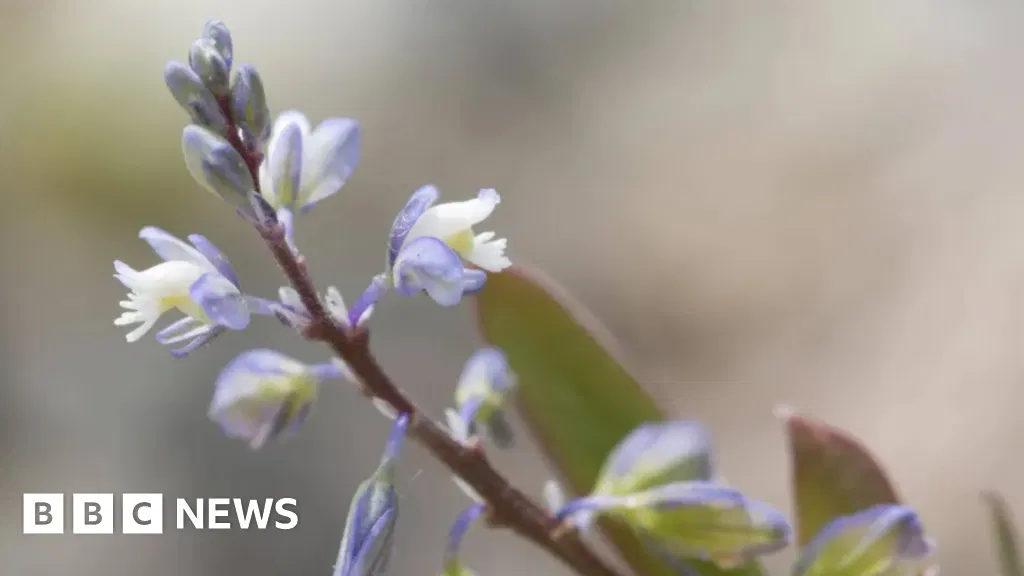
The Kentish milkwort, a rare plant, has seen a significant recovery from near extinction, with a seven-fold increase in its population. This resurgence is attributed to a long-term conservation project involving multiple organizations and local volunteers. The successful reintroduction efforts at Queendown Warren have resulted in the largest population of this species in the UK.
- ▪The Kentish milkwort population increased from a handful of plants to 1,245 at Queendown Warren.
- ▪Conservation efforts began in 2013 when the plant was on the verge of extinction.
- ▪The project involved collaboration between Kent Wildlife Trust, The Species Recovery Trust, and Royal Botanic Gardens, Kew.
BBC News — Science publishes from United Kingdom and files mainly under science. We currently carry 119 of its stories.
Story provenance
Source · retrieval · rights · ranking — open for full record
inspect →
Story provenance
Attribution is not the same as permission. This drawer separates discovery metadata, excerpts, WeSearch-generated summaries, reuse status, and whether the publisher receives the visit. Nothing here claims a legal grant the publisher has not made.
Record
| Original publisher | BBC News — Science |
| Canonical URL | https://www.bbc.com/news/articles/c4g0w899j5yo?at_medium=RSS&at_campaign=rss |
| Publication time | Sat, 16 May 2026 06:18:48 GMT |
| Retrieval time | 2026-05-16T06:45:47.240Z |
| Last seen | 2026-05-16T06:46:01.140Z |
| Headline source | Publisher (no WeSearch rewrite) |
| Excerpt source | publisher body |
| Excerpt method | First ~120 words (~800 chars) of extracted publisher body, fair-use limited. |
| Summary | WeSearch · cerebras-chat (WeSearch summarizer) |
| Summary source text | contentText |
| Citation coverage | Summary is a WeSearch-generated derivative; primary citation is the original publisher URL. |
| Cluster | hULUBwqE7b7z |
| Cluster logic | Grouped by semantic title/content similarity across sources within a rolling window. Same-publisher template collisions are excluded from coverage comparison. |
| Ranking reason | Story pages are not engagement-ranked. Hub feeds use recency, with optional source-diversified chronological ordering (cap consecutive stories per source). No personalized ranking. |
| Publisher visit | Yes — open original |
| Substitutes article? | No — link-out required for full text |
Rights status (four layers)
WeSearch handling by dimension
| Indexing | May the item be indexed (stored, ranked, made findable)? | Allowed |
| Snippet | May a short excerpt of the publisher's text be shown? | Allowed |
| AI summary | May WeSearch generate its own short summary of the article? | Limited |
| Retrieval / RAG | May the content be exposed for third-party retrieval-augmented generation? | Not asserted |
| Model training | May the content be used to train AI models? | Not asserted |
| Commercial reuse | May the content be reused commercially? | Not permitted |
Basis: Derived from the published RSS/Atom feed. Contact: [email protected]. Reviewed: 2026-07-24.
Opening excerpt (first ~120 words) tap to expand
Rare plant makes comeback from brink of extinction21 hours agoShareSaveAdd as preferred on GoogleDanielle MalgwiSouth EastKent Wildlife TrustThe Kentish milkwort nearly went extinct in 2013, according to expertsA wildlife trust is celebrating the recovery of a near-extinct plant after recording a seven-fold population increase.A total of 1,245 self-sown Kentish milkwort plants have been recorded at Queendown Warren, near Sittingbourne in Kent – the largest population of the species in the UK.The growth is the result of a long-term conservation project led by Kent Wildlife Trust, in partnership with The Species Recovery Trust, Royal Botanic Gardens, Kew and local volunteers, it said.Area warden Rob Pennington said: "We hope the population will continue to spread in the coming years and…
Excerpt limited to ~120 words for fair-use compliance. The full article is at BBC News — Science.
Discussion
0 commentsMore from BBC News — Science


