Red Dwarf Stars May Devour Rocky Planets, Showing Unexpected Lithium Levels
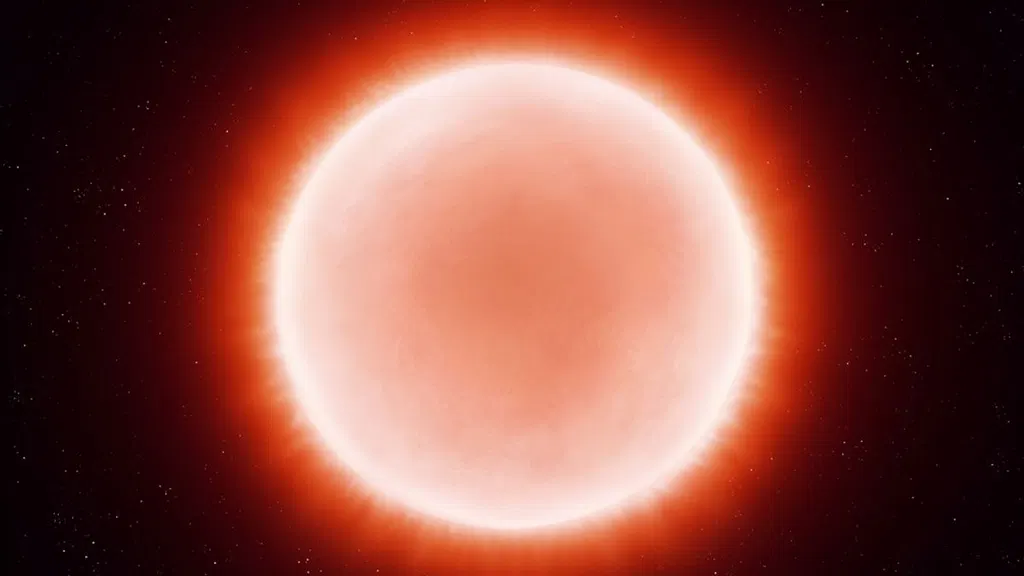
A new study suggests that red dwarf stars may be consuming Earth-like planets, leading to unexpected lithium levels in their atmospheres. Researchers found six red dwarf stars with significant lithium content, which is typically depleted in stars. The study proposes that these stars likely engulfed surrounding planets, providing insight into the evolution of planetary systems.
- ▪Red dwarf stars can consume nearby planets, leading to unusual lithium levels.
- ▪A study identified six red dwarf stars with significant lithium, contrary to expectations.
- ▪The researchers suggest that planetary engulfment is the most likely explanation for the lithium abundance.
Discover Magazine files mainly under science. We currently carry 86 of its stories.
Story provenance
Source · retrieval · rights · ranking — open for full record
inspect →
Story provenance
Attribution is not the same as permission. This drawer separates discovery metadata, excerpts, WeSearch-generated summaries, reuse status, and whether the publisher receives the visit. Nothing here claims a legal grant the publisher has not made.
Record
| Original publisher | Discover Magazine |
| Canonical URL | https://www.discovermagazine.com/red-dwarf-stars-may-devour-rocky-planets-showing-unexpected-lithium-levels-49178 |
| Publication time | Fri, 29 May 2026 22:00:00 GMT |
| Retrieval time | 2026-05-29T22:05:35.831Z |
| Last seen | 2026-05-29T22:05:35.831Z |
| Headline source | Publisher (no WeSearch rewrite) |
| Excerpt source | publisher body |
| Excerpt method | First ~120 words (~800 chars) of extracted publisher body, fair-use limited. |
| Summary | WeSearch · cerebras-chat (WeSearch summarizer) |
| Summary source text | contentText |
| Citation coverage | Summary is a WeSearch-generated derivative; primary citation is the original publisher URL. |
| Cluster | mhEtSRDMvZ5k |
| Cluster logic | Grouped by semantic title/content similarity across sources within a rolling window. Same-publisher template collisions are excluded from coverage comparison. |
| Ranking reason | Story pages are not engagement-ranked. Hub feeds use recency, with optional source-diversified chronological ordering (cap consecutive stories per source). No personalized ranking. |
| Publisher visit | Yes — open original |
| Substitutes article? | No — link-out required for full text |
Rights status (four layers)
WeSearch handling by dimension
| Indexing | May the item be indexed (stored, ranked, made findable)? | Allowed |
| Snippet | May a short excerpt of the publisher's text be shown? | Allowed |
| AI summary | May WeSearch generate its own short summary of the article? | Limited |
| Retrieval / RAG | May the content be exposed for third-party retrieval-augmented generation? | Not asserted |
| Model training | May the content be used to train AI models? | Not asserted |
| Commercial reuse | May the content be reused commercially? | Not permitted |
Basis: Derived from the published RSS/Atom feed. Contact: [email protected]. Reviewed: 2026-07-24.
Opening excerpt (first ~120 words) tap to expand
Stars sometimes partake in feasts of planetary proportions, completely engulfing neighboring worlds. Even red dwarf stars, which are much smaller than our sun, can consume the planets orbiting them, sparking a phenomenon long speculated about. A new study published in the Monthly Notices of the Astronomical Society has uncovered evidence suggesting that red dwarf stars engulf Earth-like planets by homing in on a key element: Lithium. Normally, lithium is depleted in stars, as it can’t stand the intense heat from nuclear fusion reactions that occur within the stellar core.
…
Excerpt limited to ~120 words for fair-use compliance. The full article is at Discover Magazine.
Discussion
0 commentsMore from Discover Magazine