Resource dominance reshaping Trump’s rivalry with China
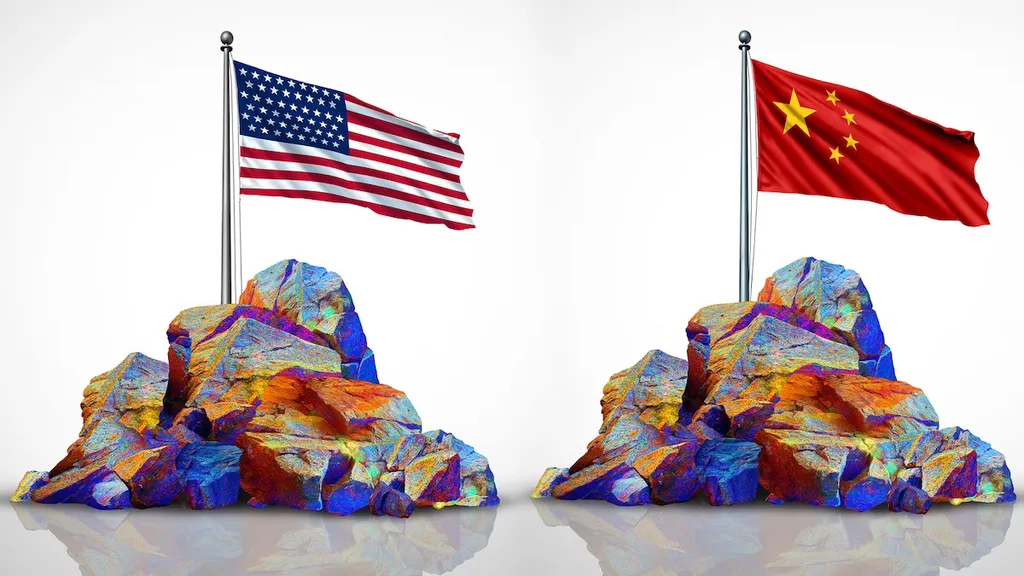
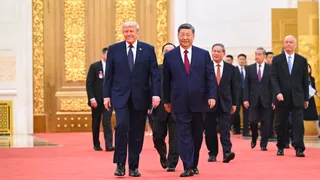
The recent Trump-Xi summit highlighted the growing significance of resource diplomacy in global geopolitics. China committed to purchasing substantial amounts of US agricultural products and increasing oil imports, while the US aims to secure its own critical mineral supply chains. This shift reflects a broader strategy where resources are viewed as tools of geopolitical leverage rather than mere commodities.
- ▪China agreed to purchase at least US$17 billion annually in US agricultural products through 2028.
- ▪The US administration views resource dependency as a vulnerability and resource dominance as a geopolitical advantage.
- ▪Washington is pursuing a policy of critical mineral securitization to reduce reliance on China.
Asia Times files mainly under world. We currently carry 156 of its stories.
Story provenance
Source · retrieval · rights · ranking — open for full record
inspect →
Story provenance
Attribution is not the same as permission. This drawer separates discovery metadata, excerpts, WeSearch-generated summaries, reuse status, and whether the publisher receives the visit. Nothing here claims a legal grant the publisher has not made.
Record
| Original publisher | Asia Times |
| Canonical URL | https://asiatimes.com/2026/05/resource-dominance-reshaping-trumps-rivalry-with-china/ |
| Publication time | Mon, 25 May 2026 08:43:21 +0000 |
| Retrieval time | 2026-05-25T08:47:36.517Z |
| Last seen | 2026-05-25T08:47:36.517Z |
| Headline source | Publisher (no WeSearch rewrite) |
| Excerpt source | publisher body |
| Excerpt method | First ~120 words (~800 chars) of extracted publisher body, fair-use limited. |
| Summary | WeSearch · cerebras-chat (WeSearch summarizer) |
| Summary source text | contentText |
| Citation coverage | Summary is a WeSearch-generated derivative; primary citation is the original publisher URL. |
| Cluster | gTv7Cz-easFs |
| Cluster logic | Grouped by semantic title/content similarity across sources within a rolling window. Same-publisher template collisions are excluded from coverage comparison. |
| Ranking reason | Story pages are not engagement-ranked. Hub feeds use recency, with optional source-diversified chronological ordering (cap consecutive stories per source). No personalized ranking. |
| Publisher visit | Yes — open original |
| Substitutes article? | No — link-out required for full text |
Rights status (four layers)
WeSearch handling by dimension
| Indexing | May the item be indexed (stored, ranked, made findable)? | Allowed |
| Snippet | May a short excerpt of the publisher's text be shown? | Allowed |
| AI summary | May WeSearch generate its own short summary of the article? | Limited |
| Retrieval / RAG | May the content be exposed for third-party retrieval-augmented generation? | Not asserted |
| Model training | May the content be used to train AI models? | Not asserted |
| Commercial reuse | May the content be reused commercially? | Not permitted |
Basis: Derived from the published RSS/Atom feed. Contact: [email protected]. Reviewed: 2026-07-24.
Opening excerpt (first ~120 words) tap to expand
The recent Trump-Xi summit in Beijing revealed how deeply commodities have become embedded in 21st-century geopolitics. Far beyond a conventional trade negotiation, the summit effectively showcased the emergence of resource diplomacy as a central organizing principle of great-power competition. According to White House statements, China agreed to purchase at least US$17 billion annually in US agricultural products through 2028, supplementing earlier soybean agreements concluded in 2025. Beijing also reportedly committed to restoring market access for American beef and poultry. Separately, US officials earlier claimed that Beijing had agreed to increase purchases of US oil in response to the ongoing instability around the Strait of Hormuz.
…
Excerpt limited to ~120 words for fair-use compliance. The full article is at Asia Times.
Discussion
0 commentsMore from Asia Times