Sampling DNA from animal skin parchments
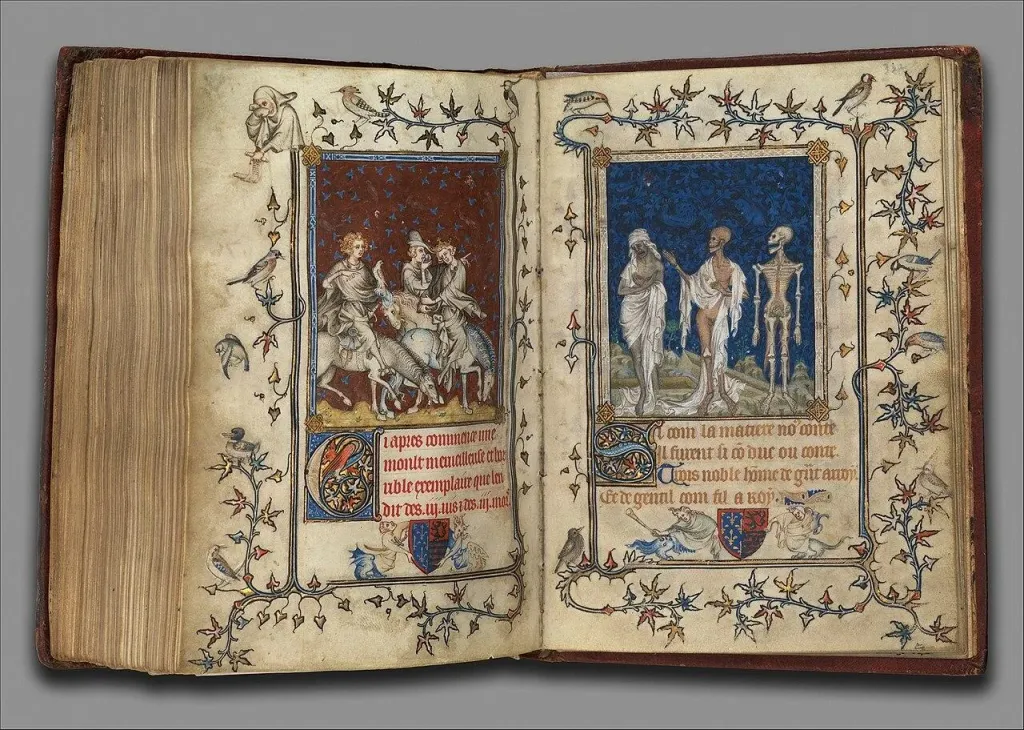
Researchers have developed a non-invasive method to study DNA in ancient parchment manuscripts. This technique allows for the analysis of genetic material from animal skins used in manuscripts dating from the eighth century to the early 1900s. The findings provide insights into livestock farming, parchment production, and trade patterns across various regions.
- ▪The study focused on 91 parchment manuscripts preserved at Duke University’s library.
- ▪Researchers used small cytology brushes to collect DNA samples without damaging the manuscripts.
- ▪About 58 percent of the samples passed quality tests for species identification, revealing a predominance of sheep, cattle, and goats.
Hacker News (Newest) files mainly under programming. We currently carry 5,306 of its stories.
Story provenance
Source · retrieval · rights · ranking — open for full record
inspect →
Story provenance
Attribution is not the same as permission. This drawer separates discovery metadata, excerpts, WeSearch-generated summaries, reuse status, and whether the publisher receives the visit. Nothing here claims a legal grant the publisher has not made.
Record
| Original publisher | Archaeology News Online Magazine |
| Canonical URL | https://archaeologymag.com/2026/05/nondestructive-dna-sampling-of-ancient-parchments/ |
| Publication time | Mon, 25 May 2026 16:58:44 +0000 |
| Retrieval time | 2026-05-25T17:07:38.860Z |
| Last seen | 2026-05-25T17:07:38.860Z |
| Headline source | Publisher (no WeSearch rewrite) |
| Excerpt source | publisher body |
| Excerpt method | First ~120 words (~800 chars) of extracted publisher body, fair-use limited. |
| Summary | WeSearch · cerebras-chat (WeSearch summarizer) |
| Summary source text | contentText |
| Citation coverage | Summary is a WeSearch-generated derivative; primary citation is the original publisher URL. |
| Cluster | ipA_sK6-nGR1 |
| Cluster logic | Grouped by semantic title/content similarity across sources within a rolling window. Same-publisher template collisions are excluded from coverage comparison. |
| Ranking reason | Story pages are not engagement-ranked. Hub feeds use recency, with optional source-diversified chronological ordering (cap consecutive stories per source). No personalized ranking. |
| Publisher visit | Yes — open original |
| Substitutes article? | No — link-out required for full text |
Rights status (four layers)
WeSearch handling by dimension
| Indexing | May the item be indexed (stored, ranked, made findable)? | Allowed |
| Snippet | May a short excerpt of the publisher's text be shown? | Allowed |
| AI summary | May WeSearch generate its own short summary of the article? | Limited |
| Retrieval / RAG | May the content be exposed for third-party retrieval-augmented generation? | Not asserted |
| Model training | May the content be used to train AI models? | Not asserted |
| Commercial reuse | May the content be reused commercially? | Not permitted |
Basis: Derived from the published RSS/Atom feed. Contact: [email protected]. Reviewed: 2026-07-24.
Opening excerpt (first ~120 words) tap to expand
Researchers have developed a way to study DNA preserved inside ancient parchment manuscripts without damaging the documents. The work focused on animal skins used to produce manuscripts dating from the eighth century through the early 1900s. By analyzing genetic material from those skins, the team gathered new information about livestock farming, parchment production, and trade patterns across several regions.Jean Le Noir. Miniature from Psalter of Bonne of Luxemburg, 1348-49 CE, Metropolitan Museum. Public domainThe study appeared in the journal Manuscript Studies. Researchers examined 91 parchment manuscripts preserved at Duke University’s David M. Rubenstein Rare Book & Manuscript Library.
…
Excerpt limited to ~120 words for fair-use compliance. The full article is at Archaeology News Online Magazine.
Discussion
0 commentsMore from Archaeology News Online Magazine