Sesame-Sized Sea Slug Found Off Taiwan Turns Out to Be a New Species
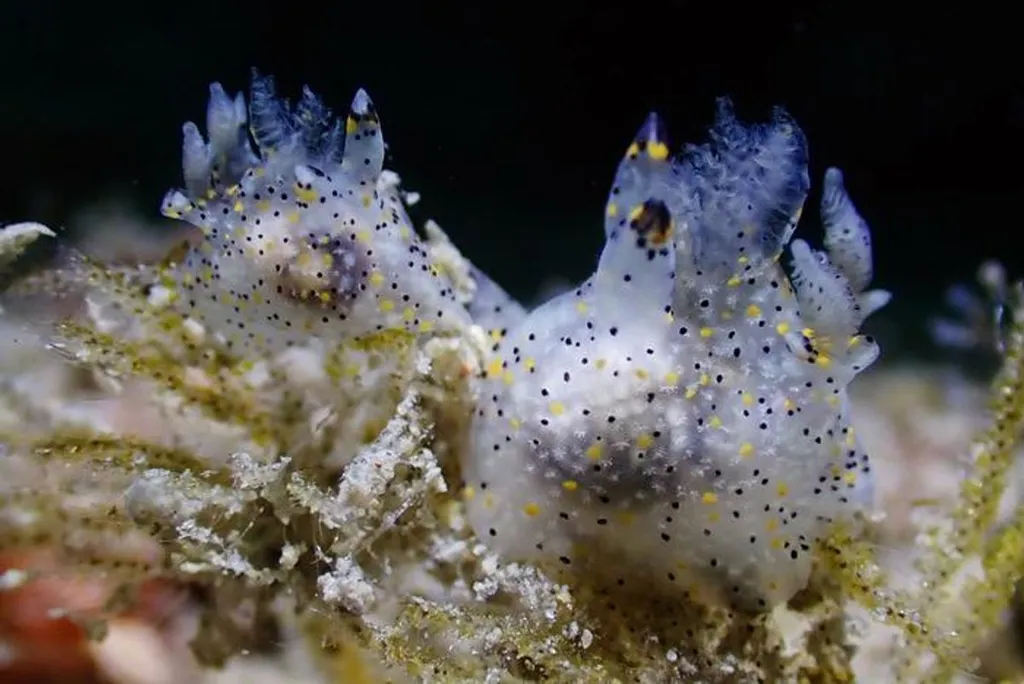
A new species of sea slug, Thecacera sesama, has been discovered off the northeastern coast of Taiwan. The tiny nudibranch, measuring less than three millimeters, was identified after years of research and specimen collection. This discovery highlights the biodiversity of Taiwan's marine ecosystems and the potential for more undiscovered species in the region.
- ▪Ho-Yeung Chan first spotted the sea slug in 2019 while diving in Taiwan.
- ▪The species was officially described in a scientific paper published in ZooKeys after extensive research.
- ▪The nudibranch is less than three millimeters long and has distinctive black and yellow markings.
2 outlets in our directory ran this story, first to last over 10 hours. All of the coverage we found sits in one bucket: centre. That one-sidedness is itself worth noticing.
Discover Magazine files mainly under science. We currently carry 86 of its stories.
Story provenance
Source · retrieval · rights · ranking — open for full record
inspect →
Story provenance
Attribution is not the same as permission. This drawer separates discovery metadata, excerpts, WeSearch-generated summaries, reuse status, and whether the publisher receives the visit. Nothing here claims a legal grant the publisher has not made.
Record
| Original publisher | Discover Magazine |
| Canonical URL | https://www.discovermagazine.com/sesame-sized-sea-slug-found-off-taiwan-turns-out-to-be-a-new-species-49154 |
| Publication time | Tue, 26 May 2026 21:30:00 GMT |
| Retrieval time | 2026-05-26T21:37:54.807Z |
| Last seen | 2026-05-26T21:37:54.807Z |
| Headline source | Publisher (no WeSearch rewrite) |
| Excerpt source | publisher body |
| Excerpt method | First ~120 words (~800 chars) of extracted publisher body, fair-use limited. |
| Summary | WeSearch · cerebras-chat (WeSearch summarizer) |
| Summary source text | contentText |
| Citation coverage | Summary is a WeSearch-generated derivative; primary citation is the original publisher URL. |
| Cluster | 3ujpEfn5R3tf · 2 stories |
| Cluster logic | Grouped by semantic title/content similarity across sources within a rolling window. Same-publisher template collisions are excluded from coverage comparison. |
| Ranking reason | Story pages are not engagement-ranked. Hub feeds use recency, with optional source-diversified chronological ordering (cap consecutive stories per source). No personalized ranking. |
| Publisher visit | Yes — open original |
| Substitutes article? | No — link-out required for full text |
Rights status (four layers)
WeSearch handling by dimension
| Indexing | May the item be indexed (stored, ranked, made findable)? | Allowed |
| Snippet | May a short excerpt of the publisher's text be shown? | Allowed |
| AI summary | May WeSearch generate its own short summary of the article? | Limited |
| Retrieval / RAG | May the content be exposed for third-party retrieval-augmented generation? | Not asserted |
| Model training | May the content be used to train AI models? | Not asserted |
| Commercial reuse | May the content be reused commercially? | Not permitted |
Basis: Derived from the published RSS/Atom feed. Contact: [email protected]. Reviewed: 2026-07-24.
Opening excerpt (first ~120 words) tap to expand
Ho-Yeung Chan was on a recreational dive off northeastern Taiwan in 2019 when he noticed something odd clinging to what looked like a clump of underwater moss — a speck of an animal, barely the size of a grain of rice, translucent white and freckled, with tiny black and yellow dots.He took a photo. Then he messaged a sea slug expert on Facebook.That message to researcher Hsini Lin was the moment Chan learned he might be looking at something science had never formally described.
…
Excerpt limited to ~120 words for fair-use compliance. The full article is at Discover Magazine.
Discussion
0 commentsMore from Discover Magazine