Shannon Got AI This Far. Kolmogorov Shows Where It Stops
The article discusses the differences between Shannon entropy and Kolmogorov complexity in the context of artificial intelligence. It highlights how modern deep learning models optimize for statistical regularities rather than understanding the underlying processes that generate data. This distinction is illustrated through a historical experiment by Michelson and Morley that failed to support the prevailing theory of light propagation.
- ▪Shannon entropy measures the statistics of outputs, while Kolmogorov complexity measures the structure of the generating process.
- ▪Deep learning models are trained to minimize cross-entropy loss, focusing on statistical regularities in data.
- ▪The article uses the failed Michelson-Morley experiment to illustrate the difference between expected and observed results in scientific inquiry.
Hacker News (AI / LLM) files mainly under ai. We currently carry 3,381 of its stories.
Story provenance
Source · retrieval · rights · ranking — open for full record
inspect →
Story provenance
Attribution is not the same as permission. This drawer separates discovery metadata, excerpts, WeSearch-generated summaries, reuse status, and whether the publisher receives the visit. Nothing here claims a legal grant the publisher has not made.
Record
| Original publisher | Medium |
| Canonical URL | https://medium.com/@vishalmisra/shannon-got-ai-this-far-kolmogorov-shows-where-it-stops-c81825f89ca0 |
| Publication time | Sun, 24 May 2026 01:58:46 +0000 |
| Retrieval time | 2026-05-24T02:07:28.716Z |
| Last seen | 2026-05-24T02:07:28.716Z |
| Headline source | Publisher (no WeSearch rewrite) |
| Excerpt source | publisher body |
| Excerpt method | First ~120 words (~800 chars) of extracted publisher body, fair-use limited. |
| Summary | WeSearch · cerebras-chat (WeSearch summarizer) |
| Summary source text | contentText |
| Citation coverage | Summary is a WeSearch-generated derivative; primary citation is the original publisher URL. |
| Cluster | YI3Ezwqr_M-y |
| Cluster logic | Grouped by semantic title/content similarity across sources within a rolling window. Same-publisher template collisions are excluded from coverage comparison. |
| Ranking reason | Story pages are not engagement-ranked. Hub feeds use recency, with optional source-diversified chronological ordering (cap consecutive stories per source). No personalized ranking. |
| Publisher visit | Yes — open original |
| Substitutes article? | No — link-out required for full text |
Rights status (four layers)
WeSearch handling by dimension
| Indexing | May the item be indexed (stored, ranked, made findable)? | Allowed |
| Snippet | May a short excerpt of the publisher's text be shown? | Allowed |
| AI summary | May WeSearch generate its own short summary of the article? | Limited |
| Retrieval / RAG | May the content be exposed for third-party retrieval-augmented generation? | Not asserted |
| Model training | May the content be used to train AI models? | Not asserted |
| Commercial reuse | May the content be reused commercially? | Not permitted |
Basis: Derived from the published RSS/Atom feed. Contact: [email protected]. Reviewed: 2026-07-24.
Opening excerpt (first ~120 words) tap to expand
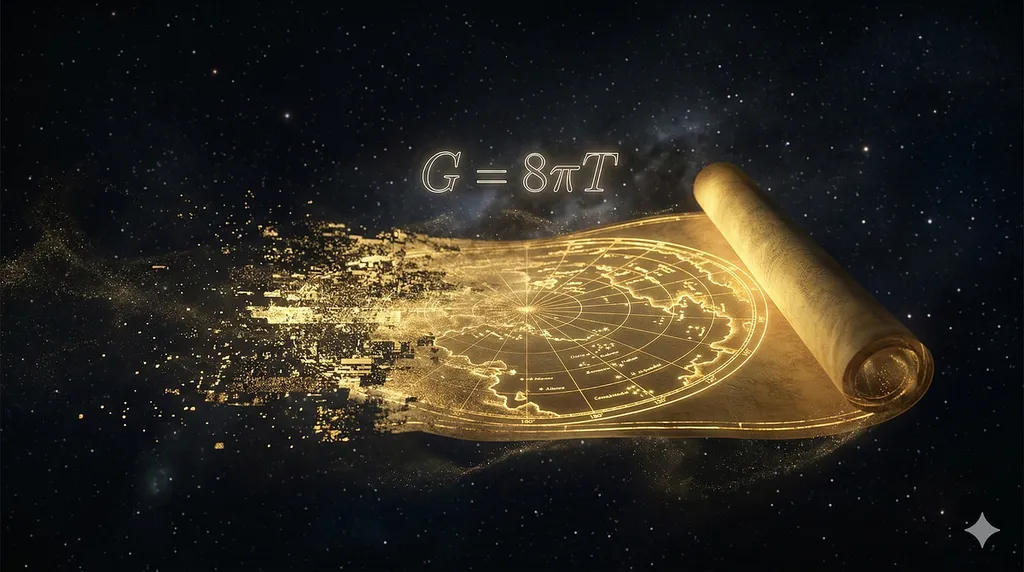
Shannon Got AI This Far. Kolmogorov Shows Where It Stops.Vishal Misra14 min read·Mar 7, 2026--30ListenShareThis post previewed a conversation I recorded with Martin Casado for the a16z podcast. The ideas here came up in that discussion — consider this the written version.Press enter or click to view image in full sizeA map that knows everything it has seen — and nothing beyond its edge. The equation above it was not found by fitting curves. It was found by asking what kind of universe would make the anomalies disappear.Here is a question that sounds like a trick but isn’t: is the number pi simple or complex?Your intuition probably says complex. The digits go on forever without repeating. No pattern jumps out.
…
Excerpt limited to ~120 words for fair-use compliance. The full article is at Medium.
Discussion
0 commentsMore from Medium