
'Six eggs used to be £1' - why everyday essentials cost so much more now
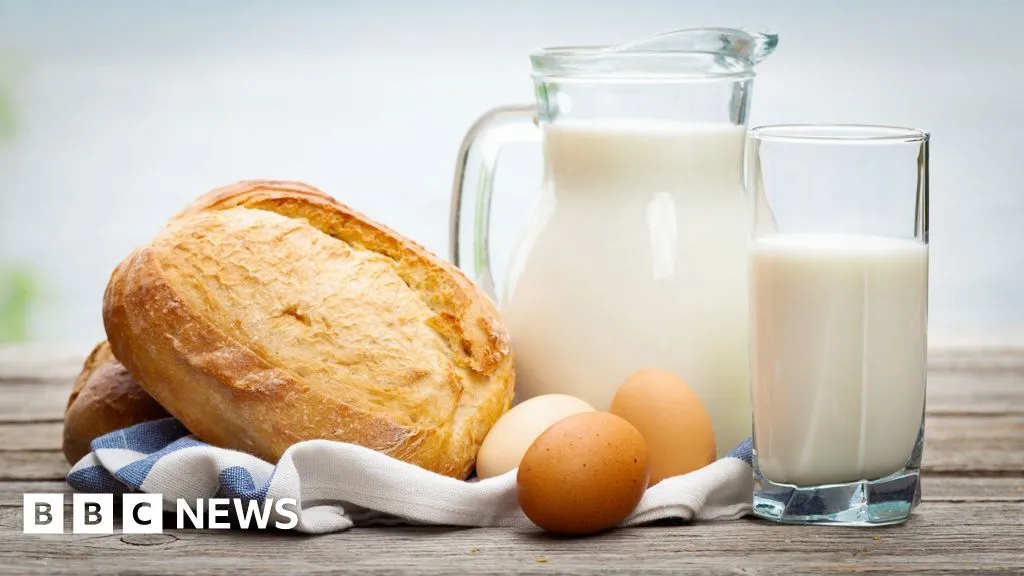
The prices of everyday essentials like eggs, milk, and bread have significantly increased over the past few years. Factors contributing to these price hikes include supply shortages, rising energy costs, and geopolitical conflicts affecting grain supplies. Despite the rising costs for consumers, supermarkets are reportedly not profiting as their operating expenses have also increased.
- ▪The price of six free-range eggs has risen from £1 in 2022 to £1.80 today due to avian flu and rising energy costs.
- ▪Milk prices have increased from £1.29 for four pints in 2022 to £1.65, impacted by energy price hikes and global oversupply.
- ▪A loaf of basic white bread has gone up from 65p in 2022 to 74p, influenced by rising wheat costs and global supply fears.
BBC News — Business publishes from United Kingdom and files mainly under business. We currently carry 180 of its stories.
Story provenance
Source · retrieval · rights · ranking — open for full record
inspect →
Story provenance
Attribution is not the same as permission. This drawer separates discovery metadata, excerpts, WeSearch-generated summaries, reuse status, and whether the publisher receives the visit. Nothing here claims a legal grant the publisher has not made.
Record
| Original publisher | BBC News — Business |
| Canonical URL | https://www.bbc.com/news/articles/cd6pw4zg5p9o?at_medium=RSS&at_campaign=rss |
| Publication time | Sun, 24 May 2026 01:02:55 GMT |
| Retrieval time | 2026-05-24T01:07:28.629Z |
| Last seen | 2026-05-24T01:07:28.629Z |
| Headline source | Publisher (no WeSearch rewrite) |
| Excerpt source | publisher body |
| Excerpt method | First ~120 words (~800 chars) of extracted publisher body, fair-use limited. |
| Summary | WeSearch · cerebras-chat (WeSearch summarizer) |
| Summary source text | contentText |
| Citation coverage | Summary is a WeSearch-generated derivative; primary citation is the original publisher URL. |
| Cluster | irr-sXyH4pBl |
| Cluster logic | Grouped by semantic title/content similarity across sources within a rolling window. Same-publisher template collisions are excluded from coverage comparison. |
| Ranking reason | Story pages are not engagement-ranked. Hub feeds use recency, with optional source-diversified chronological ordering (cap consecutive stories per source). No personalized ranking. |
| Publisher visit | Yes — open original |
| Substitutes article? | No — link-out required for full text |
Rights status (four layers)
WeSearch handling by dimension
| Indexing | May the item be indexed (stored, ranked, made findable)? | Allowed |
| Snippet | May a short excerpt of the publisher's text be shown? | Allowed |
| AI summary | May WeSearch generate its own short summary of the article? | Limited |
| Retrieval / RAG | May the content be exposed for third-party retrieval-augmented generation? | Not asserted |
| Model training | May the content be used to train AI models? | Not asserted |
| Commercial reuse | May the content be reused commercially? | Not permitted |
Basis: Derived from the published RSS/Atom feed. Contact: [email protected]. Reviewed: 2026-07-24.
Opening excerpt (first ~120 words) tap to expand
'Six eggs used to be £1' - why everyday essentials cost so much more nowJust nowShareSaveAdd as preferred on GooglePhil Leake,Data journalist,Jennifer Meierhans,Business reporterandRachel Clun,Business reporterGetty ImagesMany of us have been buying the same supermarket staples every week for years.And we've all noticed when we get to the checkout the total is higher now than it used to be - even when we've left luxuries like wine or biscuits on the shelf.But you might be surprised to know exactly how much everyday essentials like milk, bread and eggs used to cost just a few years ago compared to what you're paying today.
…
Excerpt limited to ~120 words for fair-use compliance. The full article is at BBC News — Business.
Discussion
0 commentsMore from BBC News — Business


