Texas <em>T. Rex</em>’ Is an 80-Million-Year-Old Mosasaur the Size of a School Bus
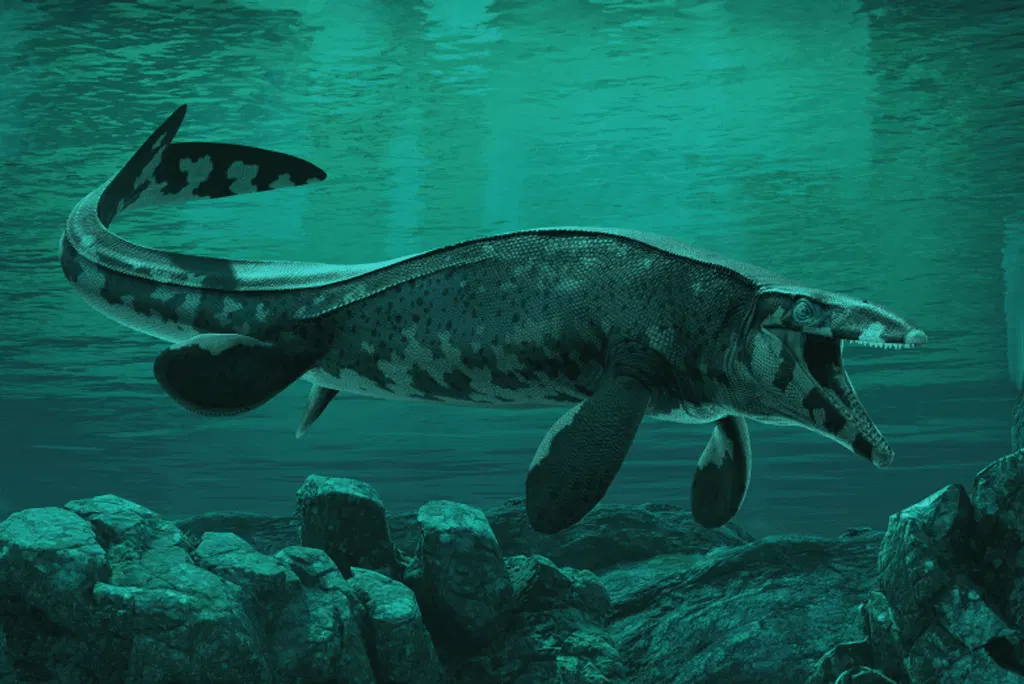
Researchers have identified a new species of giant mosasaur named Tylosaurus rex, which lived around 80 million years ago. This discovery not only adds a significant predator to the fossil record but also updates the understanding of mosasaur evolution. The findings highlight Texas as an important site for studying ancient marine ecosystems.
- ▪Tylosaurus rex was named meaning 'king of the tylosaurs' and measured up to 43 feet long.
- ▪The species exhibited powerful jaw and neck muscles, suggesting it was built to overpower prey.
- ▪Evidence of injuries among specimens indicates aggressive behavior, possibly territorial or cannibalistic interactions.
Discover Magazine files mainly under science. We currently carry 86 of its stories.
Story provenance
Source · retrieval · rights · ranking — open for full record
inspect →
Story provenance
Attribution is not the same as permission. This drawer separates discovery metadata, excerpts, WeSearch-generated summaries, reuse status, and whether the publisher receives the visit. Nothing here claims a legal grant the publisher has not made.
Record
| Original publisher | Discover Magazine |
| Canonical URL | https://www.discovermagazine.com/texas-t-rex-is-an-80-million-year-old-mosasaur-the-size-of-a-school-bus-49164 |
| Publication time | Wed, 27 May 2026 22:15:00 GMT |
| Retrieval time | 2026-05-27T22:23:05.954Z |
| Last seen | 2026-05-27T22:23:05.954Z |
| Headline source | Publisher (no WeSearch rewrite) |
| Excerpt source | publisher body |
| Excerpt method | First ~120 words (~800 chars) of extracted publisher body, fair-use limited. |
| Summary | WeSearch · cerebras-chat (WeSearch summarizer) |
| Summary source text | contentText |
| Citation coverage | Summary is a WeSearch-generated derivative; primary citation is the original publisher URL. |
| Cluster | iLTmzBQAi-Dr |
| Cluster logic | Grouped by semantic title/content similarity across sources within a rolling window. Same-publisher template collisions are excluded from coverage comparison. |
| Ranking reason | Story pages are not engagement-ranked. Hub feeds use recency, with optional source-diversified chronological ordering (cap consecutive stories per source). No personalized ranking. |
| Publisher visit | Yes — open original |
| Substitutes article? | No — link-out required for full text |
Rights status (four layers)
WeSearch handling by dimension
| Indexing | May the item be indexed (stored, ranked, made findable)? | Allowed |
| Snippet | May a short excerpt of the publisher's text be shown? | Allowed |
| AI summary | May WeSearch generate its own short summary of the article? | Limited |
| Retrieval / RAG | May the content be exposed for third-party retrieval-augmented generation? | Not asserted |
| Model training | May the content be used to train AI models? | Not asserted |
| Commercial reuse | May the content be reused commercially? | Not permitted |
Basis: Derived from the published RSS/Atom feed. Contact: [email protected]. Reviewed: 2026-07-24.
Opening excerpt (first ~120 words) tap to expand
Texas now has its own T. rex that ruled the Cretaceous seas with an iron jaw.Researchers have identified a previously unknown species of giant mosasaur, a fearsome marine reptile that once prowled the ancient seas. And in a fitting nod to its sheer dominance, scientists named it Tylosaurus rex — meaning “king of the tylosaurs.”Published in the Bulletin of the American Museum of Natural History, the discovery does more than just add a new gargantuan predator to the fossil record. It is also changing how paleontologists study mosasaur evolution, thanks to an update to a scientific dataset that has remained largely the same for decades.“These are living, breathing animals. They weren’t movie monsters.
…
Excerpt limited to ~120 words for fair-use compliance. The full article is at Discover Magazine.
Discussion
0 commentsMore from Discover Magazine