The border killing fields separating India and Bangladesh
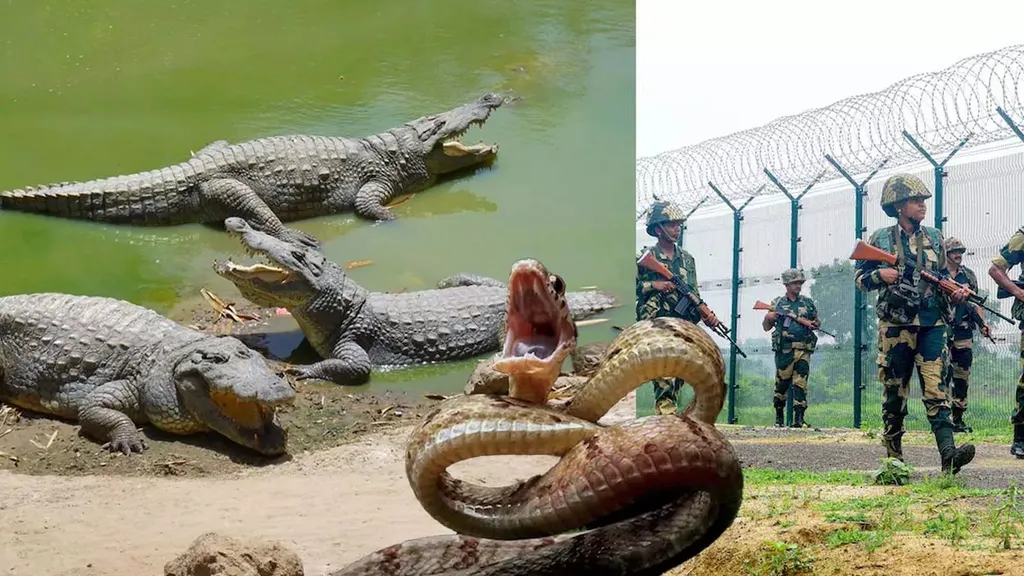
On the night of May 31, near Sadipur in Jashore’s Sharsha upazila, Border Guard Bangladesh (BGB) personnel found a section of the border fence cut open. On the far side stood more than a dozen people, among them women and children, driven to the spot by India’s Border Security Force (BSF) and told to start walking. A flag meeting was convened between the two forces, but nothing was resolved.
- ▪On the night of May 31, near Sadipur in Jashore’s Sharsha upazila, Border Guard Bangladesh (BGB) personnel found a section of the border fence cut open.
- ▪On the far side stood more than a dozen people, among them women and children, driven to the spot by India’s Border Security Force (BSF) and told to start walking.
- ▪A flag meeting was convened between the two forces, but nothing was resolved.
Asia Times files mainly under world. We currently carry 156 of its stories.
Story provenance
Source · retrieval · rights · ranking — open for full record
inspect →
Story provenance
Attribution is not the same as permission. This drawer separates discovery metadata, excerpts, WeSearch-generated summaries, reuse status, and whether the publisher receives the visit. Nothing here claims a legal grant the publisher has not made.
Record
| Original publisher | Asia Times |
| Canonical URL | https://asiatimes.com/2026/07/the-border-killing-fields-separating-india-and-bangladesh/ |
| Publication time | Wed, 08 Jul 2026 06:09:55 +0000 |
| Retrieval time | 2026-07-08T06:23:00.174Z |
| Last seen | 2026-07-08T06:23:00.174Z |
| Headline source | Publisher (no WeSearch rewrite) |
| Excerpt source | publisher body |
| Excerpt method | First ~120 words (~800 chars) of extracted publisher body, fair-use limited. |
| Summary | WeSearch · cerebras-chat (WeSearch summarizer) |
| Summary source text | contentText |
| Citation coverage | Summary is a WeSearch-generated derivative; primary citation is the original publisher URL. |
| Cluster | HiGkjgEs3MKk |
| Cluster logic | Grouped by semantic title/content similarity across sources within a rolling window. Same-publisher template collisions are excluded from coverage comparison. |
| Ranking reason | Story pages are not engagement-ranked. Hub feeds use recency, with optional source-diversified chronological ordering (cap consecutive stories per source). No personalized ranking. |
| Publisher visit | Yes — open original |
| Substitutes article? | No — link-out required for full text |
Rights status (four layers)
WeSearch handling by dimension
| Indexing | May the item be indexed (stored, ranked, made findable)? | Allowed |
| Snippet | May a short excerpt of the publisher's text be shown? | Allowed |
| AI summary | May WeSearch generate its own short summary of the article? | Limited |
| Retrieval / RAG | May the content be exposed for third-party retrieval-augmented generation? | Not asserted |
| Model training | May the content be used to train AI models? | Not asserted |
| Commercial reuse | May the content be reused commercially? | Not permitted |
Basis: Derived from the published RSS/Atom feed. Contact: [email protected]. Reviewed: 2026-07-24.
Opening excerpt (first ~120 words) tap to expand
On the night of May 31, near Sadipur in Jashore’s Sharsha upazila, Border Guard Bangladesh (BGB) personnel found a section of the border fence cut open. On the far side stood more than a dozen people, among them women and children, driven to the spot by India’s Border Security Force (BSF) and told to start walking. The BGB turned them back. A flag meeting was convened between the two forces, but nothing was resolved. The desperate group spent the night in the strip of mud and wire that officials politely refer to as no man’s land. That image — families stranded between two nations that each refuse to claim them — says more about the present state of India-Bangladesh relations than any joint statement will. And it is no longer an isolated incident.
…
Excerpt limited to ~120 words for fair-use compliance. The full article is at Asia Times.
Discussion
0 commentsMore from Asia Times