The Gulf’s African Aftershocks

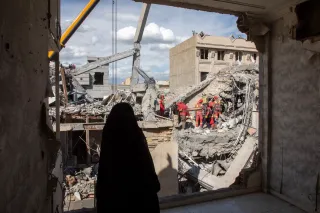
The ongoing Iran war is intensifying proxy conflicts in the Red Sea and Horn of Africa. It has polarized regional actors and exacerbated existing tensions over resources and influence. The United States and Europe face significant geopolitical challenges as these regions become battlegrounds for competing interests.
- ▪The Iran war has increased the importance of the Red Sea region and deepened existing rivalries.
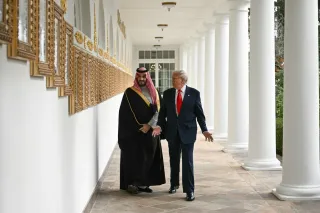
- ▪Israel and the UAE have strengthened their alliance, while Egypt, Saudi Arabia, and Turkey are countering this coalition.
- ▪The conflict has heightened perceptions of Israel as a destabilizing force in the region.
Foreign Policy files mainly under world. We currently carry 81 of its stories.
Story provenance
Source · retrieval · rights · ranking — open for full record
inspect →
Story provenance
Attribution is not the same as permission. This drawer separates discovery metadata, excerpts, WeSearch-generated summaries, reuse status, and whether the publisher receives the visit. Nothing here claims a legal grant the publisher has not made.
Record
| Original publisher | Foreign Policy |
| Canonical URL | https://foreignpolicy.com/2026/05/18/gulf-africa-iran-war-fuel-hormuz-sudan-saudi-uae-oil-proxy/ |
| Publication time | Mon, 18 May 2026 14:22:31 +0000 |
| Retrieval time | 2026-05-18T14:39:56.607Z |
| Last seen | 2026-05-18T14:39:56.607Z |
| Headline source | Publisher (no WeSearch rewrite) |
| Excerpt source | publisher body |
| Excerpt method | First ~120 words (~800 chars) of extracted publisher body, fair-use limited. |
| Summary | WeSearch · cerebras-chat (WeSearch summarizer) |
| Summary source text | contentText |
| Citation coverage | Summary is a WeSearch-generated derivative; primary citation is the original publisher URL. |
| Cluster | 2IfSQr8lpn-W |
| Cluster logic | Grouped by semantic title/content similarity across sources within a rolling window. Same-publisher template collisions are excluded from coverage comparison. |
| Ranking reason | Story pages are not engagement-ranked. Hub feeds use recency, with optional source-diversified chronological ordering (cap consecutive stories per source). No personalized ranking. |
| Publisher visit | Yes — open original |
| Substitutes article? | No — link-out required for full text |
Rights status (four layers)
WeSearch handling by dimension
| Indexing | May the item be indexed (stored, ranked, made findable)? | Allowed |
| Snippet | May a short excerpt of the publisher's text be shown? | Allowed |
| AI summary | May WeSearch generate its own short summary of the article? | Limited |
| Retrieval / RAG | May the content be exposed for third-party retrieval-augmented generation? | Not asserted |
| Model training | May the content be used to train AI models? | Not asserted |
| Commercial reuse | May the content be reused commercially? | Not permitted |
Basis: Derived from the published RSS/Atom feed. Contact: [email protected]. Reviewed: 2026-07-24.
Opening excerpt (first ~120 words) tap to expand
Argument An expert’s point of view on a current event. The Gulf’s African Aftershocks How the Iran war is deepening proxy conflicts around the Red Sea and the Horn of Africa. By Liam Karr, a the Africa Team Lead for the Critical Threats Project at the American Enterprise Institute. Flags of Israel and Somaliland fly alongside each other at the entrance to a fruit farm between the capital city of Hargeisa and Port city of Berbera in Somaliland on February 19. Flags of Israel and Somaliland fly alongside each other at the entrance to a fruit farm between the capital city of Hargeisa and the port city of Berbera in Somaliland on Feb. 19. Tony Karumba/ AFP via Getty Images Get audio access with any FP subscription.
…
Excerpt limited to ~120 words for fair-use compliance. The full article is at Foreign Policy.
Discussion
0 commentsMore from Foreign Policy