The International Space Station has sprung a new leak
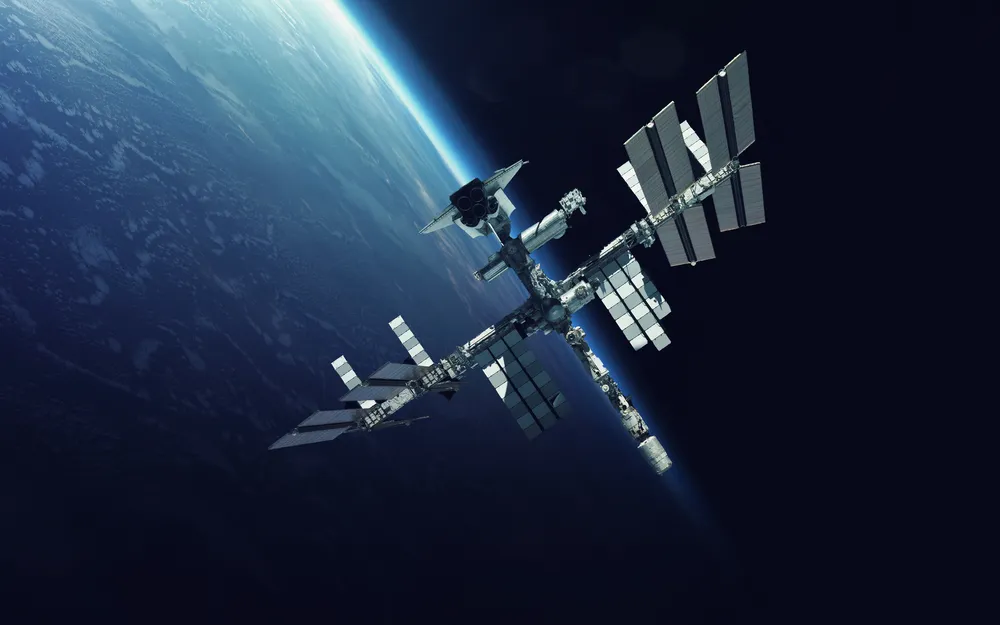
The International Space Station has experienced a new air leak in the Russian segment, raising concerns about the safety of the crew. This leak, which was previously thought to be resolved, has been classified as a significant risk by Russian space agency Roscosmos. NASA and Roscosmos are currently monitoring the situation while hoping to maintain the ISS until a commercial replacement is available.
- ▪The air leak was first detected in 2019 and had been thought to be resolved until recently.
- ▪The leak has been classified as a '5' on Roscosmos's risk matrix, indicating a high likelihood and potential for catastrophic failure.
- ▪NASA aims to keep the ISS operational until at least 2032, pending the development of commercial space stations.
2 outlets in our directory ran this story, first to last over 8 hours. All of the coverage we found sits in one bucket: centre. That one-sidedness is itself worth noticing.
- ▪ Aussie astronaut invited to International Space Station — The Sydney Morning Herald
Boing Boing files mainly under tech. We currently carry 375 of its stories.
Story provenance
Source · retrieval · rights · ranking — open for full record
inspect →
Story provenance
Attribution is not the same as permission. This drawer separates discovery metadata, excerpts, WeSearch-generated summaries, reuse status, and whether the publisher receives the visit. Nothing here claims a legal grant the publisher has not made.
Record
| Original publisher | Boing Boing |
| Canonical URL | https://boingboing.net/2026/05/25/the-international-space-station-has-sprung-a-new-leak.html |
| Publication time | Mon, 25 May 2026 18:43:45 +0000 |
| Retrieval time | 2026-05-25T19:12:40.459Z |
| Last seen | 2026-05-25T19:12:40.459Z |
| Headline source | Publisher (no WeSearch rewrite) |
| Excerpt source | publisher body |
| Excerpt method | First ~120 words (~800 chars) of extracted publisher body, fair-use limited. |
| Summary | WeSearch · cerebras-chat (WeSearch summarizer) |
| Summary source text | contentText |
| Citation coverage | Summary is a WeSearch-generated derivative; primary citation is the original publisher URL. |
| Cluster | 8-HCBDoWlX2S · 2 stories |
| Cluster logic | Grouped by semantic title/content similarity across sources within a rolling window. Same-publisher template collisions are excluded from coverage comparison. |
| Ranking reason | Story pages are not engagement-ranked. Hub feeds use recency, with optional source-diversified chronological ordering (cap consecutive stories per source). No personalized ranking. |
| Publisher visit | Yes — open original |
| Substitutes article? | No — link-out required for full text |
Rights status (four layers)
WeSearch handling by dimension
| Indexing | May the item be indexed (stored, ranked, made findable)? | Allowed |
| Snippet | May a short excerpt of the publisher's text be shown? | Allowed |
| AI summary | May WeSearch generate its own short summary of the article? | Limited |
| Retrieval / RAG | May the content be exposed for third-party retrieval-augmented generation? | Not asserted |
| Model training | May the content be used to train AI models? | Not asserted |
| Commercial reuse | May the content be reused commercially? | Not permitted |
Basis: Derived from the published RSS/Atom feed. Contact: [email protected]. Reviewed: 2026-07-24.
Opening excerpt (first ~120 words) tap to expand
The International Space Station has sprung a new leak Séamus Bellamy 11:43 am Mon May 25, 2026 Vadim Sadovski/shutterstock.com The very premium air leak in the very best Russian part of the International Space Station is back! It may well be that, much like the Little Green Men in Crimea, it's been there waiting to cause trouble all along. If you're not a space person, let us bring you up to speed. Back in 2019, Roscosmos — Russia's space agency — gave NASA a heads-up that it had detected an air leak in the tunnel connecting Russia's ISS Zvezda Service Module to the rest of the space station. From then until last year, the two space agencies and their astronauts have been trying to run down exactly where the leak was in the tunnel.
…
Excerpt limited to ~120 words for fair-use compliance. The full article is at Boing Boing.
Discussion
0 commentsMore from Boing Boing