This 70-Million-Year-Old Dinosaur Looked Like a Raptor, but May Have Fished Like a Heron
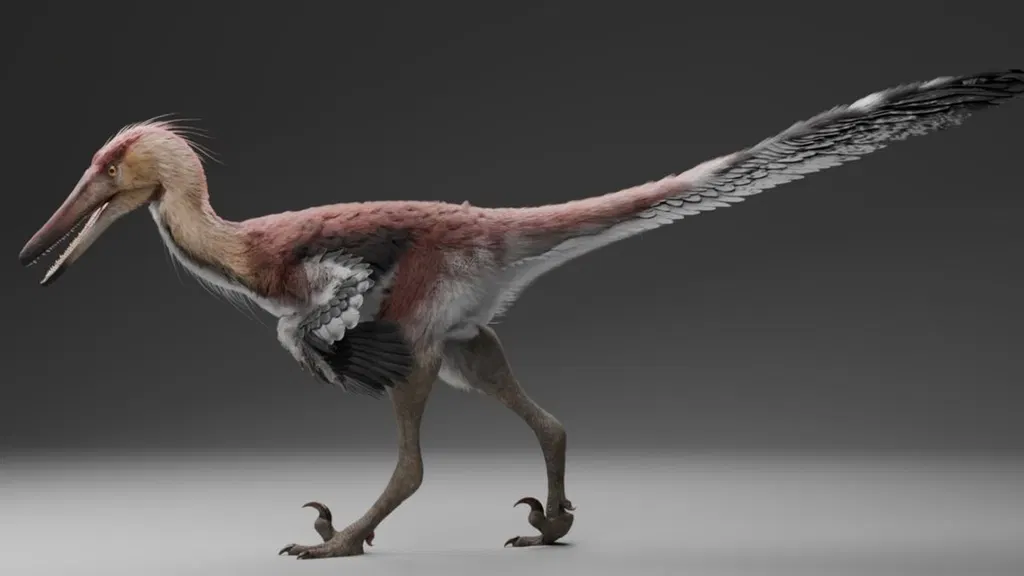
A newly discovered dinosaur, Kank australis, lived 70 million years ago in southern Patagonia and exhibited unique hunting behaviors. Unlike typical raptors, Kank is believed to have fished like a heron, using specialized neck structures for striking at water. This finding challenges previous assumptions about raptor behavior and adds complexity to the dinosaur family tree.
- ▪Kank australis lived 70 million years ago and is from the unenlagiids family of theropod dinosaurs.
- ▪Its specialized neck structures suggest it hunted fish, contrasting with the common portrayal of raptors as terrestrial predators.
- ▪Fossils of Kank were found alongside fish remains, indicating that fish were likely a primary part of its diet.
2 outlets in our directory ran this story. All of the coverage we found sits in one bucket: centre. That one-sidedness is itself worth noticing.
Discover Magazine files mainly under science. We currently carry 86 of its stories.
Story provenance
Source · retrieval · rights · ranking — open for full record
inspect →
Story provenance
Attribution is not the same as permission. This drawer separates discovery metadata, excerpts, WeSearch-generated summaries, reuse status, and whether the publisher receives the visit. Nothing here claims a legal grant the publisher has not made.
Record
| Original publisher | Discover Magazine |
| Canonical URL | https://www.discovermagazine.com/this-70-million-year-old-dinosaur-looked-like-a-raptor-but-may-have-fished-like-a-heron-49169 |
| Publication time | Thu, 28 May 2026 23:01:00 GMT |
| Retrieval time | 2026-05-28T23:04:38.351Z |
| Last seen | 2026-05-28T23:04:38.351Z |
| Headline source | Publisher (no WeSearch rewrite) |
| Excerpt source | publisher body |
| Excerpt method | First ~120 words (~800 chars) of extracted publisher body, fair-use limited. |
| Summary | WeSearch · cerebras-chat (WeSearch summarizer) |
| Summary source text | contentText |
| Citation coverage | Summary is a WeSearch-generated derivative; primary citation is the original publisher URL. |
| Cluster | 9ZuLQBf1qazZ · 2 stories |
| Cluster logic | Grouped by semantic title/content similarity across sources within a rolling window. Same-publisher template collisions are excluded from coverage comparison. |
| Ranking reason | Story pages are not engagement-ranked. Hub feeds use recency, with optional source-diversified chronological ordering (cap consecutive stories per source). No personalized ranking. |
| Publisher visit | Yes — open original |
| Substitutes article? | No — link-out required for full text |
Rights status (four layers)
WeSearch handling by dimension
| Indexing | May the item be indexed (stored, ranked, made findable)? | Allowed |
| Snippet | May a short excerpt of the publisher's text be shown? | Allowed |
| AI summary | May WeSearch generate its own short summary of the article? | Limited |
| Retrieval / RAG | May the content be exposed for third-party retrieval-augmented generation? | Not asserted |
| Model training | May the content be used to train AI models? | Not asserted |
| Commercial reuse | May the content be reused commercially? | Not permitted |
Basis: Derived from the published RSS/Atom feed. Contact: [email protected]. Reviewed: 2026-07-24.
Opening excerpt (first ~120 words) tap to expand
Picture a Velociraptor. Chances are, it's running, jaws open, claws out, closing in on something smaller and slower. Now picture one standing perfectly still at the edge of a river, neck coiled, watching the water. That's Kank australis.A newly described dinosaur from southern Patagonia, K. australis or Kank, lived 70 million years ago, and its bones suggest it hunted like a heron, not like a raptor is supposed to. The findings, published this week in the Journal of Vertebrate Paleontology, add a strange new creature to the dinosaur family tree and challenge the way we think about what raptors could be.“This suggests Kank may have been an active fisher, contrasting with common portrayal of raptors as agile terrestrial predators, like Velociraptor from the Northern Hemisphere,” lead author…
Excerpt limited to ~120 words for fair-use compliance. The full article is at Discover Magazine.
Discussion
0 commentsMore from Discover Magazine