This Single-Celled Organism Turns into a Cannibalistic Predator, Swallowing Its Own Relatives Whole
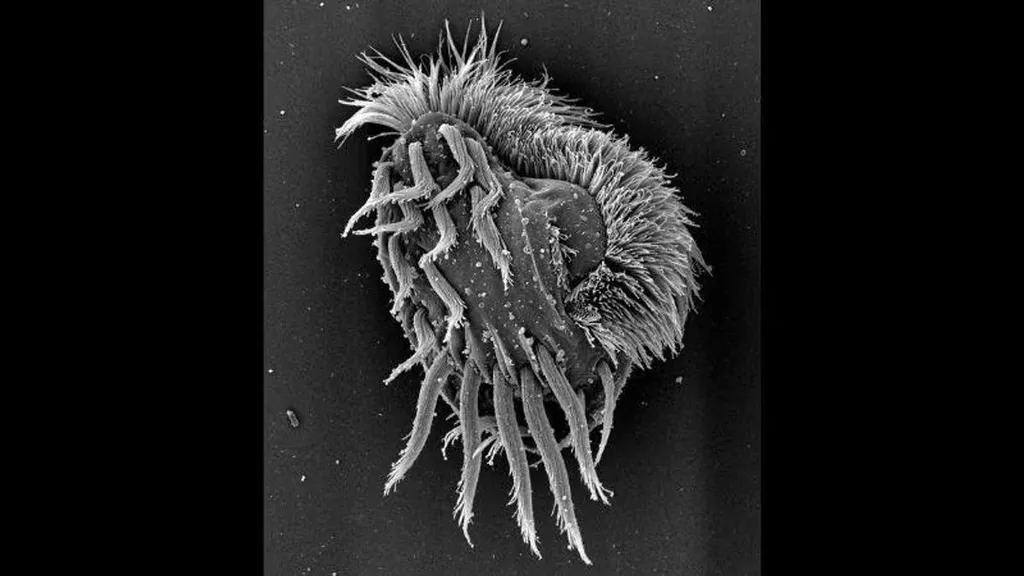
A newly discovered single-celled organism from Curaçao, named Euplotes gigatrox, exhibits cannibalistic behavior by transforming into larger predators that consume their own relatives. Researchers found that these 'supergiants' represent a distinct life stage, shifting their diet from bacteria to hunting smaller members of their population. This discovery challenges traditional views of single-celled organisms and provides insights into cellular development and behavior under changing environmental conditions.
- ▪Euplotes gigatrox can transform into oversized 'supergiants' that hunt and consume their own relatives.
- ▪The transformation occurs when food becomes scarce, allowing a small percentage of the population to exploit a different food source.
- ▪Supergiants exhibit significant changes in cellular activity, indicating they represent a distinct life stage rather than just larger versions of normal cells.
Discover Magazine files mainly under science. We currently carry 86 of its stories.
Story provenance
Source · retrieval · rights · ranking — open for full record
inspect →
Story provenance
Attribution is not the same as permission. This drawer separates discovery metadata, excerpts, WeSearch-generated summaries, reuse status, and whether the publisher receives the visit. Nothing here claims a legal grant the publisher has not made.
Record
| Original publisher | Discover Magazine |
| Canonical URL | https://www.discovermagazine.com/this-single-celled-organism-turns-into-a-cannibalistic-predator-swallowing-its-own-relatives-whole-49199 |
| Publication time | Wed, 03 Jun 2026 20:20:00 GMT |
| Retrieval time | 2026-06-03T20:28:28.991Z |
| Last seen | 2026-06-03T20:28:28.991Z |
| Headline source | Publisher (no WeSearch rewrite) |
| Excerpt source | publisher body |
| Excerpt method | First ~120 words (~800 chars) of extracted publisher body, fair-use limited. |
| Summary | WeSearch · cerebras-chat (WeSearch summarizer) |
| Summary source text | contentText |
| Citation coverage | Summary is a WeSearch-generated derivative; primary citation is the original publisher URL. |
| Cluster | OtKZ7IUsEDfA |
| Cluster logic | Grouped by semantic title/content similarity across sources within a rolling window. Same-publisher template collisions are excluded from coverage comparison. |
| Ranking reason | Story pages are not engagement-ranked. Hub feeds use recency, with optional source-diversified chronological ordering (cap consecutive stories per source). No personalized ranking. |
| Publisher visit | Yes — open original |
| Substitutes article? | No — link-out required for full text |
Rights status (four layers)
WeSearch handling by dimension
| Indexing | May the item be indexed (stored, ranked, made findable)? | Allowed |
| Snippet | May a short excerpt of the publisher's text be shown? | Allowed |
| AI summary | May WeSearch generate its own short summary of the article? | Limited |
| Retrieval / RAG | May the content be exposed for third-party retrieval-augmented generation? | Not asserted |
| Model training | May the content be used to train AI models? | Not asserted |
| Commercial reuse | May the content be reused commercially? | Not permitted |
Basis: Derived from the published RSS/Atom feed. Contact: [email protected]. Reviewed: 2026-07-24.
Opening excerpt (first ~120 words) tap to expand
Single-celled organisms aren't usually thought of as dramatic. With no organs, nervous systems, or complex bodies, they often seem like the simplest forms of life imaginable. But a newly discovered microbe from the Caribbean island of Curaçao is challenging that assumption in spectacular fashion. Researchers from the Rensselaer Polytechnic Institute (RPI) have identified a species that can transform into a giant cannibalistic version of itself, abandoning its usual diet to stalk, capture, and devour its own relatives.The discovery, published in the Proceedings of the National Academy of Sciences (PNAS), suggests that even a single cell can undergo surprisingly complex developmental changes, features scientists have traditionally associated with animals."This is a single cell doing…
Excerpt limited to ~120 words for fair-use compliance. The full article is at Discover Magazine.
Discussion
0 commentsMore from Discover Magazine