Those 100-foot Korowai tree houses are mostly built for film crews
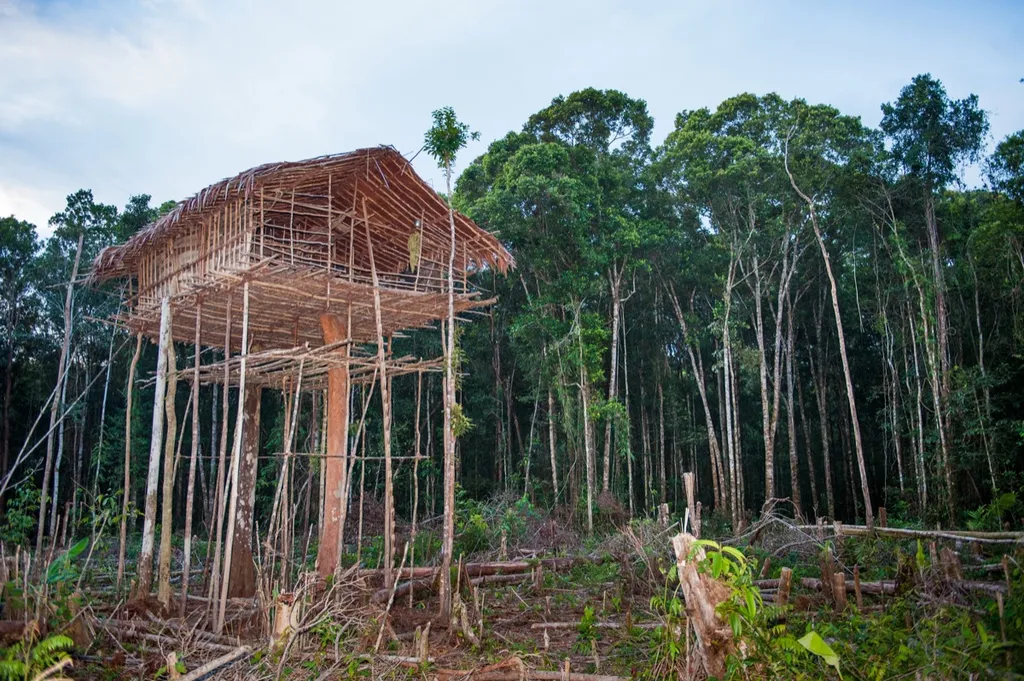
The Korowai tree houses, often depicted in media as traditional dwellings, are primarily constructed for film crews and tourists. These structures, which can reach heights of 100 feet, have become props rather than authentic homes. The fascination with these tree houses stems from a Western narrative that misrepresents their cultural significance and practicality.
- ▪The BBC staged a scene featuring a Korowai family climbing a tree house, leading to public apologies after the truth was revealed.
- ▪Most Korowai tree houses are built for tourists and film crews, with local men earning between $300 to $1,000 for these constructions.
- ▪Research indicates that the height of these tree houses is more related to fear of neighbors than to prestige.
Boing Boing files mainly under tech. We currently carry 375 of its stories.
Story provenance
Source · retrieval · rights · ranking — open for full record
inspect →
Story provenance
Attribution is not the same as permission. This drawer separates discovery metadata, excerpts, WeSearch-generated summaries, reuse status, and whether the publisher receives the visit. Nothing here claims a legal grant the publisher has not made.
Record
| Original publisher | Boing Boing |
| Canonical URL | https://boingboing.net/2026/05/18/those-100-foot-korowai-tree-houses-are-mostly-built-for-film-crews.html |
| Publication time | Mon, 18 May 2026 22:04:45 +0000 |
| Retrieval time | 2026-05-18T22:44:56.955Z |
| Last seen | 2026-05-18T22:44:56.955Z |
| Headline source | Publisher (no WeSearch rewrite) |
| Excerpt source | publisher body |
| Excerpt method | First ~120 words (~800 chars) of extracted publisher body, fair-use limited. |
| Summary | WeSearch · cerebras-chat (WeSearch summarizer) |
| Summary source text | contentText |
| Citation coverage | Summary is a WeSearch-generated derivative; primary citation is the original publisher URL. |
| Cluster | gzT7VBoVKbQf |
| Cluster logic | Grouped by semantic title/content similarity across sources within a rolling window. Same-publisher template collisions are excluded from coverage comparison. |
| Ranking reason | Story pages are not engagement-ranked. Hub feeds use recency, with optional source-diversified chronological ordering (cap consecutive stories per source). No personalized ranking. |
| Publisher visit | Yes — open original |
| Substitutes article? | No — link-out required for full text |
Rights status (four layers)
WeSearch handling by dimension
| Indexing | May the item be indexed (stored, ranked, made findable)? | Allowed |
| Snippet | May a short excerpt of the publisher's text be shown? | Allowed |
| AI summary | May WeSearch generate its own short summary of the article? | Limited |
| Retrieval / RAG | May the content be exposed for third-party retrieval-augmented generation? | Not asserted |
| Model training | May the content be used to train AI models? | Not asserted |
| Commercial reuse | May the content be reused commercially? | Not permitted |
Basis: Derived from the published RSS/Atom feed. Contact: [email protected]. Reviewed: 2026-07-24.
Opening excerpt (first ~120 words) tap to expand
Those 100-foot Korowai tree houses are mostly built for film crews Ellsworth Toohey 3:04 pm Mon May 18, 2026 Image: Depositphotos.com The BBC's Human Planet showed a Korowai family in Papua climbing a bamboo ladder into a hut roughly 100 feet up in an ironwood tree, while the narrator declared height equals prestige in their culture. British tabloids later revealed the scene was staged — the BBC paid a family to build the house for the cameras, then apologized to viewers. Writer Robert Moor digs into the rest of that story in a Lapham's Quarterly essay adapted from his new book In Trees: An Exploration. Those dwellings are mostly props for tourists and TV crews.
…
Excerpt limited to ~120 words for fair-use compliance. The full article is at Boing Boing.
Discussion
0 commentsMore from Boing Boing