Underwater Cameras Capture Seals Resting in Secret ‘Bubble Caves’
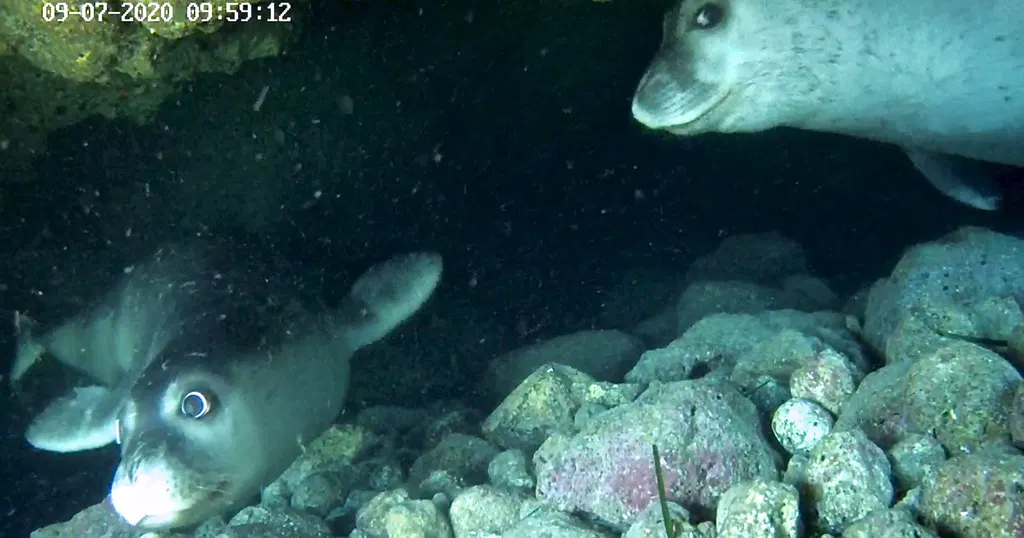
Researchers have discovered that Mediterranean monk seals are using secret underwater 'bubble caves' as resting spots to avoid human disturbance. These caves contain trapped air pockets and are accessed through submerged passages, providing a unique environment for the seals. This finding highlights the adaptability of the species in response to increasing human activity in coastal areas.
- ▪Mediterranean monk seals are one of the most threatened seal species, with only a few hundred individuals left in the wild.
- ▪Researchers used remote cameras to identify previously unknown resting spots for the seals in underwater caves.
- ▪The newly discovered 'bubble caves' are fully submerged chambers that allow seals to rest without needing a dry surface.
PetaPixel files mainly under photography. We currently carry 91 of its stories.
Story provenance
Source · retrieval · rights · ranking — open for full record
inspect →
Story provenance
Attribution is not the same as permission. This drawer separates discovery metadata, excerpts, WeSearch-generated summaries, reuse status, and whether the publisher receives the visit. Nothing here claims a legal grant the publisher has not made.
Record
| Original publisher | PetaPixel |
| Canonical URL | https://petapixel.com/2026/05/24/remote-underwater-cameras-reveal-how-worlds-rarest-seals-rest-in-secret-bubble-caves/ |
| Publication time | Sun, 24 May 2026 11:00:42 +0000 |
| Retrieval time | 2026-05-24T11:07:32.394Z |
| Last seen | 2026-05-24T11:07:32.394Z |
| Headline source | Publisher (no WeSearch rewrite) |
| Excerpt source | publisher body |
| Excerpt method | First ~120 words (~800 chars) of extracted publisher body, fair-use limited. |
| Summary | WeSearch · cerebras-chat (WeSearch summarizer) |
| Summary source text | contentText |
| Citation coverage | Summary is a WeSearch-generated derivative; primary citation is the original publisher URL. |
| Cluster | OlZDqDcxzFDl |
| Cluster logic | Grouped by semantic title/content similarity across sources within a rolling window. Same-publisher template collisions are excluded from coverage comparison. |
| Ranking reason | Story pages are not engagement-ranked. Hub feeds use recency, with optional source-diversified chronological ordering (cap consecutive stories per source). No personalized ranking. |
| Publisher visit | Yes — open original |
| Substitutes article? | No — link-out required for full text |
Rights status (four layers)
WeSearch handling by dimension
| Indexing | May the item be indexed (stored, ranked, made findable)? | Allowed |
| Snippet | May a short excerpt of the publisher's text be shown? | Allowed |
| AI summary | May WeSearch generate its own short summary of the article? | Limited |
| Retrieval / RAG | May the content be exposed for third-party retrieval-augmented generation? | Not asserted |
| Model training | May the content be used to train AI models? | Not asserted |
| Commercial reuse | May the content be reused commercially? | Not permitted |
Basis: Derived from the published RSS/Atom feed. Contact: [email protected]. Reviewed: 2026-07-24.
Opening excerpt (first ~120 words) tap to expand
Underwater Cameras Capture Seals Resting in Secret ‘Bubble Caves’ May 24, 2026 Pesala Bandara Monk seals seen in an underwater cave in July 2020. This is not a bubble cave | Image credit: The Octopus Foundation Scientists used remote cameras to reveal how some of the world’s rarest seals are resting in secret underwater “bubble caves” to stay out of sight of humans. freestar.config.enabled_slots.push({ placementName: "PetaPixel_728x90_ATF_Desktop", slotId: "PetaPixel_728x90_ATF_Desktop" }); freestar.config.enabled_slots.push({ placementName: "PetaPixel_300x600_300x250_320x50_Mobile", slotId: "PetaPixel_300x600_300x250_320x50_Mobile" }); According to a report by IFLScience, researchers have identified previously unknown resting spots used by the extremely rare Mediterranean monk seals, a…
Excerpt limited to ~120 words for fair-use compliance. The full article is at PetaPixel.
Discussion
0 commentsMore from PetaPixel