Upcoming Hack to Keep NASA’s Voyager 1 Alive Exploits a Quirk in Its 1970s Hardware
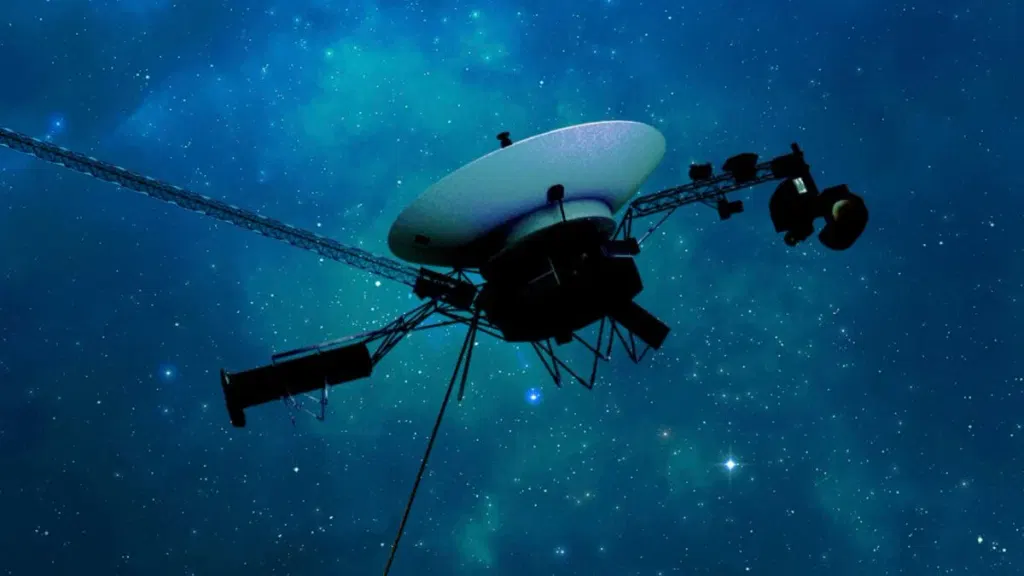
Blitzing through interstellar space at over 35,000 miles per hour (56,000 kilometers per hour), NASA’s Voyager 1 probe is now over 15 billion miles (or about 24 billion km) away from Earth. They’re calling it the “big bang,” a delicate toggling on and off of Voyager 2’s key components, in pairs of three, across a coordinated sequence—conserving energy without disastrously freezing the probe’s fuel line or its critical hardware out in the inhospitable cold of deep space. In essence, the scheme makes a virtue of the fact that the Voyagers, both launched in the late summer of 1977, are relics (respectfully) of midcentury electronics: Thanks to good old-fashioned waste heat, practically every instrument onboard these probes can be canily used to help to keep the craft warm.
- ▪Blitzing through interstellar space at over 35,000 miles per hour (56,000 kilometers per hour), NASA’s Voyager 1 probe is now over 15 billion miles (or about 24 billion km) away from Earth.
- ▪They’re calling it the “big bang,” a delicate toggling on and off of Voyager 2’s key components, in pairs of three, across a coordinated sequence—conserving energy without disastrously freezing the probe’s fuel line or its critical hardware
- ▪In essence, the scheme makes a virtue of the fact that the Voyagers, both launched in the late summer of 1977, are relics (respectfully) of midcentury electronics: Thanks to good old-fashioned waste heat, practically every instrument onboar
Gizmodo files mainly under tech. We currently carry 860 of its stories.
Story provenance
Source · retrieval · rights · ranking — open for full record
inspect →
Story provenance
Attribution is not the same as permission. This drawer separates discovery metadata, excerpts, WeSearch-generated summaries, reuse status, and whether the publisher receives the visit. Nothing here claims a legal grant the publisher has not made.
Record
| Original publisher | Gizmodo |
| Canonical URL | https://gizmodo.com/upcoming-hack-to-keep-nasas-voyager-1-alive-exploits-a-quirk-in-its-1970s-hardware-2000796070 |
| Publication time | Fri, 07 Aug 2026 18:35:12 +0000 |
| Retrieval time | 2026-08-07T18:40:47.699Z |
| Last seen | 2026-08-07T18:40:47.699Z |
| Headline source | Publisher (no WeSearch rewrite) |
| Excerpt source | publisher body |
| Excerpt method | First ~120 words (~800 chars) of extracted publisher body, fair-use limited. |
| Summary | WeSearch · cerebras-chat (WeSearch summarizer) |
| Summary source text | contentText |
| Citation coverage | Summary is a WeSearch-generated derivative; primary citation is the original publisher URL. |
| Cluster | 9JKrWz1lIRtH · 1 stories |
| Cluster logic | Grouped by semantic title/content similarity across sources within a rolling window. Same-publisher template collisions are excluded from coverage comparison. |
| Ranking reason | Story pages are not engagement-ranked. Hub feeds use recency, with optional source-diversified chronological ordering (cap consecutive stories per source). No personalized ranking. |
| Publisher visit | Yes — open original |
| Substitutes article? | No — link-out required for full text |
Rights status (four layers)
WeSearch handling by dimension
| Indexing | May the item be indexed (stored, ranked, made findable)? | Allowed |
| Snippet | May a short excerpt of the publisher's text be shown? | Allowed |
| AI summary | May WeSearch generate its own short summary of the article? | Limited |
| Retrieval / RAG | May the content be exposed for third-party retrieval-augmented generation? | Not asserted |
| Model training | May the content be used to train AI models? | Not asserted |
| Commercial reuse | May the content be reused commercially? | Not permitted |
Basis: Derived from the published RSS/Atom feed. Contact: [email protected]. Reviewed: 2026-07-24.
Opening excerpt (first ~120 words) tap to expand
Blitzing through interstellar space at over 35,000 miles per hour (56,000 kilometers per hour), NASA’s Voyager 1 probe is now over 15 billion miles (or about 24 billion km) away from Earth. And the U.S. space agency’s Jet Propulsion Lab just north of Los Angeles is working hard to make sure it keeps going for just a bit longer.cnx.cmd.push(function(){cnx({"playerId":"92b7b46b-43ed-4e0e-b21b-2c999302d9d7","settings":{"advertising":{"macros":{"AD_UNIT":"/23178111854/od.gizmodo.com/article","CHILD_UNIT":"article","POST_ID":"2000796070","POST_TYPE":"post","CHANNEL":"science","SECTION":"space","SUBSECTION":"","CATEGORIES":"space","TAGS":"interstellar-probes,nasa,space-exploration,voyager-1","NOP":"0"},"timeBeforeFirstAd":0}}}).render("cnx-player-main")}); On Tuesday, Voyager mission engineers…
Excerpt limited to ~120 words for fair-use compliance. The full article is at Gizmodo.
Discussion
0 commentsMore from Gizmodo




![‘Lynx’ Is a Sapphic Neo-Noir Thriller About a Damaged Detective and Her Snarky Cat Battling Angels [Exclusive]](/img-proxy?url=https%3A%2F%2Fgizmodo.com%2Fapp%2Fuploads%2F2026%2F08%2FLYNX-Viz-Media-1200x675.jpg&w=320)