US proposes forced-labor tariffs on 60 economies, with Brazil and China facing 12.5%
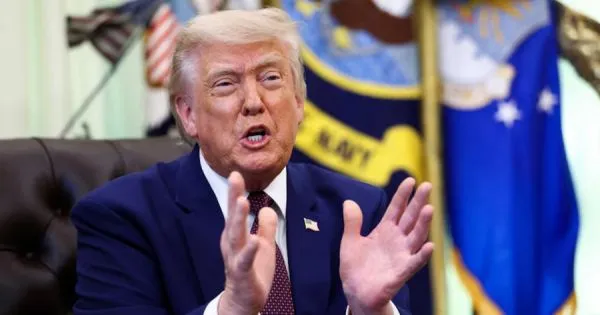
The US government has proposed tariffs of up to 12.5% on 60 economies for failing to ban imports made with forced labor. This initiative aims to replace previously struck down tariffs and is seen as a significant step in the US's tariff policy. Countries like Brazil and China will face the highest rates, while those with partial bans will incur a lower tariff rate.
- ▪The proposed tariffs affect 59 countries and the European Union.
- ▪Countries with existing bans or commitments will face a 10% tariff.
- ▪The initiative is based on Section 301 of the 1974 Trade Act.
3 outlets in our directory ran this story, first to last over 17 hours. Coverage spans 2 points on the political spectrum — 1 lean left, 1 centre.
- ▪ Brazil rejects proposed US tariffs related to forced labor — Investing.com — News
- ▪ Lula says Brazil cannot ‘accept treatment’ after new US tariffs proposed — Al Jazeera English
MercoPress files mainly under world. We currently carry 32 of its stories.
Story provenance
Source · retrieval · rights · ranking — open for full record
inspect →
Story provenance
Attribution is not the same as permission. This drawer separates discovery metadata, excerpts, WeSearch-generated summaries, reuse status, and whether the publisher receives the visit. Nothing here claims a legal grant the publisher has not made.
Record
| Original publisher | MercoPress |
| Canonical URL | https://en.mercopress.com/2026/06/04/us-proposes-forced-labor-tariffs-on-60-economies-with-brazil-and-china-facing-12.5?utm_source=feed&utm_medium=rss&utm_content=main&utm_campaign=rss |
| Publication time | Thu, 04 Jun 2026 10:40:00 GMT |
| Retrieval time | 2026-06-04T11:01:50.269Z |
| Last seen | 2026-06-04T11:01:50.269Z |
| Headline source | Publisher (no WeSearch rewrite) |
| Excerpt source | publisher body |
| Excerpt method | First ~120 words (~800 chars) of extracted publisher body, fair-use limited. |
| Summary | WeSearch · cerebras-chat (WeSearch summarizer) |
| Summary source text | contentText |
| Citation coverage | Summary is a WeSearch-generated derivative; primary citation is the original publisher URL. |
| Cluster | PyQWrhAXSfVe · 3 stories |
| Cluster logic | Grouped by semantic title/content similarity across sources within a rolling window. Same-publisher template collisions are excluded from coverage comparison. |
| Ranking reason | Story pages are not engagement-ranked. Hub feeds use recency, with optional source-diversified chronological ordering (cap consecutive stories per source). No personalized ranking. |
| Publisher visit | Yes — open original |
| Substitutes article? | No — link-out required for full text |
Rights status (four layers)
WeSearch handling by dimension
| Indexing | May the item be indexed (stored, ranked, made findable)? | Allowed |
| Snippet | May a short excerpt of the publisher's text be shown? | Allowed |
| AI summary | May WeSearch generate its own short summary of the article? | Limited |
| Retrieval / RAG | May the content be exposed for third-party retrieval-augmented generation? | Not asserted |
| Model training | May the content be used to train AI models? | Not asserted |
| Commercial reuse | May the content be reused commercially? | Not permitted |
Basis: Derived from the published RSS/Atom feed. Contact: [email protected]. Reviewed: 2026-07-24.
Opening excerpt (first ~120 words) tap to expand
US proposes forced-labor tariffs on 60 economies, with Brazil and China facing 12.5% Thursday, June 4th 2026 - 10:40 UTC Full article 0 comments (adsbygoogle = window.adsbygoogle || []).push({}); The initiative seeks to replace the tariffs the Supreme Court struck down in February, when it found that President Donald Trump had exceeded his authority by using an economic emergency law The US government proposed tariffs of up to 12.5% on 60 economies —59 countries and the 27-nation European Union— for failing to ban or effectively enforce the prohibition on imports of goods made with forced labor.
…
Excerpt limited to ~120 words for fair-use compliance. The full article is at MercoPress.
Discussion
0 commentsMore from MercoPress