Was Lincoln More Radical Than We Remember?
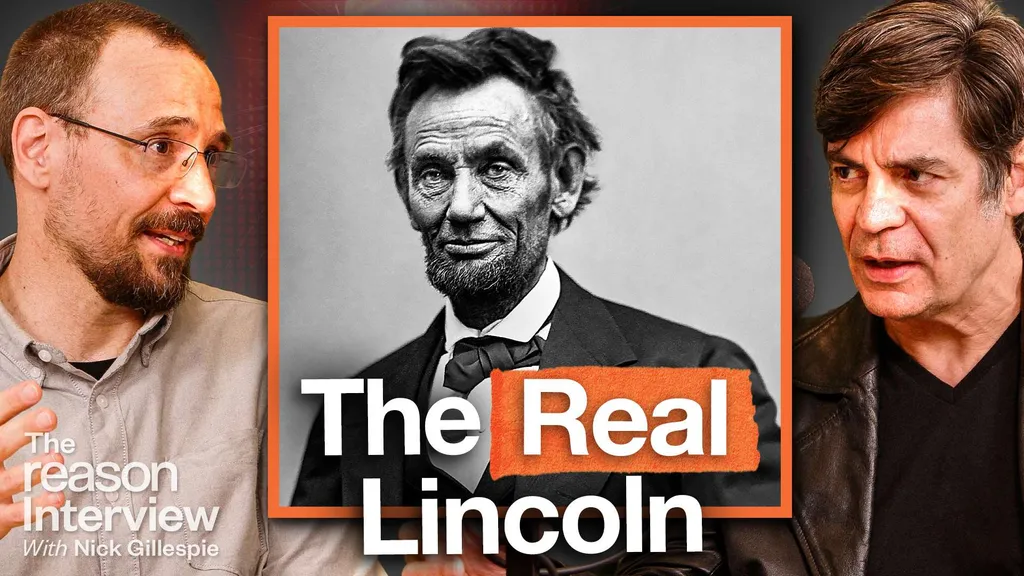
The article explores Abraham Lincoln's evolving stance on slavery and emancipation during his presidency. It highlights his initial support for a constitutional amendment to protect slavery, followed by his role in passing the 13th Amendment. The discussion also touches on the Reconstruction era and contemporary legal issues related to citizenship.
- ▪At the start of his presidency in 1861, Abraham Lincoln supported a constitutional amendment to protect slavery in existing states.
- ▪Lincoln played a crucial role in the passage of the 13th Amendment, which abolished slavery throughout the United States.
- ▪The article features insights from Damon Root, who discusses Lincoln's legacy and the implications of the Reconstruction period.
Reason Magazine files mainly under politics. We currently carry 504 of its stories.
Story provenance
Source · retrieval · rights · ranking — open for full record
inspect →
Story provenance
Attribution is not the same as permission. This drawer separates discovery metadata, excerpts, WeSearch-generated summaries, reuse status, and whether the publisher receives the visit. Nothing here claims a legal grant the publisher has not made.
Record
| Original publisher | Reason Magazine |
| Canonical URL | https://reason.com/podcast/2026/06/03/was-lincoln-more-radical-than-we-remember/ |
| Publication time | Wed, 03 Jun 2026 15:00:39 +0000 |
| Retrieval time | 2026-06-03T15:07:10.413Z |
| Last seen | 2026-06-03T15:07:10.413Z |
| Headline source | Publisher (no WeSearch rewrite) |
| Excerpt source | publisher body |
| Excerpt method | First ~120 words (~800 chars) of extracted publisher body, fair-use limited. |
| Summary | WeSearch · cerebras-chat (WeSearch summarizer) |
| Summary source text | contentText |
| Citation coverage | Summary is a WeSearch-generated derivative; primary citation is the original publisher URL. |
| Cluster | G4WU_6N8RtMY |
| Cluster logic | Grouped by semantic title/content similarity across sources within a rolling window. Same-publisher template collisions are excluded from coverage comparison. |
| Ranking reason | Story pages are not engagement-ranked. Hub feeds use recency, with optional source-diversified chronological ordering (cap consecutive stories per source). No personalized ranking. |
| Publisher visit | Yes — open original |
| Substitutes article? | No — link-out required for full text |
Rights status (four layers)
WeSearch handling by dimension
| Indexing | May the item be indexed (stored, ranked, made findable)? | Allowed |
| Snippet | May a short excerpt of the publisher's text be shown? | Allowed |
| AI summary | May WeSearch generate its own short summary of the article? | Limited |
| Retrieval / RAG | May the content be exposed for third-party retrieval-augmented generation? | Not asserted |
| Model training | May the content be used to train AI models? | Not asserted |
| Commercial reuse | May the content be reused commercially? | Not permitted |
Basis: Derived from the published RSS/Atom feed. Contact: [email protected]. Reviewed: 2026-07-24.
Opening excerpt (first ~120 words) tap to expand
Slavery Was Lincoln More Radical Than We Remember? Damon Root discusses the path to emancipation, the struggle to secure freedom after the Civil War, and the constitutional changes that remade America. Nick Gillespie and Damon Root | 6.3.2026 11:00 AM Share on FacebookShare on XShare on RedditShare by emailPrint friendly versionCopy page URL Add Reason to Google Media Contact & Reprint Requests https://dts.podtrac.com/redirect.mp3/d2h6a3ly6ooodw.cloudfront.net/reasontv_audio_8384389.mp3 1x 1.1x 1.25x 1.5x 2x 3x :15 :15 Download Was Lincoln More Radical Than We Remember? HD Video Download At the start of his presidency in 1861, Abraham Lincoln supported a constitutional amendment that would have kept the federal government from banning slavery in states where it already existed.
…
Excerpt limited to ~120 words for fair-use compliance. The full article is at Reason Magazine.
Discussion
0 commentsMore from Reason Magazine