We Hacked Our Way to Free 4.0s and Took over a UWaterloo and UofT Grading Tool
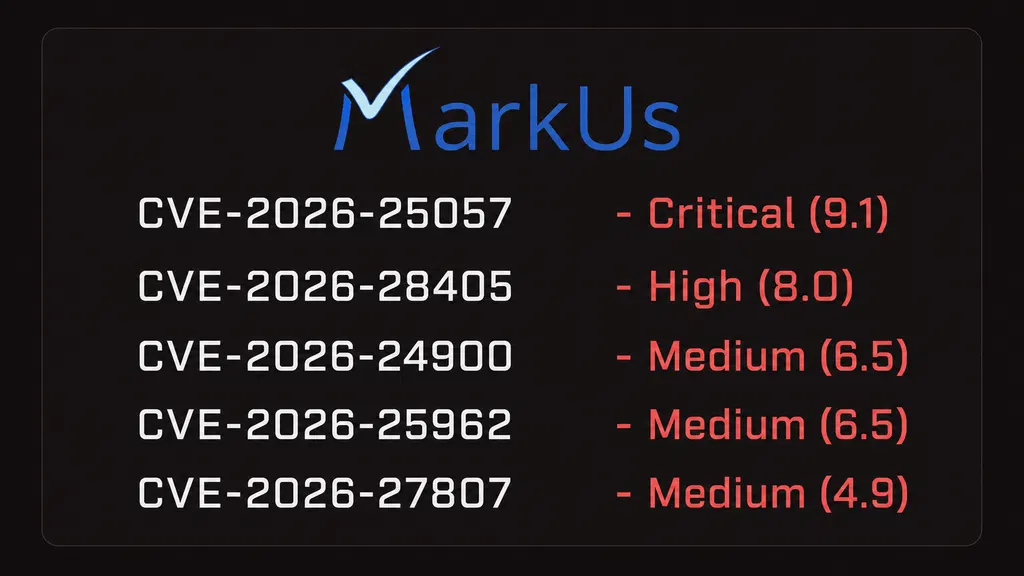
A group of students discovered vulnerabilities in the MarkUs grading tool used at the University of Toronto and the University of Waterloo. They found that students could access other submissions and potentially exploit grades through cross-site scripting (XSS) attacks. The students responsibly disclosed these issues to the MarkUs team without using them for personal gain.
- ▪MarkUs is a web application for submitting and grading assignments in computer science courses.
- ▪The students identified a flaw that allowed them to view any student's submission by manipulating file IDs.
- ▪They also discovered that malicious files could be submitted, leading to potential XSS attacks on instructors.
Hacker News (Newest) files mainly under programming. We currently carry 5,306 of its stories.
Story provenance
Source · retrieval · rights · ranking — open for full record
inspect →
Story provenance
Attribution is not the same as permission. This drawer separates discovery metadata, excerpts, WeSearch-generated summaries, reuse status, and whether the publisher receives the visit. Nothing here claims a legal grant the publisher has not made.
Record
| Original publisher | xtra |
| Canonical URL | https://xtra.sh/blog/markus/ |
| Publication time | Tue, 19 May 2026 07:27:54 +0000 |
| Retrieval time | 2026-05-19T07:34:57.437Z |
| Last seen | 2026-05-19T07:34:57.437Z |
| Headline source | Publisher (no WeSearch rewrite) |
| Excerpt source | publisher body |
| Excerpt method | First ~120 words (~800 chars) of extracted publisher body, fair-use limited. |
| Summary | WeSearch · cerebras-chat (WeSearch summarizer) |
| Summary source text | contentText |
| Citation coverage | Summary is a WeSearch-generated derivative; primary citation is the original publisher URL. |
| Cluster | rNqc1L5UEBnJ |
| Cluster logic | Grouped by semantic title/content similarity across sources within a rolling window. Same-publisher template collisions are excluded from coverage comparison. |
| Ranking reason | Story pages are not engagement-ranked. Hub feeds use recency, with optional source-diversified chronological ordering (cap consecutive stories per source). No personalized ranking. |
| Publisher visit | Yes — open original |
| Substitutes article? | No — link-out required for full text |
Rights status (four layers)
WeSearch handling by dimension
| Indexing | May the item be indexed (stored, ranked, made findable)? | Allowed |
| Snippet | May a short excerpt of the publisher's text be shown? | Allowed |
| AI summary | May WeSearch generate its own short summary of the article? | Limited |
| Retrieval / RAG | May the content be exposed for third-party retrieval-augmented generation? | Not asserted |
| Model training | May the content be used to train AI models? | Not asserted |
| Commercial reuse | May the content be reused commercially? | Not permitted |
Basis: Derived from the published RSS/Atom feed. Contact: [email protected]. Reviewed: 2026-07-24.
Opening excerpt (first ~120 words) tap to expand
First, I’ll explain what MarkUs is and why we went after it. Then I’ll walk through how a student account could view other students’ submissions, how we could get 100s on assignments/tests, and finally how we escalated to RCE. I’ll also cover a few other vulnerabilities we found along the way. Important note: We responsibly disclosed these issues to the MarkUs team and did not use them for academic or personal gain or to affect anyone’s grades. introduction what is MarkUs? MarkUs is a web app used for submitting and grading assignments. It helps students submit work, join groups, and view feedback, while TAs and instructors can grade, comment, manage groups, and release marks. It is used for almost all computer science courses at the University of Toronto and the University of Waterloo.
…
Excerpt limited to ~120 words for fair-use compliance. The full article is at xtra.
Discussion
0 commentsMore from xtra