What Canada’s TKMS sub deal means for the Indo-Pacific
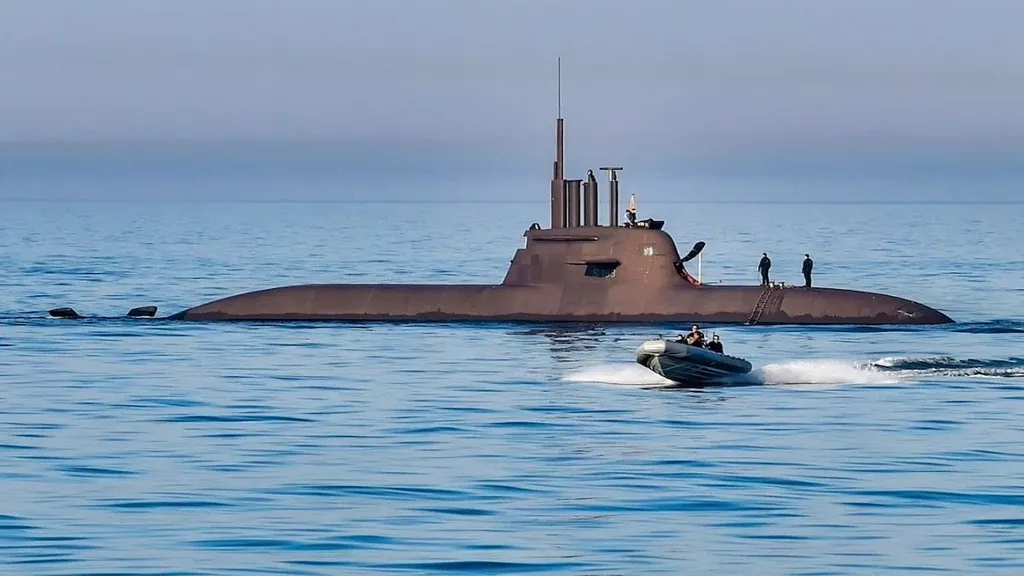
Canada announced at the NATO summit that it will procure twelve Type 212CD diesel‑electric submarines from Germany's ThyssenKrupp Marine Systems, opting against South Korea's Hanwha Ocean offering. The chosen submarines are tailored for Atlantic and Arctic operations, signaling a strategic emphasis on NATO commitments rather than expanded Indo‑Pacific capabilities. The decision is expected to affect Canada’s Operation Horizon and its ability to project submarine deterrence in the Pacific, with deliveries slated for 2034.
- ▪Prime Minister Carney announced the selection of Germany's TKMS Type 212CD submarines over South Korea's Hanwha Ocean for Canada’s new fleet of twelve submarines.
- ▪The Type 212CD is optimized for shallow, icy Atlantic and Arctic waters and lacks the long‑range missile capability of the ROK’s KSS‑III design.
- ▪The procurement aligns Canada more closely with NATO and Russian deterrence priorities, raising concerns about reduced submarine presence in the Indo‑Pacific and implications for Operation Horizon.
Asia Times files mainly under world. We currently carry 156 of its stories.
Story provenance
Source · retrieval · rights · ranking — open for full record
inspect →
Story provenance
Attribution is not the same as permission. This drawer separates discovery metadata, excerpts, WeSearch-generated summaries, reuse status, and whether the publisher receives the visit. Nothing here claims a legal grant the publisher has not made.
Record
| Original publisher | Asia Times |
| Canonical URL | https://asiatimes.com/2026/07/what-canadas-tkms-sub-deal-means-for-the-indo-pacific/ |
| Publication time | Mon, 13 Jul 2026 03:31:15 +0000 |
| Retrieval time | 2026-07-13T03:32:08.669Z |
| Last seen | 2026-07-13T03:32:08.669Z |
| Headline source | Publisher (no WeSearch rewrite) |
| Excerpt source | publisher body |
| Excerpt method | First ~120 words (~800 chars) of extracted publisher body, fair-use limited. |
| Summary | WeSearch · cerebras-chat (WeSearch summarizer) |
| Summary source text | contentText |
| Citation coverage | Summary is a WeSearch-generated derivative; primary citation is the original publisher URL. |
| Cluster | EO0NS0GW-5ph |
| Cluster logic | Grouped by semantic title/content similarity across sources within a rolling window. Same-publisher template collisions are excluded from coverage comparison. |
| Ranking reason | Story pages are not engagement-ranked. Hub feeds use recency, with optional source-diversified chronological ordering (cap consecutive stories per source). No personalized ranking. |
| Publisher visit | Yes — open original |
| Substitutes article? | No — link-out required for full text |
Rights status (four layers)
WeSearch handling by dimension
| Indexing | May the item be indexed (stored, ranked, made findable)? | Allowed |
| Snippet | May a short excerpt of the publisher's text be shown? | Allowed |
| AI summary | May WeSearch generate its own short summary of the article? | Limited |
| Retrieval / RAG | May the content be exposed for third-party retrieval-augmented generation? | Not asserted |
| Model training | May the content be used to train AI models? | Not asserted |
| Commercial reuse | May the content be reused commercially? | Not permitted |
Basis: Derived from the published RSS/Atom feed. Contact: [email protected]. Reviewed: 2026-07-24.
Opening excerpt (first ~120 words) tap to expand
During the July 2026 North Atlantic Treaty Organization (NATO) summit in Ankara, Prime Minister Carney announced Germany’s ThyssenKrupp Marine Systems (TKMS) as Canada’s primary supplier for 12 diesel-electric Type 212CD submarines over the Republic of Korea (ROK)’s Hanwha Ocean to replace its Victoria-class submarine fleet. Carney believes this will strengthen interoperability with NATO allies and increase Canada’s maritime presence in the Atlantic Ocean. However, despite Carney’s reassurance of Canadian commitment to the Indo-Pacific, this signals a quiet, significant geopolitical retreat. By choosing Germany over the ROK, Canada fundamentally shifts its ambitions of becoming a major player in the Pacific toward a more traditional role as a Eurocentric actor.
…
Excerpt limited to ~120 words for fair-use compliance. The full article is at Asia Times.
Discussion
0 commentsMore from Asia Times