Why aristocrats are funny
A recent study reveals that many professional speakers struggle with humor, with two-fifths telling no jokes and two-thirds of attempts falling flat. The article explores the comedic tradition in British culture, particularly how aristocrats and class dynamics contribute to humor. It highlights the role of Irish writers in shaping English comedy and the psychological aspects of why humor often arises from deflation and absurdity.
- ▪Two-fifths of professional speakers told no jokes, and two-thirds of attempted jokes fell flat.
- ▪British comedians often use class conflict as a source of humor, transitioning from the sublime to the mundane.
- ▪Irish writers have significantly influenced English stage comedy, using their outsider status to highlight societal absurdities.
UnHerd publishes from United Kingdom and files mainly under culture. We currently carry 40 of its stories.
Story provenance
Source · retrieval · rights · ranking — open for full record
inspect →
Story provenance
Attribution is not the same as permission. This drawer separates discovery metadata, excerpts, WeSearch-generated summaries, reuse status, and whether the publisher receives the visit. Nothing here claims a legal grant the publisher has not made.
Record
| Original publisher | UnHerd |
| Canonical URL | https://unherd.com/2026/05/why-aristocrats-are-funny/?edition=us |
| Publication time | Wed, 27 May 2026 23:01:01 +0000 |
| Retrieval time | 2026-05-27T23:08:06.186Z |
| Last seen | 2026-05-27T23:08:06.186Z |
| Headline source | Publisher (no WeSearch rewrite) |
| Excerpt source | publisher body |
| Excerpt method | First ~120 words (~800 chars) of extracted publisher body, fair-use limited. |
| Summary | WeSearch · cerebras-chat (WeSearch summarizer) |
| Summary source text | contentText |
| Citation coverage | Summary is a WeSearch-generated derivative; primary citation is the original publisher URL. |
| Cluster | vFqRbknAIG3n |
| Cluster logic | Grouped by semantic title/content similarity across sources within a rolling window. Same-publisher template collisions are excluded from coverage comparison. |
| Ranking reason | Story pages are not engagement-ranked. Hub feeds use recency, with optional source-diversified chronological ordering (cap consecutive stories per source). No personalized ranking. |
| Publisher visit | Yes — open original |
| Substitutes article? | No — link-out required for full text |
Rights status (four layers)
WeSearch handling by dimension
| Indexing | May the item be indexed (stored, ranked, made findable)? | Allowed |
| Snippet | May a short excerpt of the publisher's text be shown? | Allowed |
| AI summary | May WeSearch generate its own short summary of the article? | Limited |
| Retrieval / RAG | May the content be exposed for third-party retrieval-augmented generation? | Not asserted |
| Model training | May the content be used to train AI models? | Not asserted |
| Commercial reuse | May the content be reused commercially? | Not permitted |
Basis: Derived from the published RSS/Atom feed. Contact: [email protected]. Reviewed: 2026-07-24.
Opening excerpt (first ~120 words) tap to expand
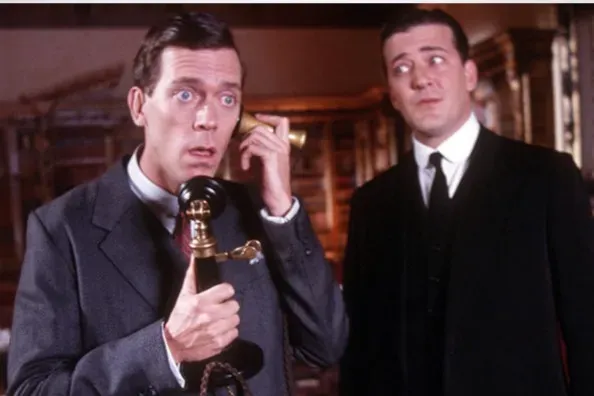
Why aristocrats are funny Toffs can be transgressive Hugh Laurie and Stephen Fry in Jeeves and Wooster, 1990. (Getty) Hugh Laurie and Stephen Fry in Jeeves and Wooster, 1990. (Getty) aristocracyBoris JohnsonCultureHumourMonty Python Terry Eagleton May 28 2026 - 12:01am 6 mins A recent scientific study of professional speakers finds that two fifths of them told no jokes, and of the jokes they attempted two thirds fell flat. In an insight of Einsteinian profundity, the researchers also discovered that audiences laugh less when they think they’re not expected to. Men are more likely to use humor than women, telling about a third more jokes than they do, and men also have a 10% higher possibility of provoking laughter.
…
Excerpt limited to ~120 words for fair-use compliance. The full article is at UnHerd.