Why the Shangri-La Dialogue finally really mattered
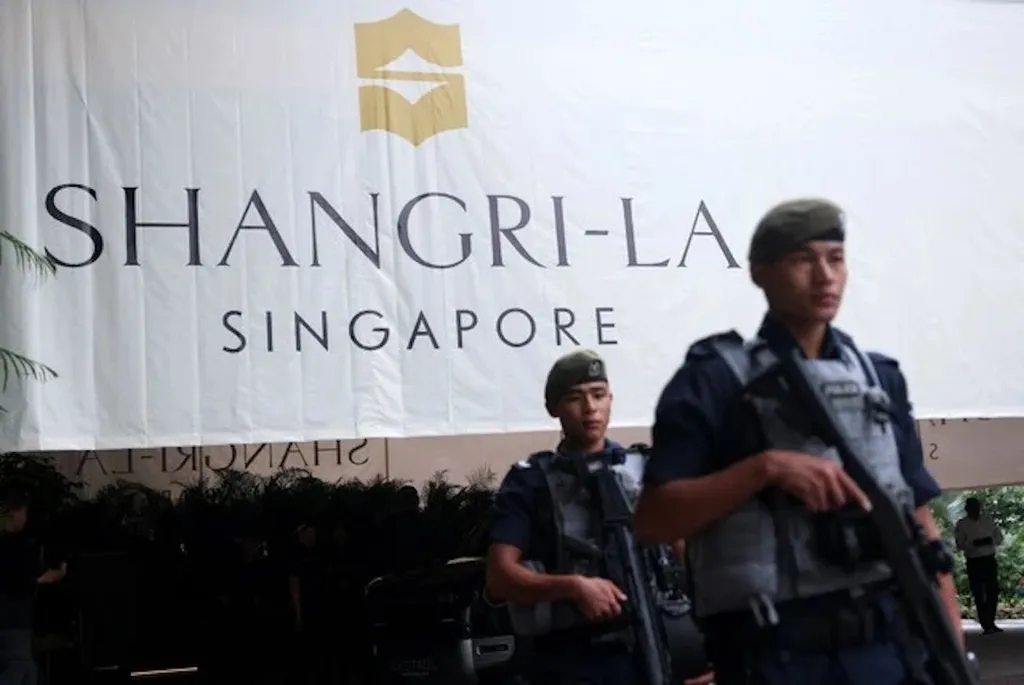
The 23rd Shangri-La Dialogue highlighted growing concerns about the stability of Asia's security architecture amid global tensions. Representatives from 44 countries discussed the erosion of international order and the need for increased military capabilities in response to shifting dynamics. The event underscored the uncertainty surrounding American security commitments and the implications of China's rising influence.
- ▪The Shangri-La Dialogue took place from May 29 to 31, 2026, in Singapore, gathering defense ministers and military chiefs from 44 countries.
- ▪Vietnam's President To Lam warned of overlapping crises affecting international order, development models, and strategic trust among nations.
- ▪US Defense Secretary Pete Hegseth indicated a shift in American policy towards burden-sharing and pragmatic idealism in defense commitments.
Asia Times files mainly under world. We currently carry 156 of its stories.
Story provenance
Source · retrieval · rights · ranking — open for full record
inspect →
Story provenance
Attribution is not the same as permission. This drawer separates discovery metadata, excerpts, WeSearch-generated summaries, reuse status, and whether the publisher receives the visit. Nothing here claims a legal grant the publisher has not made.
Record
| Original publisher | Asia Times |
| Canonical URL | https://asiatimes.com/2026/06/why-the-shangri-la-dialogue-finally-really-mattered/ |
| Publication time | Wed, 03 Jun 2026 06:14:01 +0000 |
| Retrieval time | 2026-06-03T06:16:57.146Z |
| Last seen | 2026-06-03T06:16:57.146Z |
| Headline source | Publisher (no WeSearch rewrite) |
| Excerpt source | publisher body |
| Excerpt method | First ~120 words (~800 chars) of extracted publisher body, fair-use limited. |
| Summary | WeSearch · cerebras-chat (WeSearch summarizer) |
| Summary source text | contentText |
| Citation coverage | Summary is a WeSearch-generated derivative; primary citation is the original publisher URL. |
| Cluster | MP2ciqIFpE05 |
| Cluster logic | Grouped by semantic title/content similarity across sources within a rolling window. Same-publisher template collisions are excluded from coverage comparison. |
| Ranking reason | Story pages are not engagement-ranked. Hub feeds use recency, with optional source-diversified chronological ordering (cap consecutive stories per source). No personalized ranking. |
| Publisher visit | Yes — open original |
| Substitutes article? | No — link-out required for full text |
Rights status (four layers)
WeSearch handling by dimension
| Indexing | May the item be indexed (stored, ranked, made findable)? | Allowed |
| Snippet | May a short excerpt of the publisher's text be shown? | Allowed |
| AI summary | May WeSearch generate its own short summary of the article? | Limited |
| Retrieval / RAG | May the content be exposed for third-party retrieval-augmented generation? | Not asserted |
| Model training | May the content be used to train AI models? | Not asserted |
| Commercial reuse | May the content be reused commercially? | Not permitted |
Basis: Derived from the published RSS/Atom feed. Contact: [email protected]. Reviewed: 2026-07-24.
Opening excerpt (first ~120 words) tap to expand
Under Singapore’s increasingly sweltering skies, the lobby of the Shangri-La Hotel in late May 2026 offered a revealing snapshot of a world edging toward deeper fragmentation. The 23rd edition of the Shangri-La Dialogue, held from May 29 to 31, brought together representatives from 44 countries, including dozens of defense ministers and military chiefs who shared remarkably similar concerns. In the quiet corridors between sessions, an unspoken realization hung in the air: the security architecture that has underpinned Asia’s stability for decades is showing signs of profound structural strain. Diplomacy is no longer guided primarily by shared norms and collective aspirations, but increasingly by calculations of self-reliance and strategic resilience.
…
Excerpt limited to ~120 words for fair-use compliance. The full article is at Asia Times.
Discussion
0 commentsMore from Asia Times