Workers opened a whale in 1937 and found something inside that still doesn't have a name
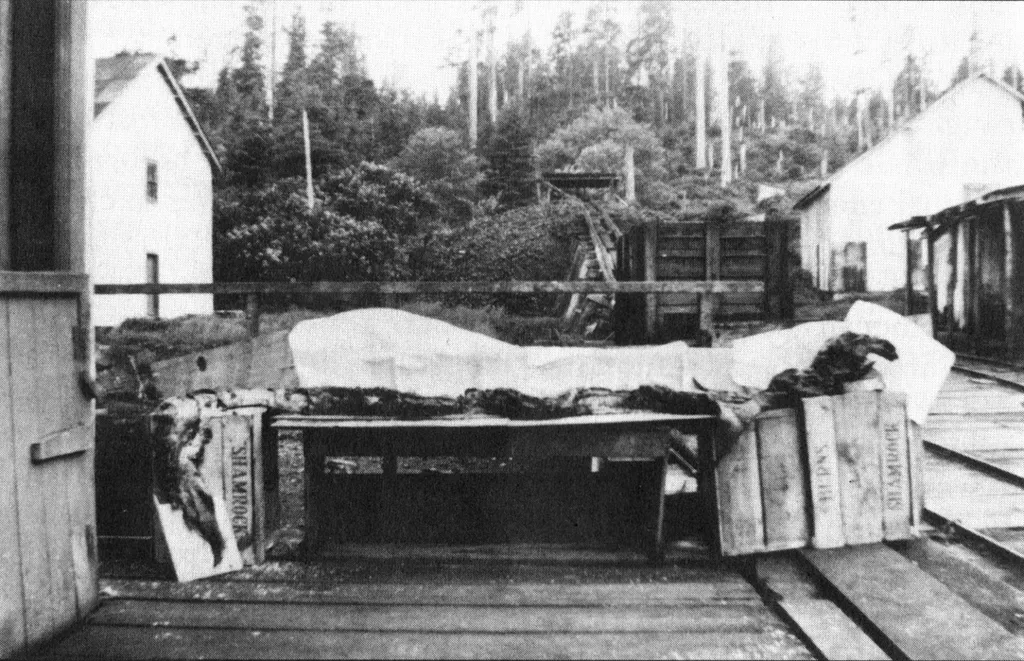
In 1937, workers at a whaling station in Haida Gwaii discovered an unidentified creature inside a sperm whale. The creature, measuring ten feet long with a horse-like head and a fan-shaped tail, has been linked to the legend of Cadborosaurus willsi, a sea serpent reported by various communities since the 1800s. Despite skepticism and alternative explanations, some zoologists continue to advocate for the existence of this mysterious animal.
- ▪Workers at the Naden Harbor whaling station found an unidentified creature in a sperm whale's gut in 1937.
- ▪The creature, measuring ten feet long, has been associated with the legend of Cadborosaurus willsi, or 'Caddy.'
- ▪Despite numerous reported sightings, skeptics attribute the sightings to known marine animals like giant oarfish or decomposing basking sharks.
Boing Boing files mainly under tech. We currently carry 375 of its stories.
Story provenance
Source · retrieval · rights · ranking — open for full record
inspect →
Story provenance
Attribution is not the same as permission. This drawer separates discovery metadata, excerpts, WeSearch-generated summaries, reuse status, and whether the publisher receives the visit. Nothing here claims a legal grant the publisher has not made.
Record
| Original publisher | Boing Boing |
| Canonical URL | https://boingboing.net/2026/05/27/workers-opened-a-whale-in-1937-and-found-something-inside-that-still-doesnt-have-a-name.html |
| Publication time | Wed, 27 May 2026 21:36:36 +0000 |
| Retrieval time | 2026-05-27T21:53:05.356Z |
| Last seen | 2026-05-27T21:53:05.356Z |
| Headline source | Publisher (no WeSearch rewrite) |
| Excerpt source | publisher body |
| Excerpt method | First ~120 words (~800 chars) of extracted publisher body, fair-use limited. |
| Summary | WeSearch · cerebras-chat (WeSearch summarizer) |
| Summary source text | contentText |
| Citation coverage | Summary is a WeSearch-generated derivative; primary citation is the original publisher URL. |
| Cluster | FVSk2tLB8pk0 |
| Cluster logic | Grouped by semantic title/content similarity across sources within a rolling window. Same-publisher template collisions are excluded from coverage comparison. |
| Ranking reason | Story pages are not engagement-ranked. Hub feeds use recency, with optional source-diversified chronological ordering (cap consecutive stories per source). No personalized ranking. |
| Publisher visit | Yes — open original |
| Substitutes article? | No — link-out required for full text |
Rights status (four layers)
WeSearch handling by dimension
| Indexing | May the item be indexed (stored, ranked, made findable)? | Allowed |
| Snippet | May a short excerpt of the publisher's text be shown? | Allowed |
| AI summary | May WeSearch generate its own short summary of the article? | Limited |
| Retrieval / RAG | May the content be exposed for third-party retrieval-augmented generation? | Not asserted |
| Model training | May the content be used to train AI models? | Not asserted |
| Commercial reuse | May the content be reused commercially? | Not permitted |
Basis: Derived from the published RSS/Atom feed. Contact: [email protected]. Reviewed: 2026-07-24.
Opening excerpt (first ~120 words) tap to expand
Workers opened a whale in 1937 and found something inside that still doesn't have a name Ellsworth Toohey 2:36 pm Wed May 27, 2026 By Boorman - http://lordgeekington.wordpress.com/cadborosaurus/, Public Domain, Link In August 1937, workers at the Naden Harbor whaling station in Haida Gwaii were cutting up a harpooned sperm whale when they found something in its gut that nobody recognized. Ten feet long, with a horse-like head, a long neck, small front flippers, and a fan-shaped tail — not a known fish, not a shark, not anything in the standard field guide. They photographed it on the dock before it deteriorated. Francis Kermode, director of the BC Provincial Museum, looked at a tissue sample and guessed it was a "fetal baleen whale," though he hedged. The carcass then disappeared.
…
Excerpt limited to ~120 words for fair-use compliance. The full article is at Boing Boing.
Discussion
0 commentsMore from Boing Boing