Xi and Putin tout ‘new type’ of world order in Beijing
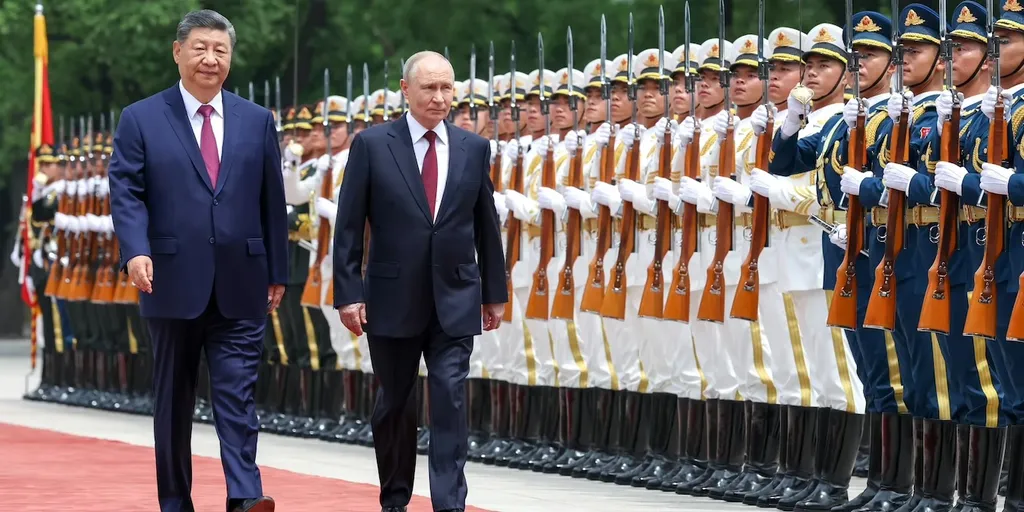
Xi Jinping and Vladimir Putin met in Beijing to discuss their ongoing cooperation and shared interests. They signed multiple agreements covering various sectors, emphasizing their commitment to building a multipolar world order. However, the complexities of their relationship reveal limitations in their collaboration, particularly in opposing U.S. influence.
- ▪Xi and Putin have met over 40 times since 2013, with this being Putin's 25th visit to China.
- ▪Both leaders reiterated their commitment to a multipolar world order, opposing U.S. global primacy.
- ▪Despite their cooperation, Russia lacks the capacity to support China economically and technologically.
2 outlets in our directory ran this story, first to last over 3 hours. All of the coverage we found sits in one bucket: lean left. That one-sidedness is itself worth noticing.
- ▪ ‘Multipolar world’: What Xi and Putin announced after Beijing summit — Al Jazeera English
Asia Times files mainly under world. We currently carry 156 of its stories.
Story provenance
Source · retrieval · rights · ranking — open for full record
inspect →
Story provenance
Attribution is not the same as permission. This drawer separates discovery metadata, excerpts, WeSearch-generated summaries, reuse status, and whether the publisher receives the visit. Nothing here claims a legal grant the publisher has not made.
Record
| Original publisher | Asia Times |
| Canonical URL | https://asiatimes.com/2026/05/xi-and-putin-tout-new-type-of-world-order-in-beijing/ |
| Publication time | Wed, 20 May 2026 17:09:43 +0000 |
| Retrieval time | 2026-05-20T17:15:02.702Z |
| Last seen | 2026-05-20T17:15:02.702Z |
| Headline source | Publisher (no WeSearch rewrite) |
| Excerpt source | publisher body |
| Excerpt method | First ~120 words (~800 chars) of extracted publisher body, fair-use limited. |
| Summary | WeSearch · cerebras-chat (WeSearch summarizer) |
| Summary source text | contentText |
| Citation coverage | Summary is a WeSearch-generated derivative; primary citation is the original publisher URL. |
| Cluster | 3m8DgXFyhbHh · 2 stories |
| Cluster logic | Grouped by semantic title/content similarity across sources within a rolling window. Same-publisher template collisions are excluded from coverage comparison. |
| Ranking reason | Story pages are not engagement-ranked. Hub feeds use recency, with optional source-diversified chronological ordering (cap consecutive stories per source). No personalized ranking. |
| Publisher visit | Yes — open original |
| Substitutes article? | No — link-out required for full text |
Rights status (four layers)
WeSearch handling by dimension
| Indexing | May the item be indexed (stored, ranked, made findable)? | Allowed |
| Snippet | May a short excerpt of the publisher's text be shown? | Allowed |
| AI summary | May WeSearch generate its own short summary of the article? | Limited |
| Retrieval / RAG | May the content be exposed for third-party retrieval-augmented generation? | Not asserted |
| Model training | May the content be used to train AI models? | Not asserted |
| Commercial reuse | May the content be reused commercially? | Not permitted |
Basis: Derived from the published RSS/Atom feed. Contact: [email protected]. Reviewed: 2026-07-24.
Opening excerpt (first ~120 words) tap to expand
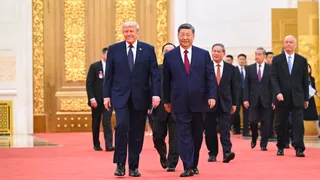
Less than a week after hosting Donald Trump, China’s leader Xi Jinping welcomed his Russian counterpart, Vladimir Putin, to Beijing. Unlike Trump’s visit, this was a routine meeting. The Chinese and Russian presidents have met more than 40 times since 2013, with the latest meeting marking Putin’s 25th visit to China. The frequency of talks is itself a testimony to the expanding scope of shared interests between the two states. And, as is typical for Sino-Russian summits, Xi and Putin signed an array of documents following their meeting in areas ranging from energy to higher education and the media.
…
Excerpt limited to ~120 words for fair-use compliance. The full article is at Asia Times.
Discussion
0 commentsMore from Asia Times