“Zombie cells” aren’t always bad and that could transform anti-aging medicine
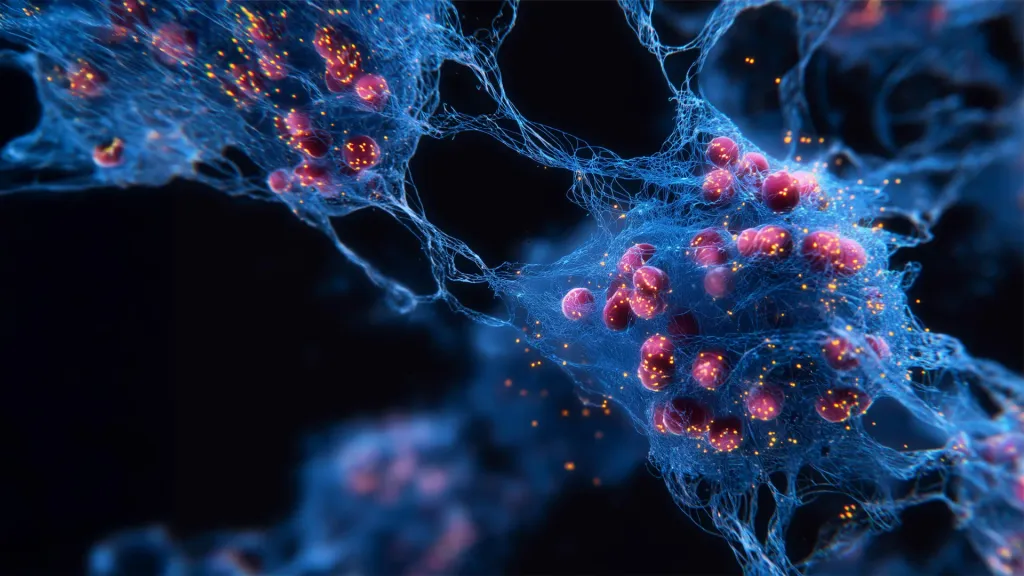
Recent research reveals that not all senescent or 'zombie' cells are detrimental; some may actually play protective roles in the body. This understanding is paving the way for more precise anti-aging therapies that aim to eliminate only harmful senescent cells. The findings suggest a shift in how scientists approach aging and cellular health.
- ▪Some senescent cells may help protect and repair the body instead of being universally harmful.
- ▪Research indicates that senescent cells can serve important biological functions, such as supporting wound healing and maintaining tissue balance.
- ▪Emerging anti-aging therapies are focusing on selectively targeting harmful senescent cells while preserving beneficial ones.
ScienceDaily files mainly under science. We currently carry 84 of its stories.
Story provenance
Source · retrieval · rights · ranking — open for full record
inspect →
Story provenance
Attribution is not the same as permission. This drawer separates discovery metadata, excerpts, WeSearch-generated summaries, reuse status, and whether the publisher receives the visit. Nothing here claims a legal grant the publisher has not made.
Record
| Original publisher | ScienceDaily |
| Canonical URL | https://www.sciencedaily.com/releases/2026/05/260521072402.htm |
| Publication time | Fri, 22 May 2026 00:28:12 EDT |
| Retrieval time | 2026-05-22T04:42:00.502Z |
| Last seen | 2026-05-22T04:42:00.502Z |
| Headline source | Publisher (no WeSearch rewrite) |
| Excerpt source | publisher body |
| Excerpt method | First ~120 words (~800 chars) of extracted publisher body, fair-use limited. |
| Summary | WeSearch · cerebras-chat (WeSearch summarizer) |
| Summary source text | contentText |
| Citation coverage | Summary is a WeSearch-generated derivative; primary citation is the original publisher URL. |
| Cluster | AbZ0Yfz2M-4a |
| Cluster logic | Grouped by semantic title/content similarity across sources within a rolling window. Same-publisher template collisions are excluded from coverage comparison. |
| Ranking reason | Story pages are not engagement-ranked. Hub feeds use recency, with optional source-diversified chronological ordering (cap consecutive stories per source). No personalized ranking. |
| Publisher visit | Yes — open original |
| Substitutes article? | No — link-out required for full text |
Rights status (four layers)
WeSearch handling by dimension
| Indexing | May the item be indexed (stored, ranked, made findable)? | Allowed |
| Snippet | May a short excerpt of the publisher's text be shown? | Allowed |
| AI summary | May WeSearch generate its own short summary of the article? | Limited |
| Retrieval / RAG | May the content be exposed for third-party retrieval-augmented generation? | Not asserted |
| Model training | May the content be used to train AI models? | Not asserted |
| Commercial reuse | May the content be reused commercially? | Not permitted |
Basis: Derived from the published RSS/Atom feed. Contact: [email protected]. Reviewed: 2026-07-24.
Opening excerpt (first ~120 words) tap to expand
Science News from research organizations “Zombie cells” aren’t always bad and that could transform anti-aging medicine Not all “zombie” cells are bad — and the future of anti-aging may depend on knowing which ones to keep alive. Date: May 22, 2026 Source: Impact Journals LLC Summary: Scientists are uncovering a surprising truth about aging cells: some may damage the body, while others help protect it. The discovery is fueling a new wave of precision anti-aging therapies aimed at removing only the harmful “zombie” cells without disrupting the body’s natural repair systems. Share: Facebook Twitter Pinterest LinkedIN Email FULL STORY A sweeping new review suggests aging may not be caused by “bad” senescent cells alone — some may actually help keep the body healthy.
…
Excerpt limited to ~120 words for fair-use compliance. The full article is at ScienceDaily.
Discussion
0 commentsMore from ScienceDaily