3D Printing Space Cadet Pinball Into the Real World
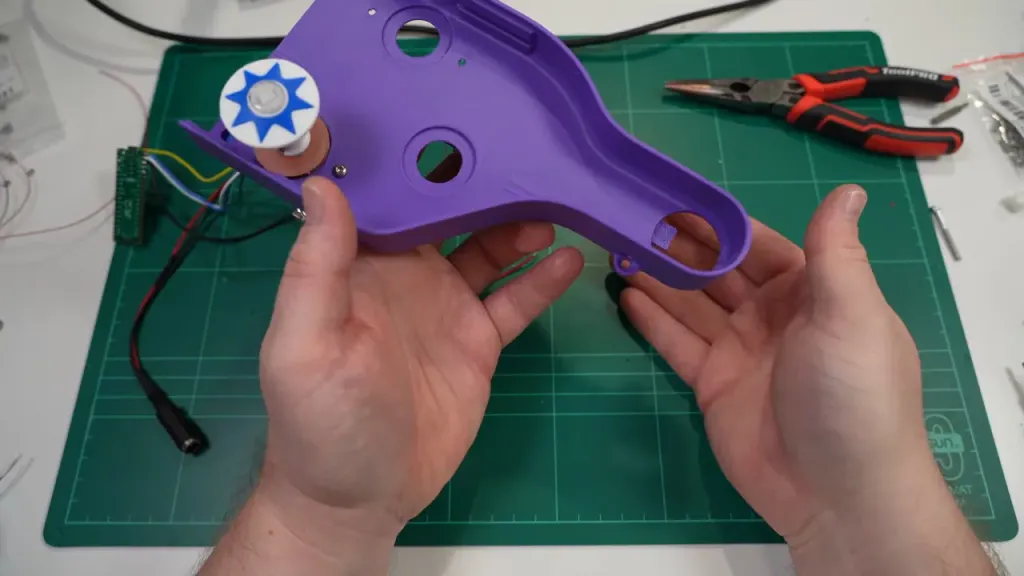
A creator known as [CNCDan] is working on bringing the classic game Space Cadet Pinball into the physical world through 3D printing. He is designing various components of the pinball machine using 3D-printed parts, as existing commercial options do not meet his specifications. [CNCDan] is seeking collaborators to help with high-resolution art assets needed for the project.
- ▪[CNCDan] is creating a physical version of Space Cadet Pinball using 3D printing.
- ▪He is designing components like pop bumpers and slingshots, which are largely 3D-printed.
- ▪The project requires high-resolution art assets that are not readily available for the 1995 game.
2 outlets in our directory ran this story, first to last over 25 hours. All of the coverage we found sits in one bucket: centre. That one-sidedness is itself worth noticing.
- ▪ 3D Printed Space Cadet Pinball [video] — Youtube
Hackaday files mainly under tech. We currently carry 245 of its stories.
Story provenance
Source · retrieval · rights · ranking — open for full record
inspect →
Story provenance
Attribution is not the same as permission. This drawer separates discovery metadata, excerpts, WeSearch-generated summaries, reuse status, and whether the publisher receives the visit. Nothing here claims a legal grant the publisher has not made.
Record
| Original publisher | Hackaday |
| Canonical URL | https://hackaday.com/2026/05/25/3d-printing-space-cadet-pinball-into-the-real-world/ |
| Publication time | Mon, 25 May 2026 17:00:00 +0000 |
| Retrieval time | 2026-05-25T17:02:38.827Z |
| Last seen | 2026-05-25T17:02:38.827Z |
| Headline source | Publisher (no WeSearch rewrite) |
| Excerpt source | publisher body |
| Excerpt method | First ~120 words (~800 chars) of extracted publisher body, fair-use limited. |
| Summary | WeSearch · cerebras-chat (WeSearch summarizer) |
| Summary source text | contentText |
| Citation coverage | Summary is a WeSearch-generated derivative; primary citation is the original publisher URL. |
| Cluster | DzFNgmXygQap · 2 stories |
| Cluster logic | Grouped by semantic title/content similarity across sources within a rolling window. Same-publisher template collisions are excluded from coverage comparison. |
| Ranking reason | Story pages are not engagement-ranked. Hub feeds use recency, with optional source-diversified chronological ordering (cap consecutive stories per source). No personalized ranking. |
| Publisher visit | Yes — open original |
| Substitutes article? | No — link-out required for full text |
Rights status (four layers)
WeSearch handling by dimension
| Indexing | May the item be indexed (stored, ranked, made findable)? | Allowed |
| Snippet | May a short excerpt of the publisher's text be shown? | Allowed |
| AI summary | May WeSearch generate its own short summary of the article? | Limited |
| Retrieval / RAG | May the content be exposed for third-party retrieval-augmented generation? | Not asserted |
| Model training | May the content be used to train AI models? | Not asserted |
| Commercial reuse | May the content be reused commercially? | Not permitted |
Basis: Derived from the published RSS/Atom feed. Contact: [email protected]. Reviewed: 2026-07-24.
Opening excerpt (first ~120 words) tap to expand
3D Printing Space Cadet Pinball Into The Real World No comments by: Tyler August May 25, 2026 Title: Copy Short Link: Copy Unless you’ve managed to avoid touching a Windows computer until after the Windows XP era, it’s pretty good odds you’ve played Space Cadet Pinball. Some of you may have even paid for the Mac port of Full Tilt! Pinball, the actual game the Windows freebee was supposed to demo. Unofficial ports exist for Linux as well, which means the one place nobody has ever played the game is, ironically, on a pinball table. [CNCDan]aims to change that in a video embedded below. Ironically given [CNCDan]’s name, the parts he starts with — the two sorts of pop bumpers, the drop targets, slingshots, and delayed-drop hole– are all largely 3D-printed.
…
Excerpt limited to ~120 words for fair-use compliance. The full article is at Hackaday.
Discussion
0 commentsMore from Hackaday