Berkeley Talks: What punk subcultures can teach us about resisting hate
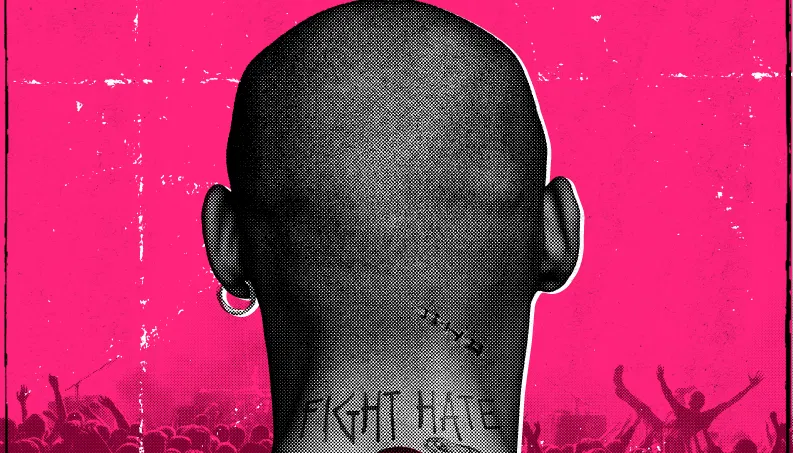
A recent panel discussion at UC Berkeley explored how punk subcultures from the 1980s can inform modern resistance to hate. Activists emphasized the importance of community solidarity and confronting extremist ideologies. The conversation highlighted the need for inclusive spaces and alliances across diverse backgrounds to combat polarization in today's society.
- ▪The panel featured the film director Jacob Kornbluth and anti-racist activists Eric Ward and Dion Garcia.
- ▪They discussed the historical context of punk movements as a response to white supremacy and hate groups.
- ▪Ward warned that modern antisemitism has evolved into mainstream discourse, exacerbating societal polarization.
Berkeley News files mainly under science. We currently carry 18 of its stories.
Story provenance
Source · retrieval · rights · ranking — open for full record
inspect →
Story provenance
Attribution is not the same as permission. This drawer separates discovery metadata, excerpts, WeSearch-generated summaries, reuse status, and whether the publisher receives the visit. Nothing here claims a legal grant the publisher has not made.
Record
| Original publisher | Berkeley News |
| Canonical URL | https://news.berkeley.edu/2026/05/29/berkeley-talks-what-punk-subcultures-can-teach-us-about-resisting-hate/ |
| Publication time | Fri, 29 May 2026 19:49:57 +0000 |
| Retrieval time | 2026-05-29T20:00:03.801Z |
| Last seen | 2026-05-29T20:00:03.801Z |
| Headline source | Publisher (no WeSearch rewrite) |
| Excerpt source | publisher body |
| Excerpt method | First ~120 words (~800 chars) of extracted publisher body, fair-use limited. |
| Summary | WeSearch · cerebras-chat (WeSearch summarizer) |
| Summary source text | contentText |
| Citation coverage | Summary is a WeSearch-generated derivative; primary citation is the original publisher URL. |
| Cluster | C9suFmQ7wTVJ |
| Cluster logic | Grouped by semantic title/content similarity across sources within a rolling window. Same-publisher template collisions are excluded from coverage comparison. |
| Ranking reason | Story pages are not engagement-ranked. Hub feeds use recency, with optional source-diversified chronological ordering (cap consecutive stories per source). No personalized ranking. |
| Publisher visit | Yes — open original |
| Substitutes article? | No — link-out required for full text |
Rights status (four layers)
WeSearch handling by dimension
| Indexing | May the item be indexed (stored, ranked, made findable)? | Allowed |
| Snippet | May a short excerpt of the publisher's text be shown? | Allowed |
| AI summary | May WeSearch generate its own short summary of the article? | Limited |
| Retrieval / RAG | May the content be exposed for third-party retrieval-augmented generation? | Not asserted |
| Model training | May the content be used to train AI models? | Not asserted |
| Commercial reuse | May the content be reused commercially? | Not permitted |
Basis: Derived from the published RSS/Atom feed. Contact: [email protected]. Reviewed: 2026-07-24.
Opening excerpt (first ~120 words) tap to expand
Arts & culture, Film, Politics & society Berkeley Talks: What punk subcultures can teach us about resisting hate A filmmaker and activists explore how the tactics of 1980s West Coast movements offer a vital blueprint for countering modern political polarization. By Strategic Communications Image courtesy of Reboot Studios/7th Art Releasing. May 29, 2026 Follow Berkeley Talks, a Berkeley News podcast that features lectures and conversations at UC Berkeley. See all Berkeley Talks. Across the American West Coast in the 1980s, the burgeoning punk rock and skinhead scenes were much more than just raw music and counterculture fashion — they quickly became contested ground in an ideological battle against white supremacy.
…
Excerpt limited to ~120 words for fair-use compliance. The full article is at Berkeley News.
Discussion
0 commentsMore from Berkeley News