Homeless encampment sweeps spiked in Oakland after Supreme Court decision
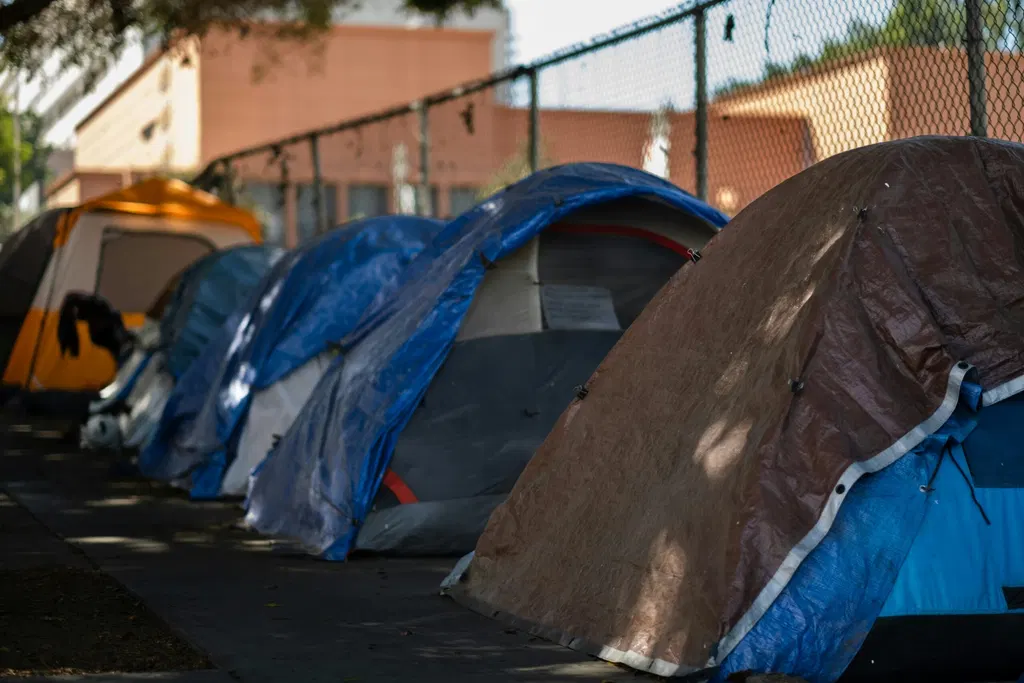
A recent study from UC Berkeley reveals that homeless encampment sweeps in Oakland have significantly increased following a Supreme Court decision. The average number of monthly sweeps more than doubled, raising concerns about the effectiveness of such measures in addressing homelessness. Researchers argue that these sweeps merely displace individuals rather than provide lasting solutions to their housing needs.
- ▪The average number of encampment sweeps in Oakland rose from 14.4 to 32.2 per month after the Supreme Court decision.
- ▪Many encampments have been closed multiple times, with one site being swept 18 times over four years.
- ▪The study suggests that sweeps are displacing homeless individuals into more vulnerable neighborhoods rather than solving homelessness.
2 outlets in our directory ran this story, first to last over 15 hours. All of the coverage we found sits in one bucket: centre. That one-sidedness is itself worth noticing.
Berkeley News files mainly under science. We currently carry 18 of its stories.
Story provenance
Source · retrieval · rights · ranking — open for full record
inspect →
Story provenance
Attribution is not the same as permission. This drawer separates discovery metadata, excerpts, WeSearch-generated summaries, reuse status, and whether the publisher receives the visit. Nothing here claims a legal grant the publisher has not made.
Record
| Original publisher | Berkeley News |
| Canonical URL | https://news.berkeley.edu/2026/05/28/homeless-encampment-sweeps-spiked-in-oakland-after-supreme-court-decision/ |
| Publication time | Thu, 28 May 2026 20:15:40 +0000 |
| Retrieval time | 2026-05-28T20:24:37.555Z |
| Last seen | 2026-05-28T20:24:37.555Z |
| Headline source | Publisher (no WeSearch rewrite) |
| Excerpt source | publisher body |
| Excerpt method | First ~120 words (~800 chars) of extracted publisher body, fair-use limited. |
| Summary | WeSearch · cerebras-chat (WeSearch summarizer) |
| Summary source text | contentText |
| Citation coverage | Summary is a WeSearch-generated derivative; primary citation is the original publisher URL. |
| Cluster | ptf5Vl4I-8w1 · 2 stories |
| Cluster logic | Grouped by semantic title/content similarity across sources within a rolling window. Same-publisher template collisions are excluded from coverage comparison. |
| Ranking reason | Story pages are not engagement-ranked. Hub feeds use recency, with optional source-diversified chronological ordering (cap consecutive stories per source). No personalized ranking. |
| Publisher visit | Yes — open original |
| Substitutes article? | No — link-out required for full text |
Rights status (four layers)
WeSearch handling by dimension
| Indexing | May the item be indexed (stored, ranked, made findable)? | Allowed |
| Snippet | May a short excerpt of the publisher's text be shown? | Allowed |
| AI summary | May WeSearch generate its own short summary of the article? | Limited |
| Retrieval / RAG | May the content be exposed for third-party retrieval-augmented generation? | Not asserted |
| Model training | May the content be used to train AI models? | Not asserted |
| Commercial reuse | May the content be reused commercially? | Not permitted |
Basis: Derived from the published RSS/Atom feed. Contact: [email protected]. Reviewed: 2026-07-24.
Opening excerpt (first ~120 words) tap to expand
Campus news Homeless encampment sweeps spiked in Oakland after Supreme Court decision In the first analysis of its kind since the 2024 Grants Pass case, UC Berkeley researchers found the number of encampment sweeps significantly increased and spread. By Jason Pohl Before the U.S. Supreme Court made it easier for local governments to clear homeless encampments, crews in Oakland swept an average of 14.4 camps each month. That number more than doubled in the six months after the decision, averaging 32.2 per month. Levi Meir Clancy via Unsplash May 28, 2026 Officials in Oakland sharply increased the number of homeless encampments they cleared in the months after the 2024 U.S. Supreme Court decision made it easier for municipalities nationwide to do so, new research from UC Berkeley shows.
…
Excerpt limited to ~120 words for fair-use compliance. The full article is at Berkeley News.
Discussion
0 commentsMore from Berkeley News