Bring Back That Aged Scanner, in Your Browser
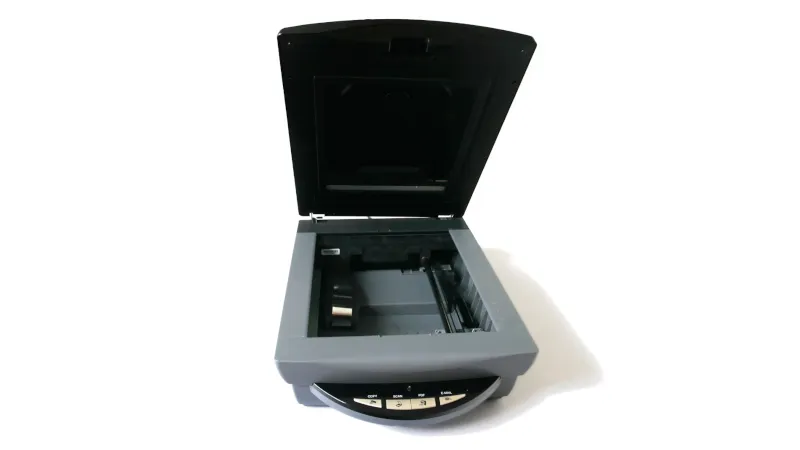
A new technique allows users to keep older peripherals, like USB scanners, functional through a browser-based solution. This method utilizes a minimalist x86 computer environment running in the browser, enabling communication with real-world hardware via WebUSB. It offers a quick and installation-free way to support aged devices, potentially applicable to various hardware types.
- ▪Older peripherals often become unusable due to lack of operating system support.
- ▪A minimalist x86 computer runs in the browser to support devices like USB scanners.
- ▪The solution uses WebAssembly and a minimal Alpine Linux environment to operate without installation.
Hackaday files mainly under tech. We currently carry 243 of its stories.
Story provenance
Source · retrieval · rights · ranking — open for full record
inspect →
Story provenance
Attribution is not the same as permission. This drawer separates discovery metadata, excerpts, WeSearch-generated summaries, reuse status, and whether the publisher receives the visit. Nothing here claims a legal grant the publisher has not made.
Record
| Original publisher | Hackaday |
| Canonical URL | https://hackaday.com/2026/05/20/bring-back-that-aged-scanner-in-your-browser/ |
| Publication time | Wed, 20 May 2026 11:00:45 +0000 |
| Retrieval time | 2026-05-20T11:05:02.097Z |
| Last seen | 2026-05-20T11:05:02.097Z |
| Headline source | Publisher (no WeSearch rewrite) |
| Excerpt source | publisher body |
| Excerpt method | First ~120 words (~800 chars) of extracted publisher body, fair-use limited. |
| Summary | WeSearch · cerebras-chat (WeSearch summarizer) |
| Summary source text | contentText |
| Citation coverage | Summary is a WeSearch-generated derivative; primary citation is the original publisher URL. |
| Cluster | gRhnwk0_A7xQ |
| Cluster logic | Grouped by semantic title/content similarity across sources within a rolling window. Same-publisher template collisions are excluded from coverage comparison. |
| Ranking reason | Story pages are not engagement-ranked. Hub feeds use recency, with optional source-diversified chronological ordering (cap consecutive stories per source). No personalized ranking. |
| Publisher visit | Yes — open original |
| Substitutes article? | No — link-out required for full text |
Rights status (four layers)
WeSearch handling by dimension
| Indexing | May the item be indexed (stored, ranked, made findable)? | Allowed |
| Snippet | May a short excerpt of the publisher's text be shown? | Allowed |
| AI summary | May WeSearch generate its own short summary of the article? | Limited |
| Retrieval / RAG | May the content be exposed for third-party retrieval-augmented generation? | Not asserted |
| Model training | May the content be used to train AI models? | Not asserted |
| Commercial reuse | May the content be reused commercially? | Not permitted |
Basis: Derived from the published RSS/Atom feed. Contact: [email protected]. Reviewed: 2026-07-24.
Opening excerpt (first ~120 words) tap to expand
Bring Back That Aged Scanner, In Your Browser No comments by: Jenny List May 20, 2026 Title: Copy Short Link: Copy We have probably all at some point had to replace a peripheral not because it is faulty, but because it is no longer supported by our operating system. It’s especially bad for Windows users, but for older hardware this is increasingly a part of the Linux experience too. [George MacKerron] is here with what may prove to be a valuable technique to keep these devices active. He’s running a minimalist x86 computer in the browser, with just enough OS to support the device. In this case the hardware is a USB scanner, and the resulting software takes a WebAssembly x86 emulator and adds a bit of glue software allowing it to use WebUSB to talk to the real-world hardware.
…
Excerpt limited to ~120 words for fair-use compliance. The full article is at Hackaday.
Discussion
0 commentsMore from Hackaday