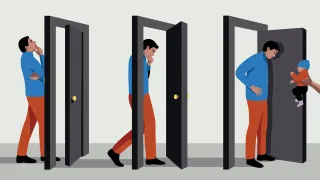
Emotional-Labor Laws

The Department of Emotional Labor has been established to protect workers from exploitation in emotional labor roles. New regulations include compensation for emotional labor and limits on the hours spent discussing personal issues. Additionally, workers are entitled to 'dick days' to address rude customer interactions without fear of retaliation.
- ▪Emotional labor is recognized as a form of work that should be compensated fairly.
- ▪Workers can invoice friends or family for emotional labor at a rate of $1,250 per hour.
- ▪Employees are allowed one 'dick day' per week to respond to rude customers.
The New Yorker files mainly under culture. We currently carry 75 of its stories.
Story provenance
Source · retrieval · rights · ranking — open for full record
inspect →
Story provenance
Attribution is not the same as permission. This drawer separates discovery metadata, excerpts, WeSearch-generated summaries, reuse status, and whether the publisher receives the visit. Nothing here claims a legal grant the publisher has not made.
Record
| Original publisher | The New Yorker |
| Canonical URL | https://www.newyorker.com/humor/shouts-murmurs/emotional-labor-laws |
| Publication time | Wed, 03 Jun 2026 10:00:00 +0000 |
| Retrieval time | 2026-06-03T10:12:01.667Z |
| Last seen | 2026-06-03T10:12:01.667Z |
| Headline source | Publisher (no WeSearch rewrite) |
| Excerpt source | publisher body |
| Excerpt method | First ~120 words (~800 chars) of extracted publisher body, fair-use limited. |
| Summary | WeSearch · cerebras-chat (WeSearch summarizer) |
| Summary source text | contentText |
| Citation coverage | Summary is a WeSearch-generated derivative; primary citation is the original publisher URL. |
| Cluster | ul6KwMg3-nc0 |
| Cluster logic | Grouped by semantic title/content similarity across sources within a rolling window. Same-publisher template collisions are excluded from coverage comparison. |
| Ranking reason | Story pages are not engagement-ranked. Hub feeds use recency, with optional source-diversified chronological ordering (cap consecutive stories per source). No personalized ranking. |
| Publisher visit | Yes — open original |
| Substitutes article? | No — link-out required for full text |
Rights status (four layers)
WeSearch handling by dimension
| Indexing | May the item be indexed (stored, ranked, made findable)? | Allowed |
| Snippet | May a short excerpt of the publisher's text be shown? | Allowed |
| AI summary | May WeSearch generate its own short summary of the article? | Limited |
| Retrieval / RAG | May the content be exposed for third-party retrieval-augmented generation? | Not asserted |
| Model training | May the content be used to train AI models? | Not asserted |
| Commercial reuse | May the content be reused commercially? | Not permitted |
Basis: Derived from the published RSS/Atom feed. Contact: [email protected]. Reviewed: 2026-07-24.
Opening excerpt (first ~120 words) tap to expand
Shouts & MurmursEmotional-Labor LawsBy Zoe PearlJune 3, 2026Photograph from GettySave this storySave this storySave this storySave this storyJust as the Department of Labor protects workers’ rights, promotes workplace safety, and advances job opportunities, the Department of Emotional Labor seeks to insure that vulnerable groups, such as customer-service employees, eldest daughters, and anyone whose co-workers think that D.E.I. is an outdoorsy retailer, are not exploited by being forced to take on an undue amount of work to make employers, customers, or emotionally immature parents more comfortable.Following multiple reports of gross violations, the United States Department of Emotional Labor would like to issue the following reminders:Wages and HoursEmotional labor is labor, and should…
Excerpt limited to ~120 words for fair-use compliance. The full article is at The New Yorker.
Discussion
0 commentsMore from The New Yorker