Fine-tuning an LLM to write docs like it's 1995
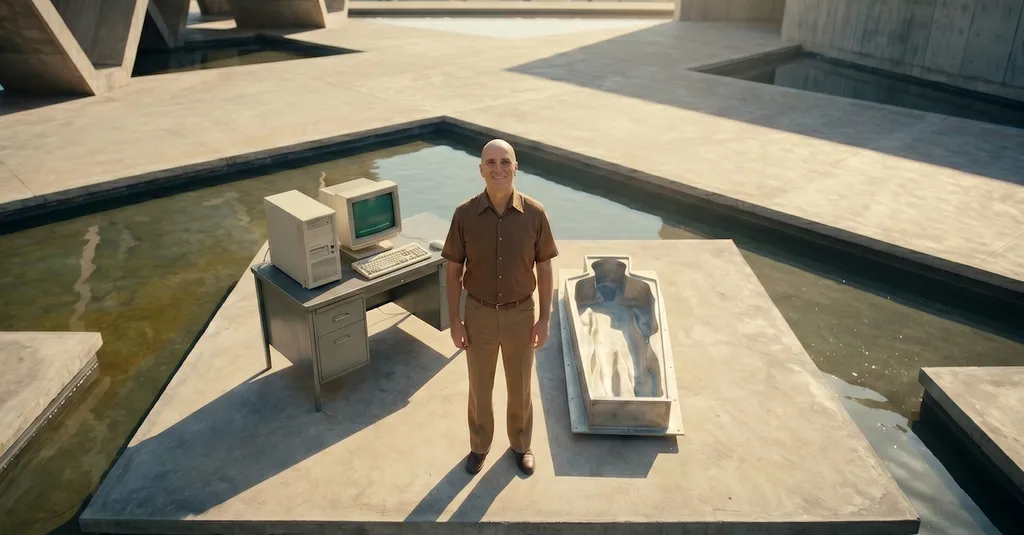
The article discusses the process of fine-tuning a language model to emulate the writing style of technical writers from the 1990s. The author utilized a collection of old Microsoft manuals as training material, highlighting the challenges of sourcing sufficient data for effective model training. The project is independent and non-commercial, focusing on style transfer rather than fact retrieval.
- ▪The author fine-tuned a model to write like a technical writer from the 90s using old Microsoft manuals.
- ▪Bitsavers is a valuable resource for accessing historical computer documentation.
- ▪Fine-tuning is a cost-effective alternative to training a model from scratch, requiring less data and resources.
Hacker News (Front Page) files mainly under programming. We currently carry 996 of its stories. Top-voted stories on Hacker News.
Story provenance
Source · retrieval · rights · ranking — open for full record
inspect →
Story provenance
Attribution is not the same as permission. This drawer separates discovery metadata, excerpts, WeSearch-generated summaries, reuse status, and whether the publisher receives the visit. Nothing here claims a legal grant the publisher has not made.
Record
| Original publisher | Passo |
| Canonical URL | https://passo.uno/fine-tuning-docs-llm/ |
| Publication time | Fri, 05 Jun 2026 05:46:06 +0000 |
| Retrieval time | 2026-06-05T06:51:43.882Z |
| Last seen | 2026-06-05T06:51:43.882Z |
| Headline source | Publisher (no WeSearch rewrite) |
| Excerpt source | publisher body |
| Excerpt method | First ~120 words (~800 chars) of extracted publisher body, fair-use limited. |
| Summary | WeSearch · cerebras-chat (WeSearch summarizer) |
| Summary source text | contentText |
| Citation coverage | Summary is a WeSearch-generated derivative; primary citation is the original publisher URL. |
| Cluster | woVhD07ZllOL |
| Cluster logic | Grouped by semantic title/content similarity across sources within a rolling window. Same-publisher template collisions are excluded from coverage comparison. |
| Ranking reason | Story pages are not engagement-ranked. Hub feeds use recency, with optional source-diversified chronological ordering (cap consecutive stories per source). No personalized ranking. |
| Publisher visit | Yes — open original |
| Substitutes article? | No — link-out required for full text |
Rights status (four layers)
WeSearch handling by dimension
| Indexing | May the item be indexed (stored, ranked, made findable)? | Allowed |
| Snippet | May a short excerpt of the publisher's text be shown? | Allowed |
| AI summary | May WeSearch generate its own short summary of the article? | Limited |
| Retrieval / RAG | May the content be exposed for third-party retrieval-augmented generation? | Not asserted |
| Model training | May the content be used to train AI models? | Not asserted |
| Commercial reuse | May the content be reused commercially? | Not permitted |
Basis: Derived from the published RSS/Atom feed. Contact: [email protected]. Reviewed: 2026-07-24.
Opening excerpt (first ~120 words) tap to expand
Fine-tuning an LLM to write docs like it's 1995 Posted on Jun 1, 2026 · 10 min read In my predictions for 2030 I wrote that tech writers would be using specialized LLMs, running locally on powerful hardware. I see hints of this move to “local first” among engineering pundits, but we’re not there yet, in part because of how much more powerful connected frontier models are. That doesn’t mean we can’t experiment, though. That’s precisely what I did last week, trying to fine-tune an instruct model to write like a software technical writer from the 80s and 90s. Summoning old tech writing lore for research To train a personal, local model to write like a technical writer from the 90s, one needs tons of written sources.
…
Excerpt limited to ~120 words for fair-use compliance. The full article is at Passo.
Discussion
0 commentsMore from Passo