Investigating the Health Impacts of UFPs and VOCs from FDM Printers
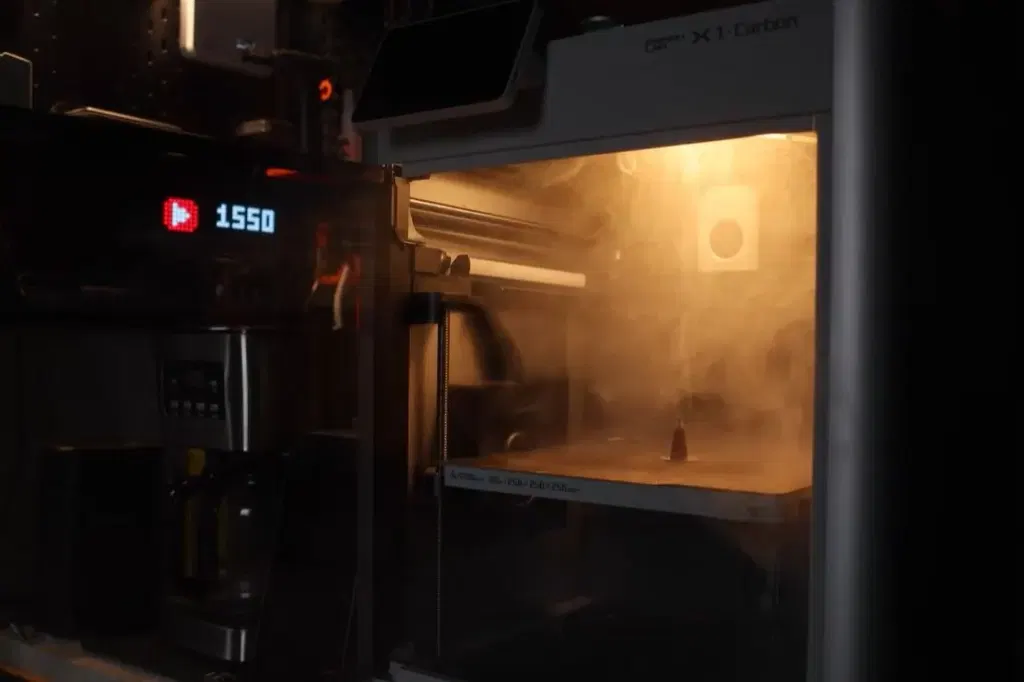
The article discusses the health impacts of ultra-fine particles (UFPs) and volatile organic compounds (VOCs) emitted by FDM 3D printers. It highlights the risks associated with various filaments, particularly PLA, ABS, and nylon, which can release harmful substances. Recommendations for improving air quality include using enclosures with filtration systems and ensuring proper ventilation.
- ▪FDM 3D printing produces UFPs and VOCs, which can pose health risks.
- ▪Common filaments like PLA and ABS emit harmful substances, including formaldehyde and styrene.
- ▪Using good ventilation and filtration systems can significantly reduce exposure to these pollutants.
Hackaday files mainly under tech. We currently carry 247 of its stories.
Story provenance
Source · retrieval · rights · ranking — open for full record
inspect →
Story provenance
Attribution is not the same as permission. This drawer separates discovery metadata, excerpts, WeSearch-generated summaries, reuse status, and whether the publisher receives the visit. Nothing here claims a legal grant the publisher has not made.
Record
| Original publisher | Hackaday |
| Canonical URL | https://hackaday.com/2026/05/20/investigating-the-health-impacts-of-ufps-and-vocs-from-fdm-printers/ |
| Publication time | Thu, 21 May 2026 02:00:44 +0000 |
| Retrieval time | 2026-05-21T02:05:03.425Z |
| Last seen | 2026-05-21T02:05:03.425Z |
| Headline source | Publisher (no WeSearch rewrite) |
| Excerpt source | publisher body |
| Excerpt method | First ~120 words (~800 chars) of extracted publisher body, fair-use limited. |
| Summary | WeSearch · cerebras-chat (WeSearch summarizer) |
| Summary source text | contentText |
| Citation coverage | Summary is a WeSearch-generated derivative; primary citation is the original publisher URL. |
| Cluster | OpMCG5wLAgBE |
| Cluster logic | Grouped by semantic title/content similarity across sources within a rolling window. Same-publisher template collisions are excluded from coverage comparison. |
| Ranking reason | Story pages are not engagement-ranked. Hub feeds use recency, with optional source-diversified chronological ordering (cap consecutive stories per source). No personalized ranking. |
| Publisher visit | Yes — open original |
| Substitutes article? | No — link-out required for full text |
Rights status (four layers)
WeSearch handling by dimension
| Indexing | May the item be indexed (stored, ranked, made findable)? | Allowed |
| Snippet | May a short excerpt of the publisher's text be shown? | Allowed |
| AI summary | May WeSearch generate its own short summary of the article? | Limited |
| Retrieval / RAG | May the content be exposed for third-party retrieval-augmented generation? | Not asserted |
| Model training | May the content be used to train AI models? | Not asserted |
| Commercial reuse | May the content be reused commercially? | Not permitted |
Basis: Derived from the published RSS/Atom feed. Contact: [email protected]. Reviewed: 2026-07-24.
Opening excerpt (first ~120 words) tap to expand
Investigating The Health Impacts Of UFPs And VOCs From FDM Printers No comments by: Maya Posch May 20, 2026 Title: Copy Short Link: Copy FDM 3D printing is fairly messy on a molecular scale, with the filament being heated up to temperatures high enough to melt it, which produces ultra-fine particles (UFPs) and volatile organic compounds (VOCs) in addition to the new plastic item on the build plate. Recently [Simon Pow] got somewhat worried about this pollution considering that he spends a considerable amount of time in the same room as FDM printers, sharing air. While there is a lot of context within the topic, it’s notable that even ‘low risk’ PLA already emits formaldehyde, a group 1 carcinogen. Studies like this 2022 one by [Taehun Kim] et al.
…
Excerpt limited to ~120 words for fair-use compliance. The full article is at Hackaday.
Discussion
0 commentsMore from Hackaday