Itching May Have Its Own Sensory Organ
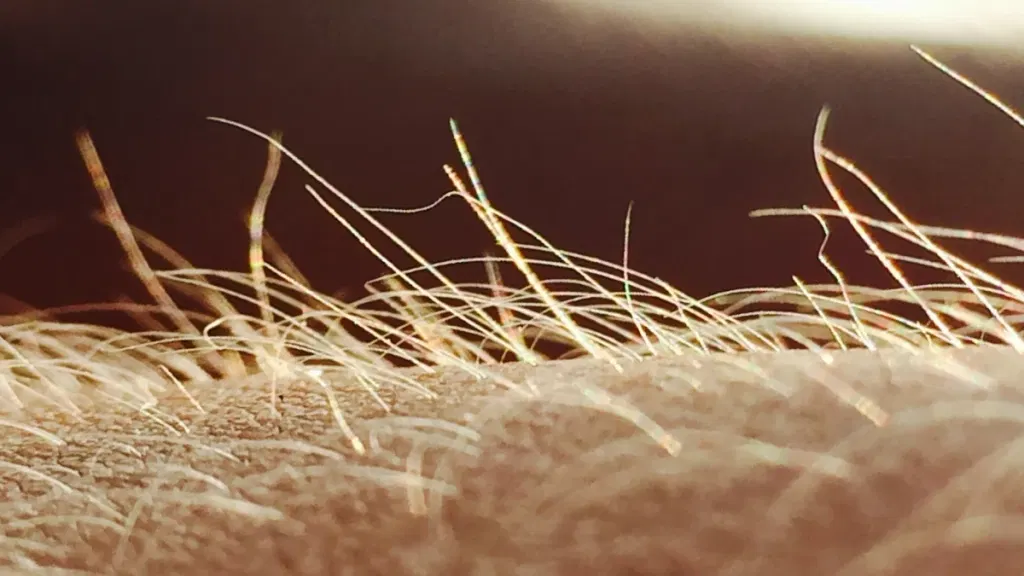
Their skin is at its most exposed in these areas. if ('undefined' !== typeof window.tmntag && 'undefined' !== typeof window.tmntag.cmd) { tmntag.cmd.push(function () { tmntag.adTag('Purch_Y_C_0_3', false); }); } Humans, by contrast, are almost totally covered in vellus hairs, also known as 'peach fuzz'. This article was fact-checked by Michael Irving and edited by Rebecca Dyer. While we pride ourselves on our process, we are only human.
- ▪Their skin is at its most exposed in these areas. if ('undefined' !== typeof window.tmntag && 'undefined' !== typeof window.tmntag.cmd) { tmntag.cmd.push(function () { tmntag.adTag('Purch_Y_C_0_3', false); }); } Humans, by contrast, are alm
- ▪This article was fact-checked by Michael Irving and edited by Rebecca Dyer.
- ▪While we pride ourselves on our process, we are only human.
Microsoft News Content : ScienceAlert : The Best in Science News and Amazing Bre files mainly under science.
Story provenance
Source · retrieval · rights · ranking — open for full record
inspect →
Story provenance
Attribution is not the same as permission. This drawer separates discovery metadata, excerpts, WeSearch-generated summaries, reuse status, and whether the publisher receives the visit. Nothing here claims a legal grant the publisher has not made.
Record
| Original publisher | ScienceAlert |
| Canonical URL | https://www.sciencealert.com/itching-may-have-its-own-sensory-organ |
| Publication time | Fri, 24 Jul 2026 05:00:00 +0000 |
| Retrieval time | 2026-07-24T06:27:06.790Z |
| Last seen | 2026-07-24T06:27:06.790Z |
| Headline source | Publisher (no WeSearch rewrite) |
| Excerpt source | publisher body |
| Excerpt method | First ~120 words (~800 chars) of extracted publisher body, fair-use limited. |
| Summary | WeSearch · cerebras-chat (WeSearch summarizer) |
| Summary source text | contentText |
| Citation coverage | Summary is a WeSearch-generated derivative; primary citation is the original publisher URL. |
| Cluster | D3bhwkJLOAYY |
| Cluster logic | Grouped by semantic title/content similarity across sources within a rolling window. Same-publisher template collisions are excluded from coverage comparison. |
| Ranking reason | Story pages are not engagement-ranked. Hub feeds use recency, with optional source-diversified chronological ordering (cap consecutive stories per source). No personalized ranking. |
| Publisher visit | Yes — open original |
| Substitutes article? | No — link-out required for full text |
Rights status (four layers)
WeSearch handling by dimension
| Indexing | May the item be indexed (stored, ranked, made findable)? | Allowed |
| Snippet | May a short excerpt of the publisher's text be shown? | Allowed |
| AI summary | May WeSearch generate its own short summary of the article? | Limited |
| Retrieval / RAG | May the content be exposed for third-party retrieval-augmented generation? | Not asserted |
| Model training | May the content be used to train AI models? | Not asserted |
| Commercial reuse | May the content be reused commercially? | Not permitted |
Basis: Derived from the published RSS/Atom feed. Contact: [email protected]. Reviewed: 2026-07-24.
Opening excerpt (first ~120 words) tap to expand
Itching May Have Its Own Sensory Organ Health24 July 2026By Jess Cockerill Add ScienceAlert on Google (Henry Ry/Pexels) If you're feeling itchy, it's probably a warning sign from your body that something alien is on your skin.Dry flakes of skin, dirt, bug bites, or even your own hair tickling your nose: all of these triggers make us squirm and yearn to itch, which, in many scenarios (though not all), works quite well to remove the offending irritant. if ('undefined' !== typeof window.tmntag && 'undefined' !== typeof window.tmntag.cmd) { tmntag.cmd.push(function () { tmntag.adTag('Purch_Y_C_0_1', false); }); } A new study in mice suggests this protective impulse may even have its own dedicated sensory organ: vellus-like hairs.
…
Excerpt limited to ~120 words for fair-use compliance. The full article is at ScienceAlert.
Discussion
0 commentsMore from ScienceAlert