"Plaything of the Gods"
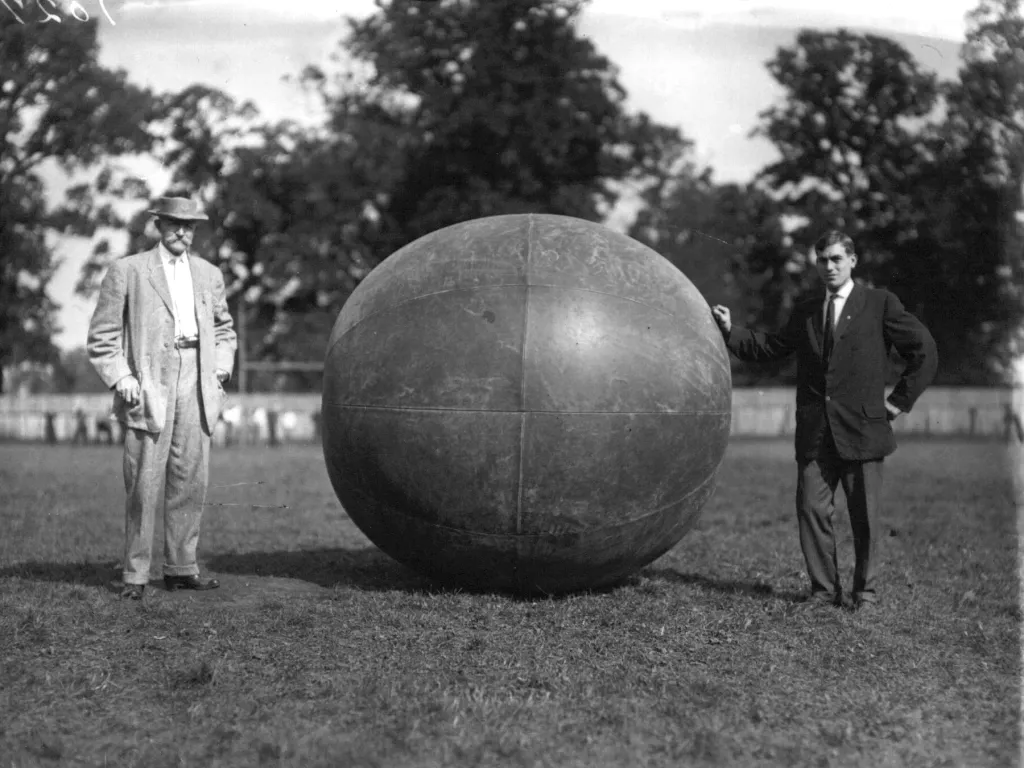
A new sport called pushball has gained popularity in American colleges, leading to predictions of its lasting presence in the sports landscape. The game has also made its way to Australia, although the British have shown less enthusiasm for it. British entrepreneur E. V. Hanegan promoted the game, claiming it was fit for giants and likening it to a pastime of the gods.
- ▪Pushball is played on a football pitch and has become popular in American colleges.
- ▪Spalding predicted that pushball would have a permanent place among American sports.
- ▪E. V. Hanegan created his own version of pushball and claimed it was a game for giants.
Hacker News (Newest) files mainly under programming. We currently carry 5,306 of its stories.
Story provenance
Source · retrieval · rights · ranking — open for full record
inspect →
Story provenance
Attribution is not the same as permission. This drawer separates discovery metadata, excerpts, WeSearch-generated summaries, reuse status, and whether the publisher receives the visit. Nothing here claims a legal grant the publisher has not made.
Record
| Original publisher | The Public Domain Review |
| Canonical URL | https://publicdomainreview.org/collection/pushball/ |
| Publication time | Sat, 23 May 2026 10:57:36 +0000 |
| Retrieval time | 2026-05-23T11:07:26.427Z |
| Last seen | 2026-05-23T11:07:26.427Z |
| Headline source | Publisher (no WeSearch rewrite) |
| Excerpt source | publisher body |
| Excerpt method | First ~120 words (~800 chars) of extracted publisher body, fair-use limited. |
| Summary | WeSearch · cerebras-chat (WeSearch summarizer) |
| Summary source text | contentText |
| Citation coverage | Summary is a WeSearch-generated derivative; primary citation is the original publisher URL. |
| Cluster | None |
| Cluster logic | Not yet clustered, or no peer story found in the clustering window. |
| Ranking reason | Story pages are not engagement-ranked. Hub feeds use recency, with optional source-diversified chronological ordering (cap consecutive stories per source). No personalized ranking. |
| Publisher visit | Yes — open original |
| Substitutes article? | No — link-out required for full text |
Rights status (four layers)
WeSearch handling by dimension
| Indexing | May the item be indexed (stored, ranked, made findable)? | Allowed |
| Snippet | May a short excerpt of the publisher's text be shown? | Allowed |
| AI summary | May WeSearch generate its own short summary of the article? | Limited |
| Retrieval / RAG | May the content be exposed for third-party retrieval-augmented generation? | Not asserted |
| Model training | May the content be used to train AI models? | Not asserted |
| Commercial reuse | May the content be reused commercially? | Not permitted |
Basis: Derived from the published RSS/Atom feed. Contact: [email protected]. Reviewed: 2026-07-24.
Opening excerpt (first ~120 words) tap to expand
This new sport, often conveniently played on a football pitch, met American colleges’ unquenchable hunger for more forms of competitive amusements; so popular was it that Spalding declared that “there is every indication that the game will occupy a permanent place among the sports of America”. It had even crossed the Atlantic and eventually found its way to Australia. The British, however, proved less committed to the struggle of man against man, and by 1904 were playing pushball on horseback and even in cars. British entrepreneur E. V. Hanegan did much to propagate the mythic proportions of this new game and created his own version of a pushball, which required the hides of nine horses.“Pushball is a game for giants”, he proclaimed.
…
Excerpt limited to ~120 words for fair-use compliance. The full article is at The Public Domain Review.
Discussion
0 commentsMore from The Public Domain Review