Twilight of the Velocipede: Typesetting Races Before the Age of Linotype
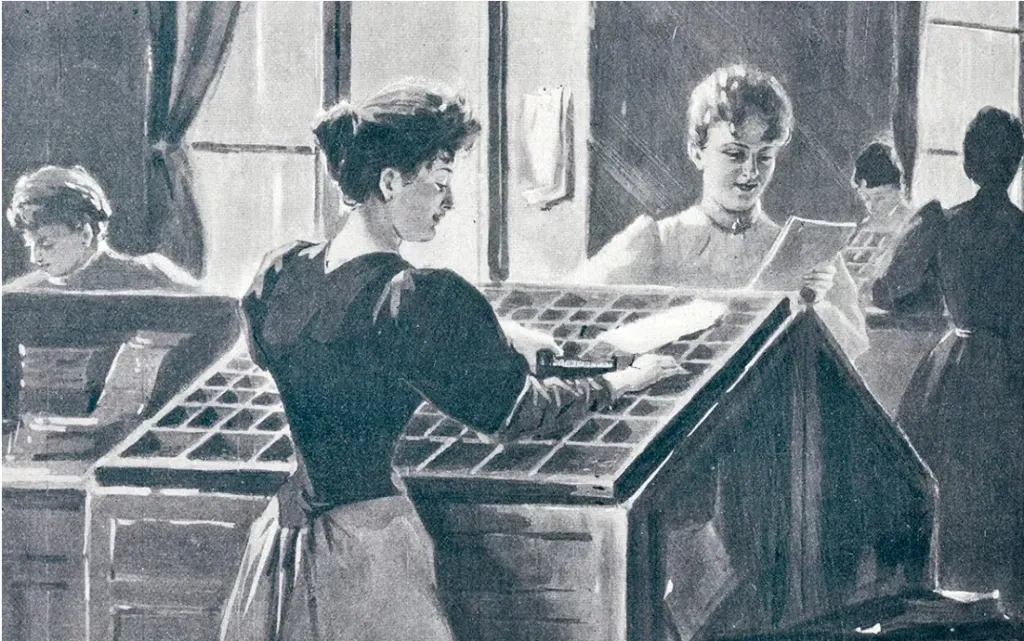
The article discusses the various attempts to create typesetting machines before the advent of Linotype. Despite numerous inventions and patents, none of the machines were able to replace manual typesetting effectively. The challenges included technical complexities and reliability issues that hindered their widespread adoption.
- ▪William Church patented a typesetting machine in 1810, but it was primitive and ineffective.
- ▪James Hedden Young and Adrien Delcambre introduced the 'pianotype' in the 1840s, which was too delicate for regular use.
- ▪Over three hundred patents for typesetting machines were issued throughout the century, yet none could replace manual compositors.
Hacker News (Newest) files mainly under programming. We currently carry 5,306 of its stories.
Story provenance
Source · retrieval · rights · ranking — open for full record
inspect →
Story provenance
Attribution is not the same as permission. This drawer separates discovery metadata, excerpts, WeSearch-generated summaries, reuse status, and whether the publisher receives the visit. Nothing here claims a legal grant the publisher has not made.
Record
| Original publisher | The Public Domain Review |
| Canonical URL | https://publicdomainreview.org/essay/twilight-of-the-velocipede/ |
| Publication time | Sat, 16 May 2026 21:25:07 +0000 |
| Retrieval time | 2026-05-16T21:40:19.062Z |
| Last seen | 2026-05-16T21:40:19.062Z |
| Headline source | Publisher (no WeSearch rewrite) |
| Excerpt source | publisher body |
| Excerpt method | First ~120 words (~800 chars) of extracted publisher body, fair-use limited. |
| Summary | WeSearch · cerebras-chat (WeSearch summarizer) |
| Summary source text | contentText |
| Citation coverage | Summary is a WeSearch-generated derivative; primary citation is the original publisher URL. |
| Cluster | kOQrW4Ah-P1m |
| Cluster logic | Grouped by semantic title/content similarity across sources within a rolling window. Same-publisher template collisions are excluded from coverage comparison. |
| Ranking reason | Story pages are not engagement-ranked. Hub feeds use recency, with optional source-diversified chronological ordering (cap consecutive stories per source). No personalized ranking. |
| Publisher visit | Yes — open original |
| Substitutes article? | No — link-out required for full text |
Rights status (four layers)
WeSearch handling by dimension
| Indexing | May the item be indexed (stored, ranked, made findable)? | Allowed |
| Snippet | May a short excerpt of the publisher's text be shown? | Allowed |
| AI summary | May WeSearch generate its own short summary of the article? | Limited |
| Retrieval / RAG | May the content be exposed for third-party retrieval-augmented generation? | Not asserted |
| Model training | May the content be used to train AI models? | Not asserted |
| Commercial reuse | May the content be reused commercially? | Not permitted |
Basis: Derived from the published RSS/Atom feed. Contact: [email protected]. Reviewed: 2026-07-24.
Opening excerpt (first ~120 words) tap to expand
Inventors had been trying for decades. As far back as 1810, a Vermont doctor named William Church patented a machine with a primitive keyboard for dropping type into a stick. Three decades later in Paris, James Hedden Young and Adrien Delcambre unveiled their “pianotype”, an improbable-looking contraption with piano-like keys and metal chutes; but it proved too delicate for regular use. In the 1850s, US inventor William Mitchell produced an ingenious “compositor” machine, but it failed to solve the thorny technical problem of justification.
…
Excerpt limited to ~120 words for fair-use compliance. The full article is at The Public Domain Review.
Discussion
0 commentsMore from The Public Domain Review